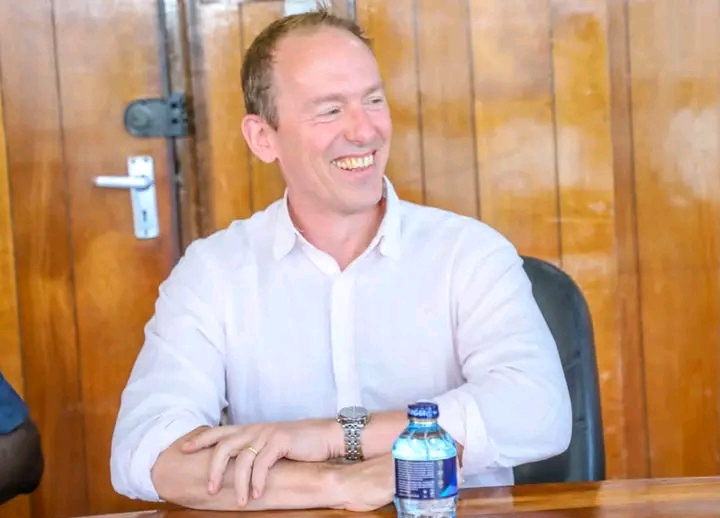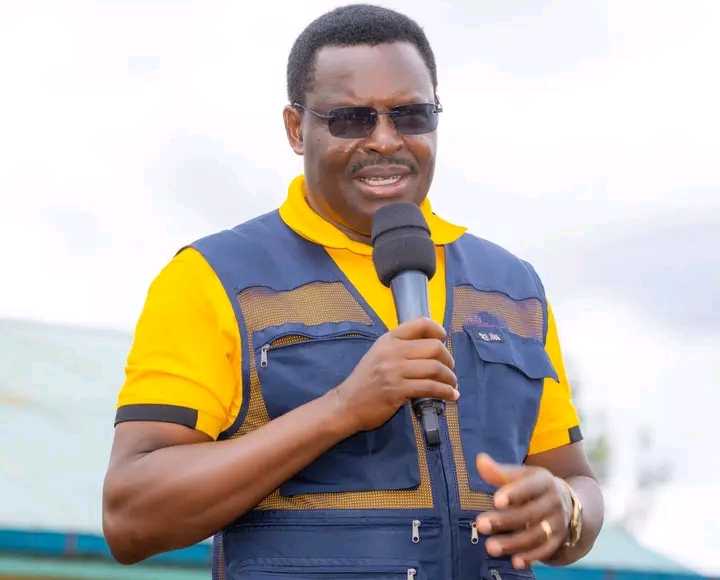
Muthomi Njuki Takes Over as Council of Governors Chairman, Kenneth Lusaka Named Deputy in Major Leadership Change
The election of Tharaka Nithi Governor Muthomi Njuki as chairman of the Council of Governors, with Bungoma Governor Kenneth Lusaka as his deputy, marks a new chapter in the coordination of Kenya's 47 county governments. Njuki takes over from Wajir Governor Ahmed Abdullahi after the latter's two consecutive one-year terms. Lusaka brings his experience as a former and current Bungoma governor to the council's top leadership. Their central responsibility will be to coordinate the governors' collective interests, strengthen engagement with the national government and help address challenges involving county financing, healthcare, infrastructure and the implementation of devolution.
Tharaka Nithi Governor Muthomi Njuki has been elected the new chairman of the Council of Governors (CoG), with Bungoma Governor Kenneth Lusaka taking up the position of deputy chairman in a leadership change that places the two county leaders at the centre of discussions on devolution, county financing and service delivery in Kenya.
The new leadership was elected on Monday, October 12, 2026, during a full Council of Governors meeting held in Nairobi. Njuki succeeds Wajir Governor Ahmed Abdullahi, who has led the council since 2024 and completed two consecutive one-year terms. The election comes at a time when county governments are seeking adequate funding, timely disbursement of resources and stronger cooperation with the national government. Njuki's election as Council of Governors chairman follows his previous involvement in the council's leadership. Before his elevation, he served as vice-chairperson and had also held responsibilities within its technical committee structure.
His experience in county administration and participation in the council's leadership have placed him in a position to take on the responsibility of coordinating the collective interests of Kenya's governors.
The new position will require him to engage with fellow governors on issues affecting their counties, including public finance, healthcare, agriculture, infrastructure and the delivery of essential services to residents.Lusaka's appointment brings his experience in county administration to the council's leadership. His responsibilities will include supporting the chairman in coordinating governors' engagements and helping advance issues of common interest to the 47 counties.
Bungoma County, which Lusaka leads, is among Kenya's western counties, with agriculture, trade and other economic activities contributing to local livelihoods. Through his role in the CoG, he will participate in discussions that affect not only Bungoma but also county governments across the country.
The partnership between Njuki and Lusaka will be important as governors seek to agree on common positions on county financing, the implementation of devolved functions and cooperation with national institutions.The Council of Governors is a non-partisan organisation established under Section 19 of the Intergovernmental Relations Act, 2012. It brings together governors from Kenya's 47 counties and provides a formal platform for consultation, coordination and cooperation on issues affecting county administrations.
Under Section 20 of the Act, the council facilitates consultations among county governments, encourages the sharing of information and best practices, considers matters of common interest, supports capacity-building and addresses disputes between counties within the applicable legal framework. One of the most important issues facing the new leadership is the financing of county governments.
Since the introduction of devolution in 2013, counties have been responsible for delivering a range of public services. These responsibilities require predictable funding to support recurrent expenditure, development projects and the maintenance of existing facilities.
The Constitution provides for the equitable sharing of nationally raised revenue between the national and county governments. Article 203 sets out considerations for determining the equitable share, including county needs, the functions assigned to counties, economic disparities and the desirability of stable and predictable allocations. Article 203 also provides that county governments' equitable share must be at least 15 per cent of nationally collected revenue, calculated using the most recent audited accounts of revenue received as approved by the National AssemblyHealthcare is another major issue for the new leadership.
County governments play a central role in operating local health facilities, providing primary healthcare and managing health workers within their responsibilities. Consequently, the availability of funding and effective cooperation between the two levels of government can directly affect the services residents receive.Kenya's devolved system requires the national and county governments to cooperate while respecting each other's constitutional responsibilities.
Article 189 of the Constitution sets out principles for cooperation between the two levels of government. The Intergovernmental Relations Act also provides structures through which their leaders can consult on matters affecting public administration and development.
The chairman of the Council of Governors has a particularly important role in this relationship. Under Section 7 of the Intergovernmental Relations Act, the chairman of the CoG serves as vice-chairperson of the National and County Government Co-ordinating Summit, whose membership includes the President and the 47 governors. The election of Njuki and Lusaka comes at a time when counties face varying economic and administrative conditions.
Some counties have large urban populations and significant demands for roads, sanitation, public transport and healthcare. Others depend heavily on agriculture, livestock production, tourism or other economic activities. Arid and semi-arid counties also face particular challenges involving water access, drought response and long distances between public facilities.
Despite these differences, all counties require effective administration, sufficient resources and clear working relationships with national institutions.The election of Njuki and Lusaka comes at a time when counties face varying economic and administrative conditions.
Some counties have large urban populations and significant demands for roads, sanitation, public transport and healthcare. Others depend heavily on agriculture, livestock production, tourism or other economic activities. Arid and semi-arid counties also face particular challenges involving water access, drought response and long distances between public facilities.
Despite these differences, all counties require effective administration, sufficient resources and clear working relationships with national institutions.The Intergovernmental Relations Act provides that the chairperson and vice-chairperson of the Council of Governors serve one-year terms and are eligible for re-election for one further one-year term.
Njuki and Lusaka therefore begin their leadership with a defined period in which to coordinate the council's work and pursue the priorities agreed upon by governors.
Their immediate responsibilities will include maintaining cooperation among county leaders, coordinating engagement with the national government and helping the council address the challenges affecting devolved services.For residents, the importance of the new CoG leadership will be measured by its handling of issues that affect everyday life.
Healthcare workers and patients will be interested in the stability of county health services. Farmers will be concerned about agricultural support and market access. Businesses will be watching the quality of local infrastructure and the administration of county services. County employees and suppliers will be concerned about the timely payment of legitimate obligations.
Residents will also expect county leaders to use public resources responsibly and explain the progress of projects funded through public budgets.

You Might Also Like
-
The Energy and Petroleum Regulatory Authority (EPRA) has announced a significant increase in fuel prices, with diesel rising by KSh 9.90 to KSh 227.76 per litre, super petrol increasing by KSh 12.93 to KSh 226.96, and kerosene recording the largest increase of KSh 28.49 to retail at KSh 219.87 per l
-
Kenya’s Ministry of Health has confirmed a second case of Ebola Virus Disease involving a close family member of the first patient, prompting intensified contact tracing and surveillance efforts to prevent further infections. Health authorities are monitoring individuals who may have been exposed
-
The Ethics and Anti-Corruption Commission (EACC) has arrested Turkana County Government nurse Gilbert Suleiman Eskuku and his business associate, Abass Abdi Yusuf, over an alleged conflict of interest involving contracts worth KSh2.76 million awarded to their company, Ekwang Suppliers Company Limite
-
Female governors and the G7 movement are intensifying their campaign for women to seek elective leadership positions and for the full implementation of Kenya's two-thirds gender principle ahead of the 2027 General Election. Through the G7 National Women Leadership Forum in Nairobi, women leaders ha
-
Nairobi Governor Johnson Sakaja has called on the Senate to review existing building laws and introduce tougher penalties for developers who disregard approved construction plans. He is also pushing for county governments to be given a greater role in prosecuting construction-related offences, argui
-
British High Commissioner Matt Baugh has delivered two significant messages for Kenya: confidence in the country's ability to respond to Ebola and a commitment by the United Kingdom to engage Kenyan political stakeholders in support of peaceful, free and fair elections in 2027. His assessment of Ke