



Nairobi to Host 2029 World Athletics Championships in Historic First for Africa
The decision to award Nairobi the 2029 World Athletics Championships is historic for Kenya and Africa. Nairobi defeated strong bids from London and Rome, while Munich was selected for 2031. For Kenya, the event is a reward for decades of excellence in athletics and for its growing experience hosting international competitions. For Africa, it represents a major breakthrough because the continent will host the senior World Athletics Championships for the first time. The next three years will be critical. Kenya will need to complete infrastructure projects, prepare venues, strengthen transport and accommodation systems, maintain high security standards and ensure that the championships are clean, professional and successful. If the preparations are successful, Nairobi 2029 could become much more than a sporting event. It could be remembered as the championship that brought the world's athletics community to Africa and opened a new chapter in the continent's sporting history.
Nairobi, Kenya, has been officially selected to host the 2029 World Athletics Championships, creating a historic moment for Kenya, East Africa and the entire African continent. The decision announced on 15 September 2026 means that Africa will host the senior World Athletics Championships for the first time since the competition was established in 1983. Nairobi defeated competing bids from London and Rome, while Munich was selected to host the 2031 edition.
The announcement represents a major recognition of Kenya's position as one of the world's most successful athletics nations. For decades, Kenyan athletes have dominated international distance running, producing Olympic and world champions in events ranging from the 800 metres and 1,500 metres to the 5,000 metres, 10,000 metres, steeplechase and marathon. Yet, despite this extraordinary record, Kenya and Africa had never hosted the senior World Athletics Championships. The 2029 event will therefore have significance far beyond sport.
*A historic first for Africa*
The biggest significance of Nairobi being awarded the 2029 championships is that it will break new ground for the African continent.
Since the first World Athletics Championships were held in Helsinki in 1983, the competition has been staged mainly in Europe, Asia, North America and the Middle East. African countries have hosted other important international athletics competitions, but the senior World Athletics Championships had never been staged on African soil.
That will change in 2029.
World Athletics President Sebastian Coe described the decision to take the championships to Africa for the first time as historic. He also highlighted Kenya's deep connection with athletics and the importance of leaving a lasting legacy on the continent.
For Kenya, the decision is particularly symbolic because athletics has become one of the country's most internationally recognised sporting identities. Kenyan runners have won numerous Olympic and World Championship medals and have become household names across the world.
The championships will give the continent an opportunity not only to watch the world's best athletes compete in Africa but also to demonstrate Africa's ability to organise a major global sporting event.
Nairobi's successful bid
Nairobi's selection followed a competitive bidding process. The Kenyan capital was competing against several major international cities, including London, Rome and Munich.
Kenya formally submitted its bid in August 2026, with the government providing backing for infrastructure, security and organisational requirements. The Nairobi bid was presented as an opportunity to bring the world's premier athletics championship to a continent that has produced some of the sport's greatest athletes.
President William Ruto was involved in Kenya's bid presentation, while the Nairobi 2029 Bid Committee was chaired by former marathon champion Ibrahim Hussein. The formal bid documents were submitted ahead of the August deadline.
The final decision was made by the World Athletics Council in Budapest, Hungary, on 15 September 2026.
The outcome means that Nairobi will host the 2029 edition, while Munich will host the 2031 championships. Before Nairobi, the 2027 World Athletics Championships will be held in Beijing, China.
Why Kenya was a natural candidate
Kenya's strongest argument was its extraordinary athletics heritage.
Kenya has produced some of the most successful athletes in world history. From legendary steeplechase runners to Olympic champions and marathon world-record holders, Kenyan athletes have consistently performed at the highest level.
The country has also developed a strong athletics culture outside Nairobi. Training centres in areas such as Iten, Kaptagat, Eldoret, Kericho, Bomet and other parts of the Rift Valley have attracted athletes from Kenya and abroad.
This athletics culture gives Kenya a unique connection with the sport.
The successful bid also builds on Kenya's previous experience hosting major international competitions. Kenya hosted the 2007 World Cross Country Championships in Mombasa, the 2017 World Under-18 Championships in Nairobi, and the 2021 World Under-20 Championships in Nairobi. Nairobi also hosted the African Athletics Championships in 2010.
Those events provided Kenya with experience in accommodating international athletes, officials, spectators and media.
Infrastructure will be crucial
Although Kenya has considerable experience hosting athletics competitions, the 2029 championships will be on a much larger scale.
World Athletics' requirements for the championships include a main stadium with at least 30,000 spectator seats, a Class 1 Athletics Facility Certificate, an appropriate warm-up track and facilities for field events. Road-running courses must also meet international measurement and technical standards.
This means preparations for Nairobi 2029 will have to focus heavily on stadium infrastructure, transportation, accommodation, security, medical services, technology, broadcasting and other logistical requirements.
Kenya has already been investing in sports infrastructure, and the championships could accelerate those developments.
The event is expected to require a world-class competition venue capable of accommodating thousands of spectators while also providing facilities for athletes, coaches, officials, journalists and broadcasters.
The country will also need efficient transportation systems between accommodation facilities, training venues and competition locations.
Economic benefits for Kenya
The 2029 championships could provide significant economic opportunities.
Thousands of athletes, coaches, officials, journalists, broadcasters and international visitors are expected to travel to Nairobi. Their presence could benefit hotels, restaurants, transport companies, tourism operators, retail businesses and other service providers.
International television coverage will also give Kenya enormous global visibility.
Visitors who come for the championships may decide to extend their trips and visit other parts of Kenya. Tourist destinations such as the Maasai Mara, Amboseli, Tsavo, the Kenyan coast and other attractions could benefit from increased international attention.
The event could therefore become more than a sporting competition. It could serve as a major tourism and investment promotion platform.
Small and medium-sized businesses could also benefit through increased demand for accommodation, food, transport, entertainment, merchandise and other services.
Opportunities for Kenyan athletes
The championships will provide an extraordinary opportunity for Kenyan athletes to compete in front of home supporters.
For many athletes, competing at a World Championships is already a career-defining achievement. Doing so in Nairobi could create an even more emotional experience.
Kenyan runners are accustomed to competing overseas in front of international crowds. In 2029, they will have the opportunity to experience the support of thousands of Kenyan fans.
Young athletes are also likely to benefit.
Seeing international champions competing in Nairobi could inspire children to take up athletics. Schools, athletics clubs and training institutions could use the championships as a platform to promote participation in sport.
The event could therefore contribute to the development of the next generation of Kenyan athletes.
*A boost to African athletics*
The impact of Nairobi 2029 will extend beyond Kenya.
Athletes from Uganda, Ethiopia, Tanzania, South Africa, Botswana, Nigeria, Morocco and other African countries will have the opportunity to compete on African soil.
The championships could encourage governments and sporting organisations across the continent to invest more heavily in athletics facilities and youth development.
Africa has enormous athletics talent, but athletes from some countries face challenges involving facilities, funding, coaching and competition opportunities.
Hosting the World Championships could encourage a stronger athletics ecosystem across the continent.
It could also change perceptions about Africa's capacity to host major international sporting events.
Kenya must also address challenges
The successful bid is a major achievement, but hosting the championships will come with significant responsibilities.
One major challenge will be infrastructure readiness. Kenya will have to ensure that venues and supporting facilities meet World Athletics standards.
Transport will also be important. Nairobi regularly experiences traffic congestion, and organisers will need carefully planned transportation systems to move athletes and officials efficiently.
Accommodation capacity will have to be assessed, particularly during the period when thousands of international visitors arrive.
Security will be another major consideration because the event will attract high-profile athletes, international officials and visitors from around the world.
Kenya will also face pressure to deliver an event that meets international standards. Any delays in construction, poor organisation or logistical problems could attract global attention.
Anti-doping will be an important issue
Kenya's athletics success has also come with increased international scrutiny over doping.
A number of Kenyan athletes have faced doping violations in recent years, leading to concerns about the integrity of the country's athletics system. The issue will therefore be important during preparations for the 2029 championships.
Kenya will need strong anti-doping education, testing and enforcement systems to ensure that the championships are associated with clean and credible competition.
The success of Nairobi 2029 will not only be measured by the quality of the stadium or the size of the crowds. The integrity of the competition will also be extremely important.
A legacy beyond 2029
One of the biggest questions will be what happens after the championships.
Kenya should aim to ensure that infrastructure built or upgraded for the event continues to benefit athletes and communities long after the final race.
Improved stadiums can provide training and competition opportunities for young athletes. Better transport and hospitality infrastructure can benefit tourism and business. Increased investment in sports development can create opportunities for coaches, officials, sports scientists and other professionals.
A successful event could also encourage more major international competitions to come to Africa.
World Athletics has already recognised the importance of taking its flagship event to a new continent. The organisation has described the move as an opportunity to create a lasting legacy for Africa.
The road to 2029
Nairobi now has approximately three years to prepare for the championships.
The next stage will involve detailed planning, construction and upgrading of facilities, operational preparations and coordination between the Kenyan government, Athletics Kenya, Nairobi authorities and World Athletics.
The bidding process itself had strict requirements. World Athletics' calendar stated that the 2029 and 2031 host cities would be selected in September 2026 following the submission and assessment of bids.
The championships are expected to take place in September 2029, consistent with World Athletics' preferred period for the event. The organisation's bidding requirements identify the second and third weeks of September as the preferred period.
*A proud moment for Kenya*
The award of the 2029 World Athletics Championships is one of the biggest moments in Kenya's sporting history.
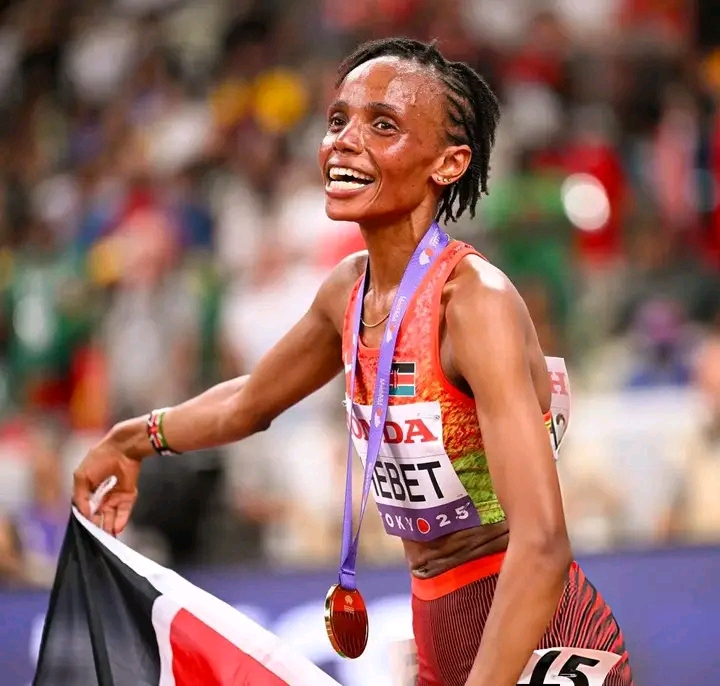
For decades, Kenya has been known internationally because of its runners. Athletes such as Eliud Kipchoge and Faith Kipyegon have helped strengthen the country's reputation as an athletics powerhouse.
Now the world's biggest athletics stars will have an opportunity to come to Kenya.
The significance is therefore not simply that Nairobi will host another sporting competition. It is that Africa will finally host the senior World Athletics Championships for the first time.
The event could become a defining moment for Kenyan sport, tourism and international visibility.
If preparations are handled successfully, Nairobi 2029 could demonstrate that Africa can host global athletics at the highest level. It could also inspire millions of young Africans to see athletics not only as a sport but as a pathway to education, employment, international recognition and personal development.

You Might Also Like
-
The KUPPET protest and calls for justice in Kericho have brought renewed attention to the death of teacher Martina Chepkemoi Ruto. Her disappearance, followed by the recovery of her body near the Kimugu River and reports of multiple chest stab wounds, has left her family, colleagues and the communit
-
Former Migori Governor Okoth Obado is back in the Milimani High Court on September 16, 2026, for sentencing following his conviction over the 2018 murder of Rongo University student Sharon Otieno. Obado, alongside his former personal assistant Michael Juma Oyamo and former Migori County official Cas
-
The announcement that Nairobi will host the 2029 World Athletics Championships has been met with considerable excitement in Eldoret, particularly among upcoming athletes, coaches and residents who identify strongly with Kenya's athletics tradition. Young athletes see the championships as a potentia
-
 President Ruto's reaction to Nairobi winning the 2029 World Athletics Championships has centred on national pride, Africa's historic opportunity and recognition of Kenya's athletics heritage. He has described the victory as belonging to Kenya, Africa and generations of athletes who have made the cou
 -
The 15th Mara Day celebrations concluded on Tuesday, September 15, 2026, at Bomet Stadium, bringing together Kenyan and Tanzanian leaders, environmental experts, conservation organisations and local communities to discuss the protection of the Mara River ecosystem. Key leaders included EAC Affairs a
-
The story of Mercy Kanini of Juja, Kiambu County, is both extraordinary and heartbreaking. She made headlines after delivering five babies through normal delivery at Thika Level Five Hospital, an event described as extremely rare in Kenya. The babies were subsequently transferred to Kenyatta Nationa