Narok County Marks World Polio Day, Calls for an End to the Preventable Disease
Narok County's participation in World Polio Day highlights the importance of sustained community action in the fight against a disease that can cause lifelong disability and death. The End Polio Walk in Narok Town forms part of broader efforts to raise awareness and encourage families to protect children through vaccination. Kenya's progress against wild poliovirus demonstrates what long-term cooperation and immunisation can achieve. However, the threat posed by variant polioviruses and gaps in vaccine coverage means the work is not finished. Parents, healthcare professionals, government authorities and community organisations must continue working together to ensure that every child receives the recommended vaccine doses.
Narok County has joined other parts of Kenya and the international community in marking World Polio Day, renewing calls for stronger vaccination programmes, increased public awareness and collective action to eliminate polio. The observance highlights the importance of protecting children from a preventable disease that can cause permanent paralysis, disability and, in severe cases, death.
World Polio Day is observed every year on October 24 to recognise the progress made in the global fight against polio and to encourage governments, healthcare workers, parents and community leaders to intensify efforts towards its complete eradication. In 2026, the World Health Organization (WHO) renewed its call for every child to be protected through vaccination, warning that gaps in immunisation could undermine decades of progress. The 2026 World Polio Day campaign comes at a time when health organisations are urging countries to sustain vaccination efforts despite the substantial decline in polio cases over the past several decades.
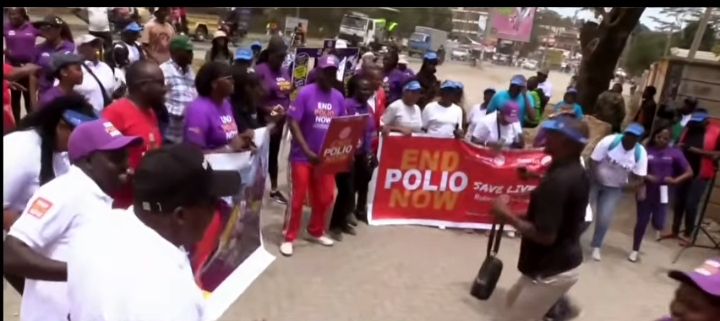
In Narok Town, an End Polio Walk was among the activities announced as part of Kenya's World Polio Day awareness efforts. The initiative was intended to bring community members together to promote childhood immunisation and encourage public participation in the campaign to eliminate the disease.
The campaign demonstrates the importance of taking the message about polio prevention beyond hospitals and health facilities. Community activities can help reach parents, caregivers, young people and other residents who may not regularly interact with healthcare professionals.Understanding polio and its dangers
Polio, medically known as poliomyelitis, is a highly infectious viral disease that primarily affects children under five years of age. The virus can spread from one person to another, commonly through the faecal-oral route, particularly where sanitation and hygiene are inadequate.
In some cases, an infected person may show no obvious symptoms but can still contribute to the spread of the virus. Other infections may cause fever, tiredness, headache, vomiting or muscle pain.
The most serious complication occurs when the virus attacks the nervous system and causes paralysis. Such paralysis can be permanent, leaving affected individuals with lifelong mobility challenges. In severe cases, the disease can affect muscles involved in breathing and become fatal.One of the central messages of World Polio Day is that every eligible child should receive all recommended doses of the polio vaccine.
Vaccination trains the immune system to recognise and fight the virus. When children receive the recommended doses, their protection against polio increases significantly, helping to reduce the risk of infection and transmission.
Parents and caregivers in Narok County are encouraged to check their children's immunisation records and consult qualified healthcare workers if they are uncertain whether the children have received all the required doses.
Children who have missed vaccinations should be taken to an appropriate health facility for guidance on completing their immunisation schedules.These circumstances make public awareness and accessible immunisation services important components of the county's public-health efforts.
Community mobilisation can help identify children who have missed vaccinations and encourage families to seek assistance from healthcare providers. Religious leaders, teachers, community health promoters and local administrators can also help distribute accurate information.
For families living far from health facilities, outreach services and mobile vaccination activities can make it easier to access preventive care.
Health authorities and partners should ensure that public-awareness campaigns reach all communities, including those facing economic challenges or limited access to information.Healthcare workers are at the centre of efforts to prevent polio. Their responsibilities include administering vaccines, educating parents, maintaining immunisation records and reporting suspected cases.
They also help communities distinguish reliable health information from rumours that can discourage parents from vaccinating their children.
Community health promoters can complement this work by visiting households, identifying children who may have missed routine immunisation and directing families to nearby health facilities.
Religious and community leaders can encourage parents to seek professional medical advice and support public-health initiatives. Their involvement can be especially valuable where misinformation or cultural concerns influence decisions about childhood vaccination.Vaccine hesitancy remains a challenge in efforts to eliminate polio. Some parents may have concerns about vaccine safety, while others may be influenced by misinformation circulating through social media or community networks.
Addressing these concerns requires respectful communication rather than blame.
Healthcare workers should explain how polio vaccines protect children, why several doses may be needed and where parents can obtain reliable information. They should also respond to questions openly and direct families to qualified medical professionals.
Public-awareness campaigns should emphasise that vaccination protects not only individual children but also the wider community by reducing opportunities for the virus to spread.
When vaccination coverage is high, the virus has fewer opportunities to circulate. Conversely, gaps in immunisation can leave groups of children vulnerable and undermine progress made over many years.Health authorities monitor suspected cases of acute flaccid paralysis, a sudden onset of weakness or loss of movement in the limbs that requires prompt investigation in children.
Laboratory testing helps determine whether poliovirus is responsible and identifies the type of virus involved. Environmental surveillance, including testing wastewater samples where suitable systems are available, can also help detect poliovirus circulation before paralytic cases are identified.
These measures enable health authorities to assess risks and respond quickly.
The WHO has highlighted the importance of maintaining surveillance networks, laboratory capacity, cross-border coordination and rapid vaccination responses as part of its regional eradication strategy. Funding and access to healthcare services
Achieving a polio-free world requires reliable funding for vaccines, healthcare personnel, transport, cold-chain equipment and community outreach.
Vaccines must be stored and handled under appropriate conditions to maintain their quality. Health facilities also need trained personnel and dependable supplies to provide immunisation services consistently.
Funding constraints can make it harder to reach children in remote areas or sustain additional vaccination campaigns when outbreaks occur.
The WHO's 2026 World Polio Day message warned that financial pressures are forcing some campaigns to prioritise the highest-risk communities, leaving other vulnerable populations in need of stronger protection. A call to protect every child
The marking of World Polio Day in Narok forms part of a wider appeal for communities to unite around a common goal: ensuring that children grow up without the threat of preventable polio-related disability.
The campaign encourages parents to verify their children's vaccination status, community leaders to support public-health education and healthcare workers to continue reaching families who may otherwise be left behind.
It also reminds government authorities that the fight against polio requires long-term planning, adequate funding and accountability.
Although the world has made extraordinary progress, the remaining challenges must not be underestimated. A single immunity gap can allow poliovirus to circulate, putting unprotected children at risk.

You Might Also Like
-
The reported inspection by Deputy President Kithure Kindiki of the Njoro–Beeston–Lawina–Elburgon road on October 27, 2026, highlights an important infrastructure project in Nakuru County. Official records confirm that the wider road programme covers approximately 40 kilometres, has a listed c
-
Kenya’s Ministry of Health has confirmed the release of 20 Ebola contacts from quarantine after completing the required monitoring period without developing symptoms. However, the ministry warns that the outbreak is not yet contained, with 98 other contacts still under observation and expected to
-
Kenya's latest published forecast available for this report points to rainfall across numerous counties, including areas in the Coast, North Eastern, Eastern, Central, Western, Nyanza and Rift Valley regions. Particular attention is warranted in Mandera, Wajir and parts of the coastal region, where
-
The commencement of post-mortem examinations for the 24 victims of the Mtito Andei road accident is a crucial step in the process of identifying the deceased, documenting the causes of death and facilitating burial arrangements. The tragedy occurred at Kanga along the Nairobi–Mombasa Highway on Oc
-
The discharge of 20 people from Ebola quarantine on 26 October 2026 marks an important step in Kenya’s efforts to contain the Bundibugyo virus disease outbreak. The individuals completed the mandatory 21-day monitoring period without symptoms and were released after health assessments. However, 9
-
KeNHA Chairperson Winfrida Ngumi has praised President William Ruto for launching the Kandwia–Kyuso and Kyuso–Tseikuru B52 road projects.The projects are expected to improve connectivity and ease transportation across the region.Better roads could boost trade by making it easier for farmers and