



Nepal Flood Disaster: Death Toll Rises to 781 as 2,502 Remain Missing
The death toll from devastating floods and mudslides in Nepal has risen to at least 781, while 2,502 people remain missing, as rescue teams continue a desperate search for survivors across some of the worst-hit areas of the Himalayan nation.
Nepal Flood Disaster: Death Toll Rises to 781 as 2,502 Remain Missing
The death toll from devastating floods and mudslides in Nepal has risen to at least 781, while 2,502 people remain missing, as rescue teams continue a desperate search for survivors across some of the worst-hit areas of the Himalayan nation.
The disaster struck on Wednesday, August 26, following catastrophic flooding along the Bhote Koshi River near Nepal's border with China. The floods swept through valleys, villages, roads and major infrastructure, leaving behind widespread destruction and a growing humanitarian crisis. Nepal's National Disaster Risk Reduction and Management Authority said 781 bodies had been recovered from flood- and mudslide-hit areas by Sunday evening.
The scale of the disaster has continued to grow as emergency teams gain access to areas that were initially cut off by landslides, destroyed roads and damaged bridges. Authorities are still working to establish the full extent of the destruction, with thousands of people unaccounted for and hundreds of families waiting for information about relatives.
The disaster has also affected people from outside Nepal. According to authorities, hundreds of foreign nationals who were in the country for tourism, work, pilgrimage and other activities remain unaccounted for. Nepal's missing-person list included hundreds of foreigners, while many hydropower workers were also caught in the path of the floodwaters.
Floods swept through communities
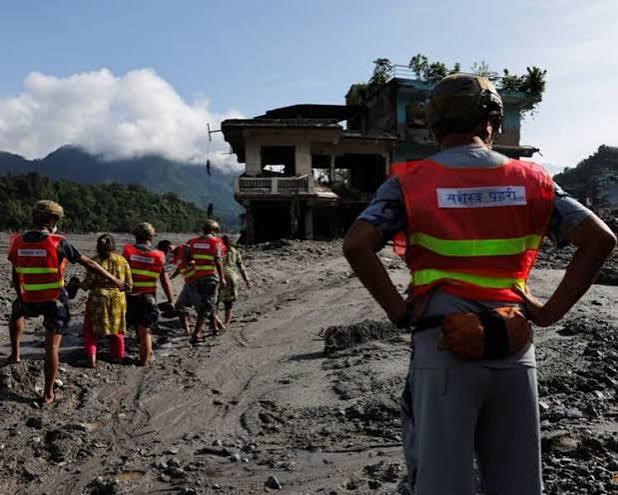
The floods caused extensive destruction along river valleys in central and northern Nepal. Torrents of muddy water and debris swept through settlements, damaging or destroying houses, bridges, roads and power facilities.
The Bhotekoshi and Trishuli river systems became major channels for the floodwaters, carrying huge amounts of mud, rocks and debris downstream. Several communities were left isolated after roads and bridges were washed away, making it difficult for emergency teams to reach residents in need of assistance.
Rasuwa district has emerged as one of the hardest-hit areas, with hundreds of people still reported missing. Other severely affected districts include Nuwakot, Dhading, Gorkha, Nawalparasi East, Nawalparasi West, Tanahun and Chitwan.
In some areas, residents have returned to what remains of their homes to search for belongings. Buildings have been buried in mud and debris, while roads and surrounding farmland have been severely damaged.
Rescue operations continue
Nepal has mobilised thousands of security personnel and emergency workers to support search, rescue and relief operations. Rescue teams have been working under difficult conditions, with heavy rain, unstable terrain, blocked roads and the possibility of additional flooding complicating their efforts.
Thousands of people have already been rescued from affected areas. Nepal's disaster authority reported that more than 8,700 people had been rescued as the search continued, although the number of missing remained extremely high.
One of the biggest challenges facing rescuers is the number of people believed to be trapped at hydropower projects along the affected rivers. According to disaster authorities, 933 hydropower workers were among those reported missing.
Rescue teams have been particularly focused on hydropower tunnels where workers may have become trapped after floodwaters and debris blocked entrances. The difficult terrain and continuing threat of rising river levels have slowed operations, but authorities have continued efforts to reach the affected workers.
International citizens among the missing
The disaster has also triggered concern among governments around the world because many foreign nationals were in the affected region.
Nepal's authorities reported that hundreds of foreigners were still unaccounted for, including people who had travelled to the region for pilgrimage, tourism and employment. The Nepal Tourism Board reported that hundreds of foreign nationals remained out of communication, although some had been rescued or had made contact with their families.
Across the border in Tibet, Chinese authorities reported 16 deaths and 546 people missing following the same disaster. When the figures from Nepal and China are combined, the number of confirmed deaths reaches nearly 800, while more than 3,000 people remain unaccounted for.
India has also reported the recovery of bodies believed to have been carried downstream by rivers flowing from Nepal. Those bodies have not been included in Nepal's official death toll because authorities are still working to establish their identities and circumstances of death.
Fresh flood warnings
Even as rescue operations continue, authorities remain concerned about the possibility of additional flooding.
Rising river levels and continuing rainfall have forced emergency teams and residents in some locations to remain cautious. Officials have warned communities living near rivers to move to safer and higher ground where necessary.
The possibility of additional flooding is particularly concerning because the original disaster created unstable conditions in several parts of the region. Landslides have blocked waterways and created temporary pools of water, raising fears that sudden releases could trigger new flooding downstream.
Emergency authorities have therefore continued monitoring rivers and vulnerable areas while urging residents to follow evacuation and safety instructions.
Questions over climate change
The disaster has also renewed concerns about the impact of climate change on the Himalayas.
Scientists and environmental experts have increasingly warned that rising temperatures are contributing to changes in glaciers and mountain environments. The latest disaster has been linked to a glacial collapse and massive movement of rock, ice and debris, although investigations into the precise chain of events are continuing.
The Himalayan region is particularly vulnerable because of its steep terrain, rapidly changing glaciers and communities located along narrow river valleys.
Nepal has repeatedly faced floods, landslides and other natural disasters, but the latest tragedy has highlighted the need for stronger early-warning systems and improved monitoring of glaciers and rivers.
Nepal's Foreign Minister Shisir Khanal has also highlighted the country's vulnerability to climate-related disasters, arguing that Nepal contributes relatively little to global greenhouse gas emissions while facing severe consequences from a changing climate.
Humanitarian crisis grows
Beyond the death toll, the floods have created a major humanitarian emergency.
Thousands of people have been displaced or affected by the destruction of their homes and livelihoods. Electricity supplies have been disrupted in some areas, while roads and bridges needed to transport food, medicine and other emergency supplies have been damaged.
Schools have also suffered significant damage. At least 69 schools in affected districts were reported destroyed or damaged, putting the education of nearly 19,000 children at risk. The government temporarily closed educational institutions in affected areas because of continued safety concerns.
In one remarkable incident, a school headteacher in Nuwakot reportedly evacuated hundreds of students shortly before floodwaters overwhelmed the area, helping prevent what could have been an even greater loss of life.
Meanwhile, authorities have begun dealing with the difficult task of identifying recovered bodies. In some areas, the number of unidentified victims has overwhelmed local mortuary facilities, forcing authorities to take additional measures while collecting information and DNA samples to assist families searching for missing relatives.
Search for survivors continues
For families across Nepal, the focus remains on finding those who are still missing.
Rescue teams continue to search damaged settlements, riverbanks, hydropower facilities and areas buried beneath mud and debris. Every additional hour brings new challenges, but authorities say efforts will continue until as many missing people as possible are accounted for.
The disaster has left Nepal facing a long recovery process. Rebuilding homes, roads, bridges, schools and power infrastructure will require significant resources, while thousands of affected families will need assistance to restore their livelihoods.
As rescue operations enter another critical phase, authorities are also warning residents not to return prematurely to dangerous areas. With rivers still rising in some locations and unstable slopes threatening additional landslides, the immediate priority remains saving lives and preventing further casualties.
The Nepal floods have become one of the country's most devastating recent disasters, with hundreds dead, thousands missing and entire communities struggling to recover. With rescue operations still underway, the final human and economic cost of the tragedy is yet to be determined.

You Might Also Like
-
Kenya’s new General Duty police uniform has sparked public debate following its unveiling on August 28, 2026, with the light-blue shirt and navy-blue trousers replacing the previous Persian-blue design. The controversy centres on reports of a KSh2.8 billion tender, with early reports linking the d
-
Winnie Byanyima Appeals for Besigye to Receive Specialised Treatment in Geneva
-
Rosemary Chemutai Koech was buried at her parents’ home in Chepseon, Kipkelion, on Friday evening, August 28, 2026, following arrangements by her family and the Kipkendek clan. Her recorded next of kin were her sister, Judy Koech-Oyamo, and son, Charles Migwe Kimwatu. The clan explained that the n
-
Mudavadi Represents President Ruto at 21st Extraordinary African Union Summit in Angola
-
ELDORET, Kenya — Police have launched a manhunt for a police officer suspected of fatally shooting a 45-year-old woman at a GSU mess compound in Eldoret following what investigators believe may have been a dispute linked to a suspected love triangle
-
Dr Joyce Laboso Hospital Finally Ready as Bomet Prepares for Landmark Healthcare Opening Bomet County is preparing to welcome the Dr Joyce Laboso Mother and Child Hospital, a Sh300 million, 300-bed Level Five facility in Longisa. The hospital has been completed and is awaiting official commissionin