ODM has reportedly endorsed President William Ruto as its preferred presidential candidate for the 2027 General Election
ODM has reportedly endorsed President William Ruto as its preferred presidential candidate for the 2027 General Election. The party has also reached an agreement with UDA to establish a joint campaign committee and operate a shared treasury account. However, negotiations over the sharing of government positions, including the Deputy President's seat, remain unresolved. Junet Mohamed says the next phase of discussions will focus on elective positions, government appointments and the structure of the joint campaign. The proposed coalition is expected to reshape political alignments ahead of the 2027 polls. Both parties are working towards a formal agreement to guide their partnership. The negotiations are also expected to address how the two parties will distribute political responsibilities. Attention now turns to whether the outstanding differences can be resolved before the coalition deal is finalised.
The Orange Democratic Movement (ODM) has reportedly settled on President William Ruto as its preferred presidential candidate for the 2027 General Election, marking a significant development in the ongoing political discussions between the party and the ruling United Democratic Alliance (UDA).
The two political formations have also agreed to establish a joint campaign committee and operate a shared treasury account as they work towards strengthening their cooperation ahead of the next General Election. The arrangements are expected to provide a coordinated structure through which the parties can organise campaigns, mobilise supporters and manage resources.
However, despite the progress made in discussions surrounding the presidential candidature and campaign arrangements, the two sides are yet to reach an agreement on the sharing of government positions. Among the outstanding issues is the position of Deputy President, which remains a key subject in the negotiations as both parties work towards a formal coalition agreement.
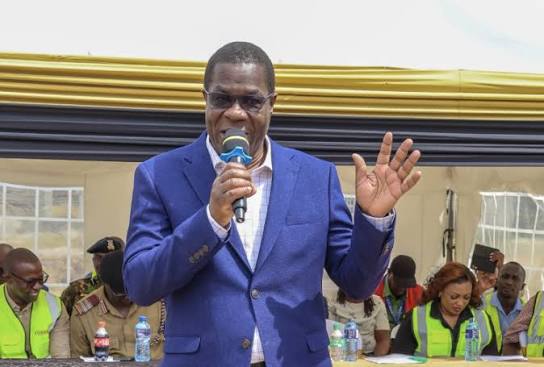
National Assembly Minority Leader and ODM Director of Elections Junet Mohamed said the negotiations would now shift towards other important areas of cooperation, including the distribution of positions below the presidency, sharing of elective seats and the establishment of a joint campaign structure.
The discussions come at a time when political parties are beginning to position themselves ahead of the 2027 General Election, with possible alliances and coalition arrangements attracting increasing attention across the country's political landscape.
The reported agreement on President Ruto's candidature represents one of the major issues addressed in the ongoing engagement between ODM and UDA. However, the outstanding questions surrounding government appointments and political representation demonstrate that negotiations between the two sides are not yet complete.
The proposed joint campaign committee is expected to serve as the central coordinating structure for activities undertaken by the two political formations. Through such an arrangement, the parties would be able to coordinate campaign planning, communication, mobilisation and other activities intended to support their shared political agenda.
A common treasury account would also provide a financial coordination mechanism for the joint campaign. Such an arrangement would require the participating parties to agree on how contributions are managed, how campaign expenditure is authorised and how financial accountability is maintained.
The financial structure is particularly important because national campaigns require substantial resources for logistics, communication, grassroots mobilisation and coordination across different parts of the country.
For ODM and UDA, establishing a common campaign framework could help reduce duplication of activities and provide a more organised approach to their political engagement. However, the effectiveness of such an arrangement would depend on the terms agreed upon by the parties and the level of cooperation among their respective leadership teams.
The negotiations are also expected to address how the two parties will share elective positions across the country. This includes seats in the National Assembly, Senate, county governorships and county assemblies. Both parties have political interests in different regions, making the distribution of these positions an important part of the discussions.
According to Junet, the two parties intend to avoid competing against each other in areas where cooperation could strengthen their combined political position. Instead of adopting a strict zoning arrangement, the proposed approach is based on complementarity, whereby each party can rely on the other's political influence in regions where it has established support.
Under this approach, ODM and UDA would assess their respective political strengths and identify opportunities to work together in securing elective positions. The arrangement is expected to reduce competition between candidates from the two parties and improve coordination during the campaign period.
The joint campaign structure is also expected to bring together the existing grassroots networks of both political formations. These structures would be used to mobilise supporters, coordinate political activities and communicate the coalition's agenda to voters across the country.
The parties are also working towards developing a common political manifesto that would outline their shared priorities and commitments to Kenyans ahead of the 2027 elections. A joint manifesto committee is expected to develop the document, which would provide the policy foundation for the proposed coalition.
The manifesto process is intended to bring together the policy priorities of both parties and establish areas where they can agree on a common development agenda. It is also expected to address outstanding challenges and identify areas requiring additional attention in the next administration.
The proposed coalition is expected to retain the individual identities of ODM and UDA rather than dissolve the two political parties into one organisation. This means each party would continue operating under its existing structures while participating in a formal political partnership.
For ODM, the negotiations are particularly important because the party wants its participation in the proposed coalition to be reflected in a written agreement. Its leadership has maintained that political cooperation should be guided by clearly documented commitments rather than verbal assurances.
The party is seeking guarantees on its representation in the next government, including the positions it currently occupies and any additional responsibilities that may be agreed upon during negotiations.
Among the government positions attracting attention is the Deputy President's office. Although ODM has indicated interest in the position as part of its proposed power-sharing arrangement, UDA has maintained that Deputy President Kithure Kindiki remains its preferred running mate for the 2027 presidential election.
This difference in position presents one of the major outstanding questions that the negotiating teams must address before the coalition agreement is finalised.
The Deputy President's position is politically significant because it forms part of the country's top executive leadership. Any agreement concerning the position is therefore likely to attract considerable attention from political leaders, party supporters and other stakeholders.
ODM leaders have expressed interest in securing a substantial share of government responsibilities in exchange for supporting President Ruto's re-election bid. However, the exact formula for distributing positions has not been finalised.

You Might Also Like
-
Energy and Petroleum Cabinet Secretary Opiyo Wandayi has urged ODM leaders to abandon hardline demands and support President William Ruto’s re-election bid unconditionally ahead of the 2027 General Election. His remarks come amid growing debate within ODM over a possible pre-election agreement wit
-
The eight East African Community Partner States have adopted a regional Artificial Intelligence Strategy and approved a new AI learning module for universities. The initiative seeks to integrate artificial intelligence education into both technical and non-technical degree programmes. Students will
-
The multi-agency rescue operation at the collapsed 18-storey building in Nairobi’s Eastleigh is expected to conclude today after approximately 90% of the rubble was cleared. Rescue teams are now concentrating on the rear section and basement, where missing persons are believed to be trapped. Six p
-
Members of the National Assembly have rejected Senate amendments on the tallying and electronic transmission of presidential election results ahead of the 2027 General Election. The proposed changes, negotiated by teams representing President William Ruto and the late Raila Odinga, sought to introdu
-
Kenya has challenged Saudi Arabia’s decision to suspend travel by its citizens to Kenya and halt visa issuance to Kenyan travellers amid the Ebola outbreak. Health Cabinet Secretary Aden Duale has termed the restrictions excessive, arguing that they are not supported by the prevailing epidemiologi
-
Detectives have arrested two additional suspects in connection with the murder of 65-year-old Evelyne Mukiri Mbaabu, who was killed at her home in Kithoka Village, Meru County, on August 7, 2026. The newly arrested suspects, identified as the deceased's brother and sister-in-law, are alleged to have