



Opiyo Wandayi Breaks Silence on Lamu Oil Refinery, Tells Critics: “Ask Me, Not Ruto”
Opiyo Wandayi's remarks on Tuesday, October 6, have added a new dimension to the debate surrounding the Lamu oil refinery. The Energy CS effectively told critics that questions about the project should be directed to him because the refinery falls under his ministry's mandate. His defence comes as the government moves forward with the Dangote East Africa Petroleum Refinery, a project expected to process up to 700,000 barrels of crude oil daily and potentially transform Kenya's position in the regional petroleum market. At the same time, demands for disclosure of the government's agreements with Dangote, land disputes and questions about crude supply show that the project will continue to attract public scrutiny. Wandayi's challenge now puts the Energy and Petroleum Ministry directly in the spotlight to provide answers and demonstrate how the refinery will serve Kenya's long-term energy and economic interests.
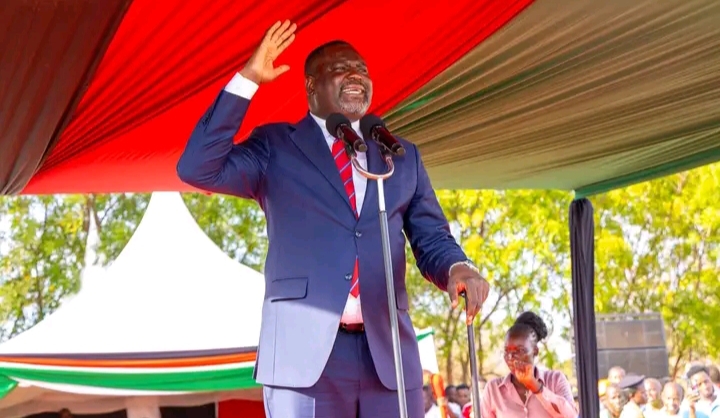
Energy and Petroleum Cabinet Secretary Opiyo Wandayi has strongly defended the government’s proposed Dangote East Africa Petroleum Refinery in Lamu, telling critics who have questions about the multibillion-shilling project to direct their concerns to him rather than President William Ruto.
Wandayi made the remarks on Tuesday, October 6, 2026, while speaking to the media in Kisumu. His comments came amid growing scrutiny of the Lamu refinery, particularly over agreements between the Kenyan government and Dangote, the cost and ownership structure of the project, and questions being raised by political leaders and other critics.
The Cabinet Secretary made it clear that the Lamu refinery falls directly under his Energy and Petroleum docket. He therefore challenged those seeking explanations about the project to approach his ministry instead of directing their questions to the President.
Wandayi's intervention comes just days after President Ruto and Nigerian businessman Aliko Dangote presided over the groundbreaking of the proposed refinery in Lamu. The project, estimated at more than Sh2 trillion, is expected to become one of the largest industrial investments in Kenya and a major petroleum project for the wider East African region.
Wandayi tells critics to approach him
One of the strongest messages from Wandayi was that he should be the person answering questions concerning the refinery because the project is under his ministry.
The CS said that he is the Cabinet Secretary responsible for Energy and Petroleum and that the East African oil refinery in Lamu therefore falls squarely within his responsibilities. He invited anyone with questions about the project, including questions concerning agreements, to direct them to him.
His remarks were also directed at people who have been questioning President Ruto over decisions connected to the refinery.
Wandayi argued that critics should not use the President as a shield when asking questions about matters that have been delegated to the Energy and Petroleum Ministry. He said President Ruto had delegated the functions of the ministry to him as Cabinet Secretary.
The statement effectively placed Wandayi at the centre of the government's defence of the Lamu refinery project at a time when questions over transparency and the terms of the investment are attracting considerable public attention.
Questions over the refinery agreement
The latest controversy has largely centred on calls for the government to make public its agreement with Dangote concerning the proposed refinery.
People's Party of Kenya leader Ndindi Nyoro has demanded that President Ruto disclose the agreement with Dangote, arguing that Kenyans have a right to scrutinise the terms of a major project involving national interests. Thirdway Alliance leader Ekuru Aukot also formally sought disclosure of the agreement, including documents and information concerning the project's ownership structure and related arrangements.
It is against this background that Wandayi challenged critics to direct their questions to his ministry.
His position appears to be that the government should be given an opportunity to explain the project through the ministry responsible for energy and petroleum rather than allowing questions to be framed as though President Ruto alone is responsible for every aspect of the project.
Wandayi also criticised some of the people raising questions, suggesting that certain critics, including former government officials, were asking questions to which they already knew the answers.
What Wandayi has said about the refinery
Wandayi has previously presented the Lamu refinery as a major opportunity for Kenya's energy security.
During the groundbreaking period, he said construction would proceed after the launch and described the project as a potential game changer for Kenya and East Africa. He said the refinery could contribute to a more stable fuel supply and reduce some of the costs associated with transporting petroleum products from overseas markets.
The refinery is planned to have a processing capacity of approximately 700,000 barrels of crude oil per day. At that capacity, it would rank among Africa's largest refining projects. The project is expected to serve Kenya as well as markets across the East African region.
Wandayi has also acknowledged that Kenya's own crude production will not be sufficient to supply such a large refinery.
Kenya's South Lokichar oil production is expected to increase in the coming years, but even projected domestic output would represent only a small fraction of the refinery's potential capacity. Wandayi has therefore explained that the facility is designed to process crude from different regions rather than relying exclusively on Kenyan oil.
This means that Lamu's location on the Indian Ocean is particularly important. The refinery could receive crude brought by sea from international markets and convert it into petroleum products for the Kenyan and regional markets.
Fuel prices and energy security
Another major argument surrounding the refinery is whether it will eventually help reduce fuel prices.
Wandayi has previously said the refinery could improve fuel availability and reduce transportation costs. Currently, Kenya imports large quantities of refined petroleum products, meaning that international freight costs, shipping disruptions and global oil prices can influence what motorists and businesses pay locally.
The government hopes that producing petroleum products closer to the markets where they will be consumed will reduce some of those costs.
However, the refinery will not necessarily make Kenya completely immune to international oil-price fluctuations. Crude oil remains an internationally traded commodity, meaning global prices will continue to influence the cost of petroleum products.
The proposed facility could nevertheless give Kenya greater control over the supply chain and provide an additional source of refined petroleum products for the region.
The refinery's wider regional importance
The Lamu project is being promoted not simply as a Kenyan refinery but as an East African energy project.
The proposed facility is expected to serve markets beyond Kenya, potentially strengthening Lamu's position as an important regional petroleum and logistics hub. The groundbreaking ceremony was attended by several African leaders, demonstrating the wider regional interest in the project.
The refinery is also expected to benefit from Lamu's deep-water port infrastructure, allowing crude and other materials to be transported by sea.
For the government, the project represents an opportunity to attract investment, create employment and stimulate additional industrial development around Lamu.
Land and community concerns
Despite the government's strong support for the project, the refinery has also faced concerns from some residents over land ownership and compensation.
A court case has been filed by residents who argue that they have longstanding interests in some of the land associated with the project. The dispute involves claims by residents who say their families have occupied or used portions of the land for many years.
The government, however, has maintained that the main refinery site is largely public land.
Lands Cabinet Secretary Alice Wahome recently said genuine landowners and squatters with legitimate claims would be identified and addressed while the government continued supporting the refinery project.
The land question remains important because the government wants the refinery to proceed without delays, while affected residents want their rights and compensation concerns addressed.
Wandayi's message to Kenyans
Wandayi's latest statement is therefore significant because it places responsibility for explaining the refinery directly on the Energy and Petroleum Ministry.
Rather than allowing the debate to remain focused on President Ruto, Wandayi is asking critics to engage him and his ministry over the project's agreements, implementation and other technical questions.
The CS's comments also show that the government remains firmly committed to the Lamu refinery despite the political debate, legal challenges and calls for greater disclosure.
The proposed refinery is now one of Kenya's most closely watched infrastructure projects. Its success will depend not only on construction but also on securing reliable crude supplies, managing costs, addressing land and community concerns, attracting regional investment and ensuring transparency in the agreements governing the project.

You Might Also Like
-
Former President Uhuru Kenyatta steps down as Azimio council chair, with James Orengo and Rigathi Gachagua emerging in discussions over the coalition’s future leadership.
-
Kenya's Ebola response has entered a critical surveillance and contact-tracing phase following confirmation of the country's first imported Bundibugyo Ebola case. PS Mary Muthoni says 57 contacts have been identified, with 10 already placed under quarantine, while health officers across the country
-
Deputy President Kithure Kindiki's appearance at Jamhuri Park on October 7 placed agriculture and food security at the centre of the national economic transformation conversation. He outlined government figures on farmer registration, fertiliser prices, livestock vaccination, milk production, meat e
-
A passenger travelling aboard a Kenya Airways flight from Nairobi to Lagos, Nigeria, has died after suffering a medical emergency shortly before the aircraft landed at Murtala Muhammed International Airport. The passenger reportedly became unresponsive about 20 minutes before landing, prompting cabi
-
NCIC's latest actions against CS Geoffrey Ruku and its handling of nominated MP Joseph Wainaina Iraya underline the commission's growing focus on political language and national cohesion ahead of the 2027 elections. Ruku has been directed to stop repeating remarks that NCIC found divisive, respond w
-
President William Ruto says Raila Odinga’s mausoleum at Kang’o Ka Jaramogi honours his contribution to Kenya’s democratic journey and will help preserve his legacy for future generations.