



President Ruto’s Visit to Chebunyo, Bomet County: Hospital, Market and Development Agenda
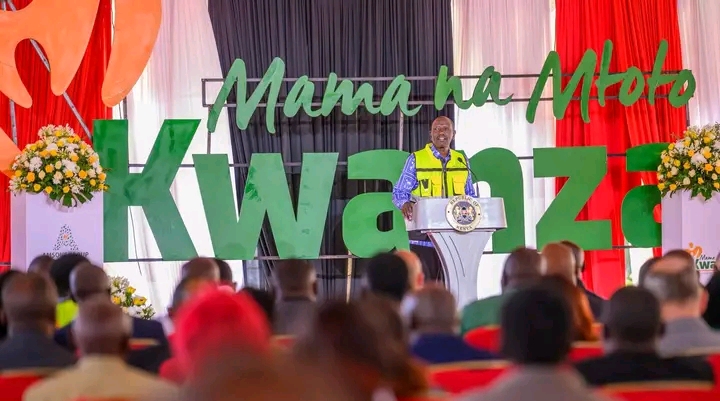
President William Ruto’s visit to Chebunyo in Bomet County on Saturday, September 12, 2026, marked an important moment in his four-day South Rift development tour. The laying of the foundation stone for the Chebunyo Mother and Child Hospital was the major highlight of the visit. The planned Level 4 facility, with a capacity of approximately 200 to 250 beds, is expected to provide specialised maternal and newborn healthcare services to residents of the area. The project is part of the Mama na Mtoto Kwanza Initiative, supported by a $35 million grant from Amsons Group for 10 mother and baby hospitals across Kenya. The President also inspected the ongoing construction of the Chebunyo Modern Market, demonstrating the administration’s parallel focus on improving commercial infrastructure and supporting local economic activity. For Chebunyo and the wider Chepalungu area, the significance of the visit will ultimately be measured by whether the projects are completed on schedule and whether they provide the promised services. The hospital, in particular, could become a major healthcare centre for mothers and children if it is completed, equipped and staffed as planned. The visit also demonstrated Ruto’s continued focus on taking development projects directly to communities while using presidential tours to communicate his administration’s wider economic and social agenda. As the South Rift tour concluded, Chebunyo stood out as one of the locations where healthcare, investment and local economic development came together in the President’s programme.
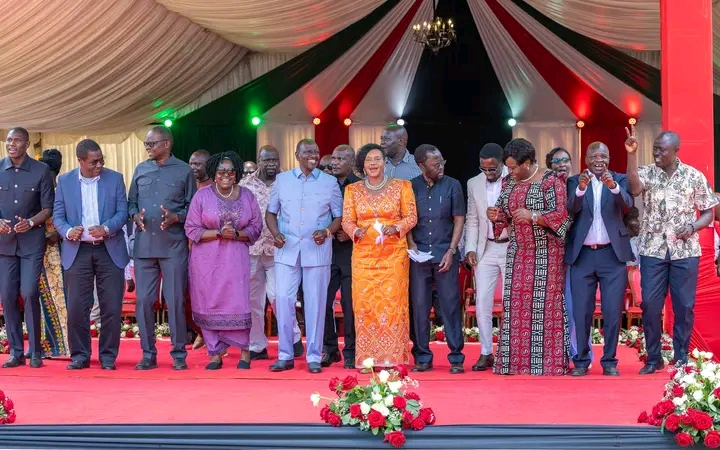
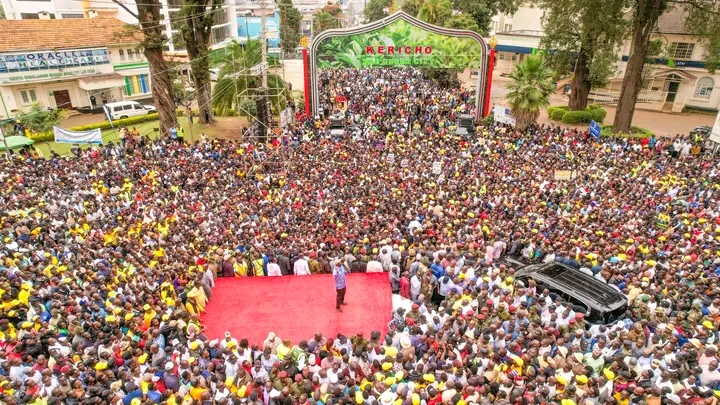
President William Ruto visited Chebunyo in Bomet County on Saturday, September 12, 2026, as he concluded a four-day development tour of Bomet and Kericho counties. The visit brought national attention to Chebunyo, where the President presided over the laying of the foundation stone for the Chebunyo Mother and Child Hospital and inspected the ongoing construction of the Chebunyo Modern Market. The visit formed part of the government’s broader development agenda focusing on healthcare, markets, infrastructure, investment and improvement of services for residents in the South Rift.
The Chebunyo engagement was particularly significant because it combined development projects with direct interaction between the President and residents. Ruto used the occasion to explain some of his administration’s priorities while highlighting the need to improve access to specialised healthcare, especially services targeting mothers and newborn children.
Ruto lays foundation stone for Chebunyo Mother and Child Hospital
One of the most important activities during President Ruto’s visit was the laying of the foundation stone for the Chebunyo Amsons Mother and Baby Hospital.
The planned facility is expected to become an important healthcare institution serving residents of Chepalungu and neighbouring areas. According to reports from the President’s visit, the facility is planned as a Level 4 hospital with a capacity of between 200 and 250 beds. It is expected to provide specialised maternal and newborn services, reducing the distance that women and families have to travel when seeking critical healthcare.
The hospital is expected to provide services covering the entire maternal healthcare journey. These include antenatal care, labour and delivery services, maternity care, postnatal services and newborn care. The facility is also planned to have obstetric and neonatal intensive-care services, maternity and neonatal theatres, an isolation unit, a mothers’ hostel, a pharmacy and health-information services.
During the ceremony, President Ruto stressed the importance of ensuring that women do not lose their lives while giving birth because essential healthcare services are unavailable. His message placed maternal and newborn healthcare at the centre of the Chebunyo project.
The President also linked the project to the wider national effort to improve maternal and child health. He argued that despite improvements in Kenya’s healthcare system, gaps remain in access to maternity and emergency obstetric services.
Investment by Amsons Group
The Chebunyo hospital is part of the Mama na Mtoto Kwanza Initiative, under which Amsons Group is investing $35 million, approximately KSh4.5 billion, as a grant to establish 10 mother and baby hospitals across Kenya. The Chebunyo facility is one of the projects being developed under this initiative.
President Ruto said the Chebunyo facility is expected to be completed within six months and commissioned by March 2027. He also called for adherence to the construction timetable and proper use of resources so that the people of Bomet can benefit from the facility as planned.
The involvement of private-sector investment in the project reflects the administration’s continued emphasis on partnerships between government and businesses to expand social services. Rather than relying entirely on government funding, such partnerships are intended to mobilise additional resources for infrastructure and public services.
Maternal healthcare remains a major issue
The President used the Chebunyo hospital launch to draw attention to maternal and child health challenges facing Kenya.
According to figures cited by Ruto during the event, approximately 16 women die every day in Kenya from pregnancy-related causes. He also noted that fewer than half of health facilities provide maternity services, while only about one-third provide emergency obstetric care.
The President further pointed to the shortage of hospital beds across the country. He said Kenya has approximately 12 hospital beds for every 10,000 people, compared with the World Health Organisation recommendation of at least 25 beds per 10,000 people.
Level 4 hospitals, according to figures presented during the visit, have about 6,231 beds against an estimated requirement of approximately 18,900 beds. The Chebunyo facility therefore forms part of efforts to increase healthcare capacity at the local and national levels.
Bomet’s healthcare performance
President Ruto also highlighted healthcare indicators in Bomet County, noting that the county has recorded better maternal and child health indicators than national averages in several areas.
The President cited neonatal mortality in Bomet at 17 deaths per 1,000 live births compared with 21 nationally. Infant mortality was cited at 26 deaths per 1,000 live births in Bomet compared with 32 nationally, while under-five mortality stood at 28 compared with a national average of 41.
He also said more than 75 per cent of births in Bomet are attended by skilled health workers, compared with a national average of 69 per cent. More than 79 per cent of children are fully immunised, while exclusive breastfeeding for the first six months was cited at 82.5 per cent.
These figures were used to demonstrate the progress already being made in Bomet while also showing why additional healthcare facilities are necessary.
Inspection of Chebunyo Modern Market
Healthcare was not the only major development issue during Ruto’s Chebunyo visit.
The President also inspected the ongoing construction of the Chebunyo Modern Market in Chepalungu Constituency. The market is intended to improve the environment in which traders conduct their businesses and provide better infrastructure for commercial activities in the area.
Ruto toured the construction site and assessed the progress of the project. The market is among government development projects being undertaken in the region to improve infrastructure and services for local residents.
Modern markets are important to rural economies because they provide traders with organised spaces where farmers, small businesses and consumers can interact. For a largely agricultural region such as Bomet, improved market facilities can potentially help farmers access buyers and reduce some of the challenges associated with selling agricultural produce.
The Chebunyo market project therefore complements other government investments in the region by focusing on economic activity in addition to social services.
Focus on local economic development
The President’s visit to Chebunyo also fitted into his wider economic message during the South Rift tour.
Ruto has repeatedly said that his administration wants to create an environment where businesses can invest and expand, arguing that increased investment can generate employment and improve household incomes.
During his Chebunyo engagement, he also said Kenya remains open to foreign investors and workers who comply with Kenyan laws. He argued that his administration had removed barriers that previously hindered investment and said Kenya was seeking to attract investment from across Africa and beyond.
The President said foreign direct investment into Kenya had increased significantly over the past three years, rising from KSh206.75 billion to KSh413.49 billion, according to figures he cited during the engagement.
His remarks placed the Chebunyo development projects within a wider national argument that investment, infrastructure and public services should work together to improve economic opportunities.
Interaction with residents
Another notable feature of the Chebunyo visit was the President’s interaction with residents.
As has been the case during several stops on his South Rift tour, Ruto used public engagements to speak directly to residents and communicate his administration’s development priorities.
Residents gathered to receive the President as he inspected projects and participated in the hospital foundation-stone ceremony. The engagements provided an opportunity for the national government to demonstrate projects being implemented in the locality while also giving residents an opportunity to hear directly from the Head of State.
Such public interactions have become a significant feature of Ruto’s development tours, with the President frequently combining official project launches with public addresses.
Part of a wider Bomet and Kericho tour
The Chebunyo visit was not an isolated presidential engagement. It came on the final day of a four-day tour covering Bomet and Kericho counties.
The tour began on Wednesday, September 9, and involved the launch and inspection of several development projects across the two counties. The President’s programme included activities involving roads, markets, healthcare, airports, housing and other infrastructure projects.
By the time Ruto reached Chebunyo on Saturday, he had already spent several days touring communities across the South Rift.
The tour was therefore designed to showcase ongoing government projects and reinforce the administration’s message that development programmes should reach communities outside major urban centres.
Significance to Chepalungu residents
For residents of Chepalungu and surrounding areas, the Chebunyo projects could have a direct impact on daily life.
The planned mother and child hospital could reduce the need for pregnant women and newborn children to travel long distances in search of specialised healthcare. Access to maternity and neonatal services closer to communities can be particularly important in emergencies, when delays in reaching a health facility can have serious consequences.
The modern market could similarly provide traders with improved facilities while creating a more organised environment for commercial activities.
Together, the two projects represent two different but connected aspects of development: social welfare through healthcare and economic empowerment through improved trading infrastructure.
Questions of implementation
While the launch of the projects was welcomed as an important development milestone, attention will now turn to implementation.
The President has set an ambitious timetable for the Chebunyo Mother and Child Hospital, with the facility expected to be completed within six months and commissioned in March 2027.
The success of the project will therefore depend not only on completing the physical structure but also on ensuring that the facility is adequately equipped, staffed and supplied once it opens.
For residents, a modern hospital building will only provide the intended benefit if doctors, nurses, equipment, medicines and other essential services are available. Similarly, the Chebunyo Modern Market will need to be completed and effectively managed so that traders can fully benefit from the investment.
Ruto’s broader message in Chebunyo
The President’s message in Chebunyo was centred on development, healthcare and investment.
The Mother and Child Hospital provided an opportunity for Ruto to emphasise the government’s commitment to reducing preventable maternal and newborn deaths. The modern market, meanwhile, highlighted the economic side of the government’s development agenda.
His comments about foreign investors and workers also demonstrated that the President was using the South Rift tour to communicate broader national policy beyond individual projects.
The Chebunyo visit therefore combined local development with national policy messaging.

You Might Also Like
-
President William Ruto's visit to Kisumu today marks the beginning of an important four-day development tour of Nyanza. The President started the day at the Voice of Salvation and Healing Church, where he worshipped alongside senior national and county leaders, including Governor Anyang' Nyong'o, Go
-
President William Ruto's visit to Kericho on September 12, 2026, marked the conclusion of his four-day development tour of the South Rift and brought a mixture of development announcements, project launches, political engagements and meetings with local leaders. The launch of the Chelimo Special Ec
-
The death of Dr David Silverstein at the age of 82 on September 13, 2026, brings to an end the life of a physician whose story was deeply intertwined with Kenya's political and medical history. He will particularly be remembered as the longtime personal physician of the late President Daniel arap Mo
-
Tension erupted at a UDA meeting after hundreds of youths reportedly attempted to force their way into a gathering restricted to invited officials. The confrontation allegedly led to the burning of several vehicles, with two people feared dead and others reportedly injured as security efforts to con
-
The Kenya Dairy Board's warning about declining milk supplies comes at a critical time for Kenya's agricultural sector. The country is not facing a situation where milk has completely disappeared, but there is a genuine reduction in formal milk deliveries and supply constraints in several parts of t
-
Kenya is entering another period of uncertainty in the petroleum market. While pump prices under the current EPRA cycle have remained relatively stable, international crude oil prices have surged above $100 per barrel because of geopolitical tensions, tanker disruptions and fears of tighter global s