President Ruto challenges Kenyans to scrutinize leaders seeking to succeed him in 2027
President William Ruto's challenge to Kenyans to scrutinise leaders seeking to succeed him in 2027 has added to the growing political debate ahead of the next General Election. His message is that citizens should not elect leaders based on popularity, tribal affiliations or political alliances alone, but should carefully examine their leadership records, integrity, experience and development agendas. As opposition leaders continue positioning themselves for the presidential contest, Ruto has insisted that candidates must demonstrate what they can offer the country. Ultimately, Kenyans will have the responsibility of deciding who deserves their votes and who has the vision and ability to lead the nation into the future.
President William Ruto has challenged Kenyans to carefully scrutinise political leaders seeking to succeed him in the 2027 General Election, urging voters to make informed decisions before electing individuals to public office. As the country moves closer to the next general election, political activities are gaining momentum, with various leaders positioning themselves for different elective positions, including the presidency. The President's message highlights the importance of examining the leadership records, integrity, experience, development achievements and policy proposals of individuals seeking to lead the country.
The 2027 General Election is expected to be a major political contest, with President Ruto seeking another term in office and several opposition leaders positioning themselves to challenge his administration. With political alliances, party movements and succession discussions becoming increasingly prominent, the President has emphasised the need for Kenyans to look beyond political slogans, personalities and ethnic considerations when deciding who deserves their votes.The President's remarks come at a time when political discussions surrounding the 2027 General Election are intensifying. Several political figures have expressed interest in challenging him, while opposition parties are exploring possible alliances and strategies to present a strong presidential candidate.
Ruto has argued that the country cannot afford to make political decisions based solely on popularity, political excitement or ethnic affiliations. Instead, he wants voters to examine the actual abilities of those seeking leadership and establish whether they can deliver meaningful change.
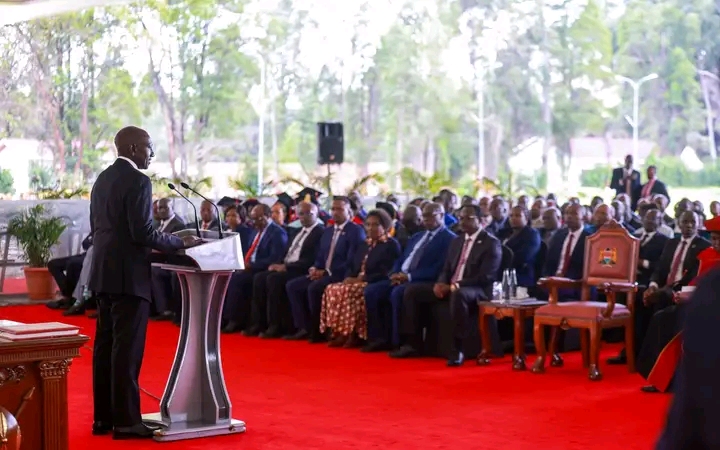
During his Mashujaa Day address in Eldoret on October 20, 2026, the President emphasised that the coming election should be guided by leadership records, clear visions, practical plans and development agendas. He maintained that political candidates must explain what they have achieved in their previous responsibilities and what they intend to accomplish if entrusted with public office.Ruto has repeatedly questioned whether some of the emerging political formations have developed realistic programmes capable of addressing the challenges facing the country.
According to the President, political alliances should not be established simply because different politicians want to remove an incumbent government. Instead, those seeking leadership should demonstrate that they have workable solutions to the country's economic and social challenges.
He has challenged his political competitors to explain their plans for improving the economy, creating employment opportunities, expanding infrastructure and strengthening public services.
The Head of State believes that Kenyans deserve to understand what every presidential candidate intends to do before giving them the opportunity to govern.Leadership Records Should Determine Who Gets Elected
One of the major issues highlighted in Ruto's message is the importance of examining the previous performance of political leaders.
The President believes that individuals seeking public office should be judged according to their responsibilities and achievements rather than the promises they make during political campaigns.
For example, someone seeking the presidency after serving as a governor, Cabinet Secretary, Member of Parliament or in another senior government position should be prepared to explain their record.Kenyans should establish whether such individuals successfully fulfilled their previous responsibilities and whether they demonstrated the ability to manage public resources and serve citizens.
This approach would help voters distinguish between politicians who have demonstrated leadership abilities and those whose political ambitions are not supported by meaningful achievements.
The President's position also places emphasis on accountability, integrity and the ability to make decisions that benefit the wider population.
Political candidates should explain how they intend to address challenges such as unemployment, poverty, high living costs, inadequate healthcare services and the need for quality education.
Ruto's argument is that leadership should be treated as a serious responsibility because decisions made by the person occupying State House affect millions of Kenyans.As he challenges other political leaders to present their achievements, President Ruto has continued defending the performance of his administration since taking office in September 2022.
His government has prioritised several development programmes under the Bottom-Up Economic Transformation Agenda.
Some of the key areas include affordable housing, agriculture, healthcare, education, infrastructure, manufacturing and employment creation.
The administration has maintained that these programmes are intended to expand economic opportunities, improve household incomes and support the country's long-term development.
The President has particularly highlighted infrastructure development, including road construction, electricity connectivity, markets and other projects intended to improve economic activities across different counties.Another important message from the President concerns the influence of ethnic politics in determining the country's leadership.
Kenyan elections have historically been influenced by regional political alliances and ethnic voting patterns, with political leaders frequently seeking support from communities considered to have significant voting populations.
Ruto has urged Kenyans to move away from this approach and focus on national development, leadership abilities and policy proposals.
He has argued that the country needs leaders capable of bringing citizens together regardless of their ethnic, religious or regional backgrounds.
According to the President, political competition should provide an opportunity for candidates to explain their visions rather than encourage hostility between different communities.The question of who will succeed President Ruto has increasingly become a major subject of political discussion as the country approaches the next general election.
Several opposition figures are positioning themselves for the presidential contest, with discussions continuing around possible coalitions and the identification of a candidate capable of challenging the incumbent.
Among the political figures whose ambitions and positions have attracted attention are former Deputy President Rigathi Gachagua, former Interior Cabinet Secretary Fred Matiang'i and Wiper Party leader Kalonzo Musyoka, among other opposition personalities.
The People's Party of Kenya leader Ndindi Nyoro has also called for opposition unity and argued that the quality of the presidential candidate should be considered alongside the numerical strength of political alliances.The President's remarks also highlight the responsibility of ordinary citizens in determining the country's political direction.
Voters have an important role to play beyond attending political rallies and listening to campaign speeches.
They should demand explanations from candidates concerning their development priorities, financial management plans and strategies for improving public services.
For instance, presidential aspirants should explain how they intend to create employment for young people, improve the education system, strengthen healthcare and reduce the economic burden facing ordinary households.
They should also explain how they intend to manage public debt, attract investments and create an environment in which businesses can grow.As political campaigns gain momentum, citizens will be presented with different promises, manifestos and development proposals from candidates seeking their support.
An informed electorate will be important in ensuring that political competition produces meaningful discussions about the country's future.
Voters should compare campaign promises with previous achievements and examine whether proposed programmes are financially realistic and capable of being implemented.
They should also consider whether candidates have demonstrated respect for democratic principles and the rights of citizens.
Political analysts and observers have increasingly focused on the importance of policy-based campaigns as parties begin preparing for the next election.

You Might Also Like
-
Sugarcane farmers in Nandi County are calling on the national government to fast-track investigations concerning the Kenya Sugar Board and address the concerns surrounding its operations and leadership. They want the institution to be given the freedom to stand independently, exercise its responsibi
-
President William Ruto and First Lady Rachel Ruto on Friday, November 6, 2026, joined their daughter Charlene Ruto and Tanzanian businessman Isaya Yunge as they officially exchanged marriage vows at Malaika Beach Resort in Mwanza, Tanzania. The colourful ceremony attracted several Kenyan political
-
The upcoming Great Chepsaita Cross Country Run scheduled for December 5, 2026, is expected to bring together approximately 10,000 athletes from different parts of the world. With 21 countries confirming participation and nearly KSh20 million in prize money available, the competition is preparing for
-
The Nairobi lawyers' demonstration on November 6, 2026, has brought renewed attention to the disappearance of Advocate Abshir Ahmedsadak Abdi and concerns about the safety of legal practitioners in Kenya. Led by LSK President Charles Kanjama, the lawyers marched from Milimani Law Courts towards Vig
-
The sentencing of Paul Nthenge Mackenzie to 200 years in prison marks a significant moment in Kenya's pursuit of justice for the victims of the Shakahola massacre. The tragedy, which claimed 191 lives covered by the murder trial, including 190 children, exposed the dangers of religious manipulation
-
The investigation into Rose Mwende Mala's illness remains an important matter for her family and the wider public. The 32-year-old reportedly became unwell during her birthday celebration on February 14, 2026, and has since remained bedridden and unable to speak. Her family suspects possible exposu