



PRESIDENT RUTO HANDS OVER 20,189 TITLE DEEDS TO LAMU RESIDENTS
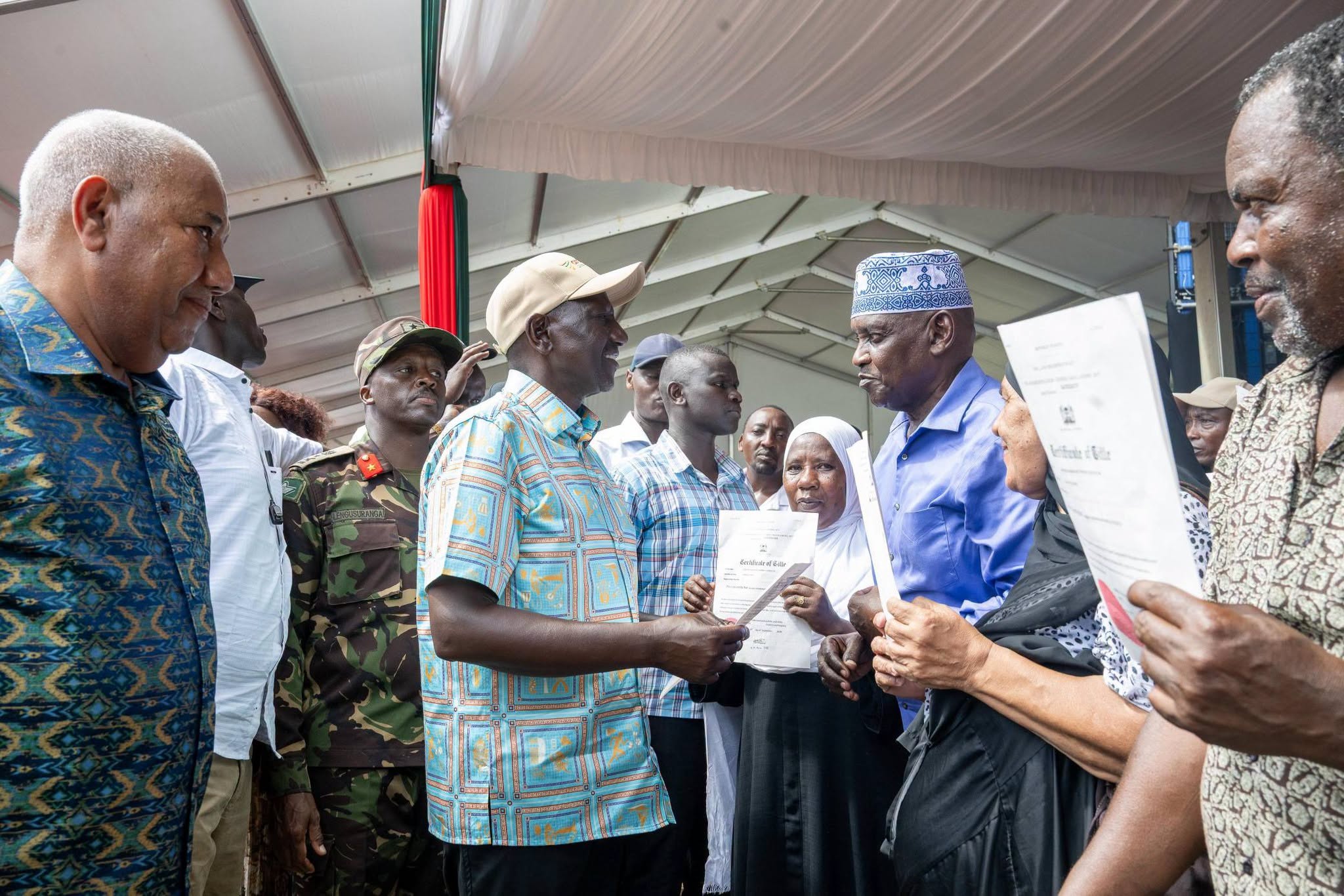
President William Ruto has handed over 20,189 title deeds to residents of Lamu County. The exercise is part of a wider programme to issue 300,000 title deeds across the Coast. Beneficiaries include residents from community lands and settlement schemes across Lamu. The initiative seeks to strengthen land ownership and security of tenure for residents.
President William Ruto has handed over 20,189 title deeds to residents of Lamu County, as part of the government’s ongoing programme to address longstanding land ownership challenges across the Coast region.
The issuance forms part of a wider government initiative targeting more than 300,000 title deeds across the six coastal counties, namely Lamu, Tana River, Mombasa, Kilifi, Kwale and Taita Taveta. The programme is aimed at providing residents with formal documentation of land ownership and addressing historical and administrative challenges surrounding land tenure in the region.
The title deed handover in Lamu is significant for communities that have for years faced uncertainty over land ownership and formal recognition of their properties. For many residents, the documents provide legal evidence of ownership and are expected to strengthen security of tenure.
The beneficiaries include residents from Ashuwei, Mvundeni, Rubu, Mwambore and Simambae community lands, as well as beneficiaries from the Shanga/Ishakani, Muhamarani, Kauthara and Hindi Magogoni settlement schemes, among other areas.
Several of these communities have a long history of land ownership challenges. Earlier in 2026, Lamu County reported the issuance of Community Land Registration Certificates to Ashuwei, Mvundeni, Simambae, Rubu and Mwambore communities, describing the development as an important step towards securing community land ownership and reducing land-related disputes.
The latest title deed exercise therefore forms part of broader efforts to formalise land ownership and give communities official documentation for land they occupy.
Across the Coast, land ownership has remained a longstanding issue, with historical settlement questions, squatter settlements, unresolved adjudication processes and disputes over ownership contributing to uncertainty for many families.
The national government has identified land titling as one of the key areas of its development programme in the region. According to the State Department for Lands, more than 300,000 title deeds are being issued across the Coast, while the government has set a broader target of reaching 500,000 title deeds.
President Ruto has repeatedly linked the titling programme to efforts to provide residents with greater security of tenure and enable them to invest in their properties without fear of losing their land.
The title documents can also provide an important foundation for economic activity. Formal land ownership may make it easier for beneficiaries to plan development on their properties and, where applicable, use legally recognised ownership documentation when seeking financial services.
The Lamu exercise comes as President Ruto continues his Coast development tour, which has included engagements in Taita Taveta, Kwale, Kilifi, Mombasa, Tana River and Lamu counties.
Land ownership has been one of the major themes of the tour, alongside infrastructure, energy, housing, education, healthcare and investment projects.
In previous stages of the programme, thousands of residents in other coastal counties have also received title deeds. The State Department for Lands reported that 31,318 beneficiaries in Taita Taveta received title deeds, while thousands of other beneficiaries have received documents in Kwale, Kilifi and Mombasa.
In Kwale, the government reported the issuance of 26,000 title deeds in Lunga Lunga, while Kilifi was allocated tens of thousands of titles under the wider Coast titling programme.
The scale of the exercise reflects the government's stated intention to address land documentation challenges across the entire coastal region rather than focusing on individual counties.
For residents receiving the documents, the title deeds represent more than pieces of paper. They provide formal documentation that can establish ownership and offer greater certainty over land that families and communities have occupied for years.
The programme also comes against the backdrop of long-running debates over historical land injustices at the Coast. Government officials have said the ongoing titling exercise is intended to help address some of these challenges by formalising ownership and giving eligible residents recognised documentation.
Lands officials have also said surveyors and land officers are continuing to work on the ground to process additional parcels and beneficiaries. Lands Principal Secretary Generali Nixon Korir said the government was targeting further progress in the Coast titling programme, with an ambition to surpass the 500,000-title mark by December.
President Ruto has also urged landowners and other stakeholders to cooperate with the government in resolving outstanding land issues, while warning against practices that could make it difficult for residents to secure formal ownership.
During the Mombasa phase of the programme, the President said the government was working on a compensation framework for landowners while seeking to protect residents who have occupied land for many years.
The issue of land ownership remains particularly important in coastal communities because of the historical relationship between land, settlement, livelihoods and economic development.
For Lamu residents, the handover of the 20,189 title deeds therefore marks another stage in the formalisation of land ownership in the county.
The beneficiaries from community lands and settlement schemes now have official documentation connected to their land, giving them a clearer legal basis for ownership.
The government has said the titling programme is also intended to support investment and economic empowerment. Secure land ownership can provide residents with confidence to develop their properties and plan for the future.
The programme is being implemented alongside other development projects announced during the President’s Coast tour.
In Lamu, the tour has also attracted national and regional attention following the groundbreaking of the proposed Dangote East Africa Refinery, a major investment project announced for the county. The refinery project has, however, also been accompanied by debate over land ownership and compensation, highlighting the continuing importance of land rights in the county.
Against this background, the title deed programme has become a major part of the government's message on land ownership at the Coast.
The issuance of the documents also gives communities an opportunity to move beyond years of uncertainty and focus on development.
For families who have waited for formal recognition of their land rights, receiving a title deed can represent an important milestone.
The government has said the programme will continue, with additional title deeds expected to be processed and issued as land surveys, adjudication and other administrative procedures are completed.
The wider Coast programme covers all six counties in the region, with allocations varying according to the number of beneficiaries and identified land ownership needs.
Officials have described the programme as part of a broader effort to resolve historical land challenges and improve land administration.
The government has also indicated that it intends to continue working with county governments, community representatives and residents to address remaining land-related challenges.
As President Ruto hands over the title deeds in Lamu, the exercise puts land ownership firmly at the centre of the Coast's development conversation.
For the beneficiaries, the documents provide formal evidence of their land rights. For the government, the exercise represents part of its broader programme to address historical land questions and increase the number of Kenyans with secure land tenure.
The issuance of 20,189 title deeds in Lamu therefore forms one part of a much larger Coast-wide land titling programme, with more documents expected to reach residents as the exercise continues.
The government says the ultimate objective is to ensure that more residents have legally recognised ownership of their land and can use that security as a foundation for investment, development and improved livelihoods.
With the Coast programme continuing across the six counties, attention now turns to the remaining beneficiaries and the government's broader target of issuing additional title deeds before the end of the year.

You Might Also Like
-
Ndindi Nyoro gives President William Ruto 14 days to make the Dangote Refinery agreement public, calling for greater transparency on the deal.
-
Opposition leaders have graced the event, attracting a large gathering of supporters and wananchi. The leaders addressed key issues affecting Kenyans, including governance, development and the economy. The event also provided a platform for political engagement and interaction with the public. Lea
-
Rigathi Gachagua's latest engagements in the United States have focused heavily on Kenya's future and the role Kenyans abroad can play in shaping it. In Boston, he praised the achievements of the diaspora and said their skills, experience and financial contribution should receive greater recognition
-
Wicknell Chivayo’s family has announced that there will be no viewing of his body or that of his wife, Lucy Muteke, during their funeral ceremonies.
-
The gathering at Uhuru Park on October 2, 2026, became one of the major public events marking the first anniversary of Raila Odinga’s death. Thousands of people converged on the Nairobi park carrying candles, flowers, flags and portraits as they joined prayers, music, speeches and the nationwide c
-
President William Ruto’s October 2, 2026 visit to Kilifi was largely centred on development and economic opportunities. The President launched and announced road projects, expanded electricity connectivity plans, invested in technical education, commissioned a modern market and outlined Government