



PRESIDENT RUTO SAYS RAILA MAUSOLEUM HONOURS HIS CONTRIBUTION TO KENYA’S DEMOCRATIC JOURNEY
President William Ruto says Raila Odinga’s mausoleum at Kang’o Ka Jaramogi honours his contribution to Kenya’s democratic journey and will help preserve his legacy for future generations.
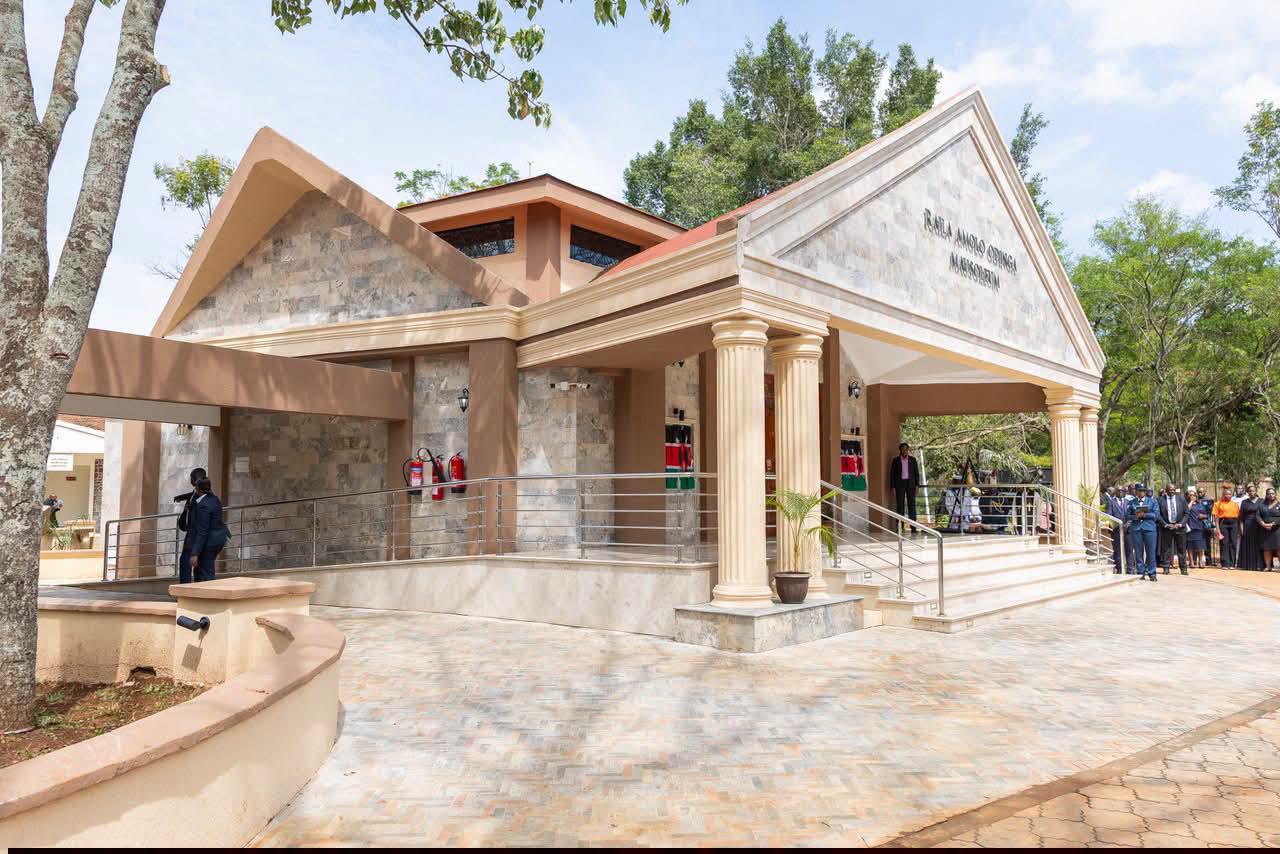
President William Ruto has said the mausoleum built by the Kenya Defence Forces at Kang’o Ka Jaramogi in Bondo, Siaya County, is a lasting testament to the contribution of the late former Prime Minister Raila Amolo Odinga to Kenya’s democratic journey.
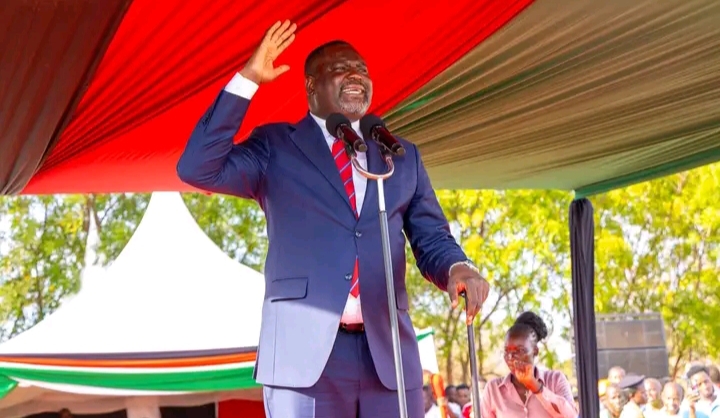
Ruto made the remarks on Wednesday, October 7, 2026, during the official handover and commissioning of the Raila Odinga Mausoleum, a ceremony attended by national leaders, members of the Odinga family and other invited guests.
The ceremony marks a significant moment in efforts to preserve the memory and legacy of one of Kenya’s most prominent political figures. Raila Odinga, who died in October 2025 aged 80, spent decades in public service and played a major role in the country’s political and democratic development.
The mausoleum stands at Kang’o Ka Jaramogi, the historic family home in Bondo where Raila was laid to rest alongside his father, Jaramogi Oginga Odinga, Kenya’s first Vice President. The site has now been developed into an important memorial and heritage location associated with the Odinga family and Kenya’s political history.
President Ruto said the decision to establish the mausoleum reflects the importance of remembering Raila not only as a political leader but also as a Kenyan whose public life was closely connected to the country’s democratic transformation.
According to Ruto, the monument represents recognition of Raila’s contribution to the long process of building a democratic society in Kenya.
The President also urged Kenyans to remember the person behind the political figure, highlighting Raila’s family life, his relationship with his wife, Mama Ida Odinga, his children and the wider family that supported him throughout his long public career.
Ruto said Raila’s connection to his heritage was an important part of his identity and that his years of public service had transformed that personal heritage into a broader national legacy.
The President’s remarks came during a ceremony that formally transferred the completed mausoleum into state stewardship. The Kenya Defence Forces undertook the construction of the facility, with the project later expected to come under the management of the National Museums of Kenya.
The transition is intended to ensure that the site is properly preserved, documented and interpreted as part of Kenya’s national heritage.
A monument to history
The mausoleum is expected to serve more than the purpose of being Raila Odinga’s final resting place. It is also intended to provide a permanent location where Kenyans and future generations can learn about his life, political career and contribution to the country.
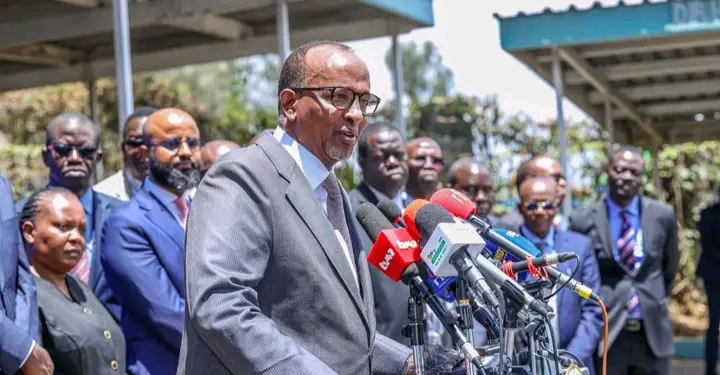
Gender, Culture, the Arts and Heritage Cabinet Secretary Hannah Cheptumo has described the facility as a repository of memory, history and identity.
She said the significance of the mausoleum goes beyond the physical structure, arguing that it provides an opportunity for future generations to understand the period in which Raila lived, the political struggles he participated in and the role he played in Kenya’s development.
The National Museums of Kenya is expected to play a central role in preserving the site. Its responsibilities will include conservation, documentation, interpretation and protection of the mausoleum for future generations.
The development of the site also adds another layer to the historical significance of Kang’o Ka Jaramogi. The location already serves as the final resting place of Jaramogi Oginga Odinga, one of the central figures in Kenya’s independence struggle and the country’s first Vice President.
Raila’s burial at the same family compound further connects two generations of the Odinga family to an important chapter in Kenya’s political history.
Raila’s political journey
Raila Odinga’s political career spanned several decades and included periods in government, opposition and national political negotiations.
He served as Kenya’s Prime Minister in the Grand Coalition Government between 2008 and 2013, following the disputed 2007 presidential election and the political crisis that followed.
His career was also closely associated with campaigns for political pluralism, constitutional reform and greater democratic participation.
Over the years, Raila became one of the country’s most influential opposition leaders and remained a major figure in national politics for decades.
His political journey also included several presidential campaigns and alliances with leaders from different parts of the country.
His supporters often referred to him as “Baba,” a title that became closely associated with his political identity and relationship with his supporters.
Beyond electoral politics, Raila was also known for his Pan-African outlook and involvement in regional and continental affairs.
President Ruto, during his remarks at the mausoleum, described Raila as a leader whose contribution extended beyond his immediate political environment.
Ruto has previously described Raila as a patriot, Pan-Africanist and statesman whose public life was dedicated to issues of freedom, justice and national development.
The commissioning of the mausoleum therefore comes at a time when the country is reflecting on the wider historical impact of Raila’s life and political career.
Ruto and Raila’s political relationship
The commissioning also carries significance because of the political relationship between President Ruto and the late former Prime Minister.
The two leaders were at different points political allies and opponents during their long careers.
Ruto joined Parliament in 1997, while Raila had already established himself as one of the country’s most prominent opposition politicians. Their political paths crossed repeatedly as Kenya’s political alliances changed over the years.
Following Raila’s death, President Ruto took part in national and family ceremonies to honour him.
At Raila’s burial in October 2025, Ruto led the country in paying his final respects. Raila was accorded military honours before being buried at Kang’o Ka Jaramogi alongside his father.
The current commissioning of the mausoleum therefore represents another chapter in the state’s recognition of Raila’s place in Kenya’s history.
A restricted ceremony
The handover and commissioning ceremony was restricted to invited guests because of the limited space at Kang’o Ka Jaramogi and the sacred nature of the site.
Members of the public were expected to follow the proceedings from designated viewing areas where screens had been installed.
The organising committee said the decision was necessary because the mausoleum grounds could not accommodate the large number of people expected to attend the event.
Following the official ceremony, members of the public are expected to have an opportunity to access the mausoleum and view the facility.
The event brings together government officials, political leaders, members of the Odinga family, friends and other invited guests as the country marks one year since Raila’s death.
The commissioning also forms part of wider commemorative activities dedicated to remembering Raila’s life and legacy.
Preserving the legacy
For the government, the mausoleum provides an opportunity to preserve a significant part of Kenya’s political history.
The National Museums of Kenya is expected to ensure that the site remains protected and that information about Raila’s life and contribution is properly documented.
The mausoleum is also likely to become a place visited by researchers, historians, students and members of the public interested in Kenya’s political history.
Its location beside the mausoleum of Jaramogi Oginga Odinga gives the site additional historical importance.
Together, the two mausoleums represent different generations of the Odinga family and their involvement in Kenya’s political development.
Raila’s life was closely linked to some of the country’s most important political moments, from the struggle for multiparty democracy and constitutional reform to his years in government and his continued participation in national politics.
The mausoleum will therefore serve as a physical reminder of those chapters.
President Ruto’s message during the commissioning was that Raila’s contribution should be remembered within the wider story of Kenya’s democratic journey.
As the country continues to reflect on Raila’s life, the mausoleum is expected to provide a permanent space for that history to be preserved.
The commissioning at Kang’o Ka Jaramogi is consequently not only about the completion of a building. It marks the formal establishment of a memorial dedicated to a leader whose political career spanned generations and whose name remains closely connected to Kenya’s democratic and constitutional development.
With the facility now moving into the stewardship of the National Museums of Kenya, the focus will shift from construction to long-term preservation.
The responsibility will be to ensure that the story associated with the mausoleum remains accessible to future generations and that the site continues to reflect the historical significance of Raila Odinga’s life and public service.
For President Ruto, the mausoleum stands as a testament to Raila’s contribution to Kenya’s democratic journey.
For the Odinga family, it provides a permanent place where his memory can be honoured.
And for the country, it becomes another site through which future generations can encounter and study the history of one of Kenya’s most influential political figures.

You Might Also Like
-
Former President Uhuru Kenyatta steps down as Azimio council chair, with James Orengo and Rigathi Gachagua emerging in discussions over the coalition’s future leadership.
-
Kenya's Ebola response has entered a critical surveillance and contact-tracing phase following confirmation of the country's first imported Bundibugyo Ebola case. PS Mary Muthoni says 57 contacts have been identified, with 10 already placed under quarantine, while health officers across the country
-
Deputy President Kithure Kindiki's appearance at Jamhuri Park on October 7 placed agriculture and food security at the centre of the national economic transformation conversation. He outlined government figures on farmer registration, fertiliser prices, livestock vaccination, milk production, meat e
-
A passenger travelling aboard a Kenya Airways flight from Nairobi to Lagos, Nigeria, has died after suffering a medical emergency shortly before the aircraft landed at Murtala Muhammed International Airport. The passenger reportedly became unresponsive about 20 minutes before landing, prompting cabi
-
NCIC's latest actions against CS Geoffrey Ruku and its handling of nominated MP Joseph Wainaina Iraya underline the commission's growing focus on political language and national cohesion ahead of the 2027 elections. Ruku has been directed to stop repeating remarks that NCIC found divisive, respond w
-
Aden Duale's leadership in checking Kenya's Ebola preparedness comes at a crucial time following the country's first confirmed imported Ebola case and the death of the patient in Nairobi. The development has tested systems that the government had been preparing for months. Authorities are now conce