President Ruto Signs VAT Amendment Law, Extends 8% Tax Rate on Petroleum Products
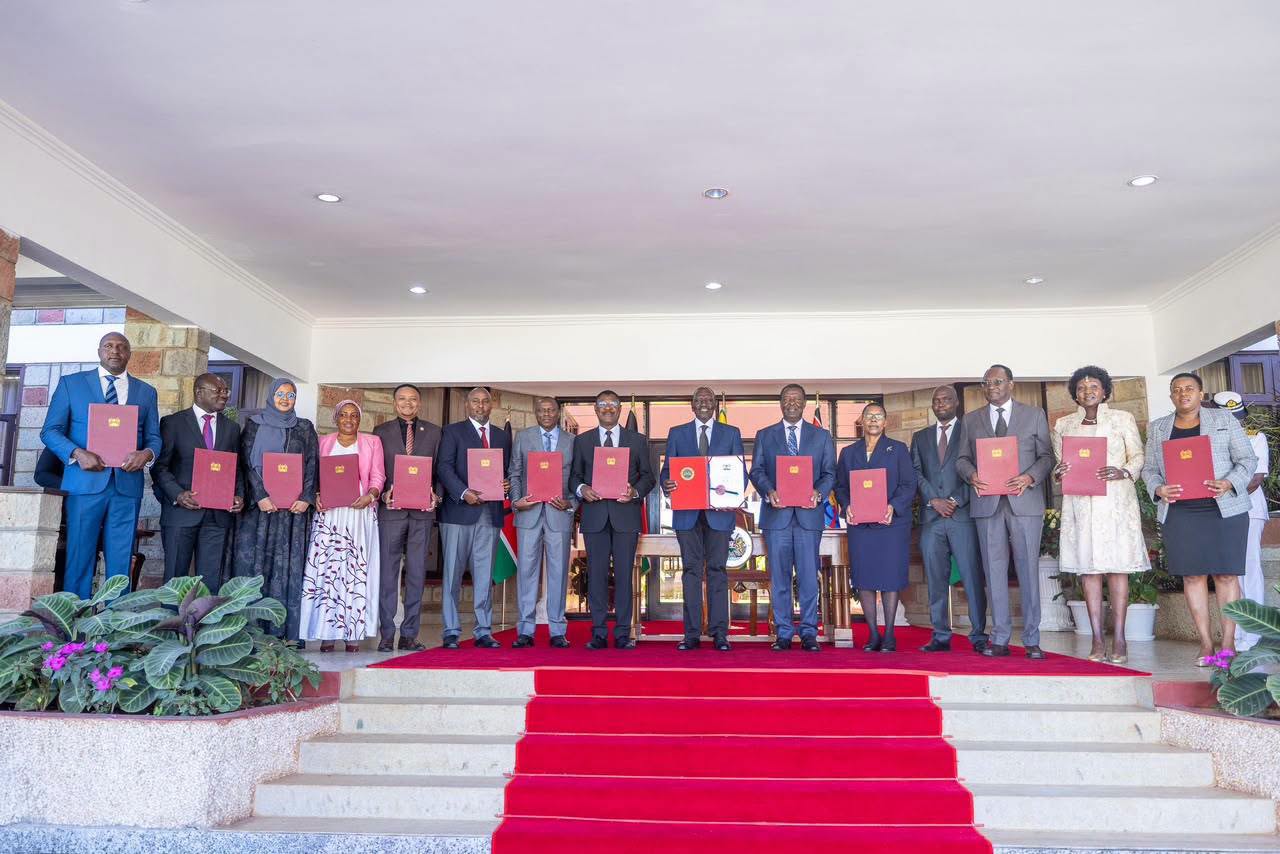
President William Ruto has signed the Value Added Tax (Amendment) law, extending the 8% VAT rate on petroleum products for another 90 days amid uncertainty surrounding the ongoing conflict in the Middle East. The move is aimed at cushioning Kenyans against potential increases in fuel costs, which can affect transport fares, food prices, business operations and the overall cost of living. The legislation also introduces changes to taxes on selected construction materials, including ceramic tiles and sanitary ware, in a move intended to ease building costs and support the construction and affordable housing sectors. The revised tax measures could help reduce some expenses for developers and homeowners, although the actual impact will depend on market prices and whether suppliers pass the savings on to consumers. In a separate development, President Ruto has assented to the Kenya Revenue Authority (Amendment) Bill, which introduces changes intended to strengthen coordination between the Kenya Revenue Authority and the Kenya Ports Authority in matters relating to customs operations and revenue collection. The new measures come as the government seeks to balance relief for households and businesses with the need to maintain revenue for public services and development projects. Follow Aasai TV for more updates on government policies, taxation and developments affecting the Kenyan economy.
President William Ruto has signed the Value Added Tax (Amendment) law, extending the 8 per cent VAT rate on petroleum products for another 90 days as the government seeks to manage the impact of uncertainty surrounding the ongoing conflict in the Middle East.
The extension is significant for Kenya’s economy because petroleum products are central to transport, manufacturing, agriculture and the distribution of goods across the country. Changes in fuel taxation can influence the cost of moving people and products, with potential effects on businesses and household budgets.
The law also introduces tax changes affecting tiles and ceramics, with the stated aim of easing construction costs. In a separate legislative development, the President has assented to the Kenya Revenue Authority (Amendment) Bill, marking another step in the government’s efforts to adjust the country’s tax and revenue administration framework.
The measures come at a time when economic policymakers are navigating external risks, including uncertainty in international energy markets, alongside domestic concerns about the cost of living, the affordability of construction and the need to sustain government revenue.
Fuel VAT Relief Extended for Another 90 Days
The legislation maintains the VAT rate on petroleum products at 8 per cent, below the standard rate of 16 per cent. The reduced rate is intended to cushion consumers against the effects of rising global petroleum prices and disruptions linked to geopolitical tensions in the Middle East.
The extension follows earlier measures introduced to reduce the tax burden on petroleum products. The latest provision is designed to maintain the relief for an initial period of 90 days, with the possibility of a further extension if circumstances require additional intervention.
The decision comes as international energy markets remain vulnerable to developments in the Middle East, a region that plays a significant role in global oil production and supply. Conflict and uncertainty can affect oil prices, shipping routes, insurance costs and the movement of petroleum products in international markets.
For Kenya, which relies heavily on imported petroleum, changes in international prices can influence the cost of fuel purchased by consumers and businesses. The effects can spread across the economy because petroleum is used in transport, agriculture, manufacturing, construction and other essential activities.
Maintaining the reduced VAT rate is intended to limit the tax component of fuel costs during the relief period. However, the measure does not guarantee that petrol, diesel or kerosene prices will fall, since pump prices are influenced by several other factors, including international oil prices, exchange rates, shipping expenses and distribution costs.
The government’s approach is to retain a lower tax rate while monitoring external developments that could affect the domestic economy.
What the Extension Means for Motorists and Households
Fuel prices remain an important concern for many Kenyan households because changes at the pump can affect everyday expenditure. Motorists use petrol and diesel for private transport, public service vehicles, commercial operations and the movement of goods.
When fuel becomes more expensive, transport operators may face higher operating costs. Depending on market conditions, some of those costs may be passed on to passengers through fares or to businesses through higher delivery charges.
The resulting increases can affect the prices of food, household supplies and other essential products, particularly when transportation accounts for a substantial portion of the final cost of goods.
Farmers and agricultural traders are also exposed to changes in petroleum prices. Fuel is required to transport farm inputs, operate machinery and move produce from rural areas to markets in towns and cities. Higher transport costs can place pressure on both producers and consumers.
By retaining the 8 per cent VAT rate, the government aims to moderate one part of the cost structure affecting petroleum products. The difference between the reduced rate and the standard VAT rate means consumers are not subjected to the full 16 per cent rate during the specified period.
Nevertheless, the actual benefit experienced by consumers will depend on how other components of fuel pricing change during the 90-day period. A rise in international oil prices could offset some of the relief provided through lower taxation.
The effectiveness of the measure will therefore depend partly on developments in international markets and the extent to which the reduced tax rate limits pressure on domestic fuel prices.
Changes to Taxes on Tiles and Ceramic Products
Beyond petroleum taxation, the new law introduces changes to excise duty on selected construction materials, including ceramic tiles and sanitary ware. The adjustments are intended to ease some of the tax-related costs associated with construction projects.
One of the key changes is the move from calculating excise duty on ceramic tiles according to their weight to calculating it according to their surface area. Under the revised framework, the rate for the affected tiles is set at KSh400 per square metre, replacing the previous weight-based approach.
The change addresses concerns that a tax based on weight could place a substantial burden on imported tiles, which are commonly bought and sold according to the area they cover.
Under the previous system, the weight of a shipment could significantly influence the amount of excise duty payable, even though the commercial value of tiles is generally assessed in relation to their quality, design, dimensions and the surface area they cover.
The revised calculation method is intended to align taxation more closely with how the products are marketed and used in construction.
The legislation also reduces the specific excise duty on certain imported ceramic sanitary products, including sinks, wash basins, baths, bidets, toilet pans, flushing cisterns and urinals, from KSh50 per kilogramme to KSh30 per kilogramme.
These products are used in residential buildings, commercial properties, institutions and public infrastructure projects. Changes to their taxation could influence the overall cost of purchasing construction materials.
The government’s stated objective is to reduce some of the financial pressures affecting the construction sector, including projects associated with affordable housing.
However, the extent to which consumers benefit will depend on how importers, suppliers, retailers and contractors respond to the tax changes. Lower excise duty does not automatically translate into an equivalent reduction in retail prices.
Other expenses, such as transport, storage, exchange-rate movements, labour and distribution margins, can continue to influence the final cost of construction materials.
Potential Impact on the Construction and Housing Sector
Construction is an important part of Kenya’s economy, supporting employment across building, engineering, transport, manufacturing and the supply of materials.
Housing projects, in particular, depend on the availability and affordability of a wide range of products, including cement, steel, tiles, plumbing fixtures, glass and electrical equipment.
When construction materials become more expensive, developers may face higher project costs, potentially affecting budgets, completion schedules and the prices charged for completed buildings.
The adjustments to tile and ceramic taxation are intended to ease some of these pressures by changing how certain products are taxed.
For developers undertaking large projects, the cost of materials can represent a substantial share of total expenditure. Any reduction in the tax burden on selected products could help moderate expenses, although the overall impact will vary according to the materials used and the size of the project.
Small-scale builders and individual homeowners could also be affected by changes in the prices of tiles and sanitary fittings. These products are commonly purchased during the finishing stages of residential construction and renovation.
For households building or upgrading homes, the cumulative cost of fittings and finishing materials can be significant. A reduction in the applicable tax could provide some relief if suppliers pass the savings on to buyers.
The amendments may also have implications for affordable housing programmes, where controlling construction costs is important to the overall financial viability of projects.
At the same time, the actual effect on housing affordability will depend on several factors beyond taxation, including land prices, financing costs, labour expenses, infrastructure provision and the supply of building materials.
The changes should therefore be viewed as one component of the wider effort to address construction costs rather than a guarantee that housing prices will immediately decline.
Provisions Affecting Glass Products
The legislation also addresses the tax treatment of certain imported glass products, including float glass and surface-ground or polished glass.
The changes are intended to clarify the application of excise duty to qualifying products originating from East African Community partner states and align the relevant provisions with regional customs arrangements.
Glass is widely used in residential buildings, office blocks, commercial premises and other infrastructure projects. Its cost can affect construction budgets, particularly for developments that require extensive windows, glazed facades and other glass installations.
Adjustments to the tax treatment of qualifying imports could help reduce some costs for businesses sourcing materials from within the region.
The implications will depend on the products covered by the revised provisions and whether importers and suppliers pass any resulting savings on to contractors and final consumers.
The changes also demonstrate the connection between domestic taxation, regional trade rules and the cost of materials used by Kenya’s construction industry.
President Ruto Also Assents to Kenya Revenue Authority Amendment Bill
In addition to the tax measures affecting fuel and construction materials, President Ruto has assented to the Kenya Revenue Authority (Amendment) Bill.
The legislation introduces changes to the governance and composition of the Kenya Revenue Authority’s board, including provision for the Managing Director of the Kenya Ports Authority to sit on the KRA board. The changes are intended to strengthen coordination between revenue collection and port operations.
The Kenya Revenue Authority is responsible for administering tax laws, collecting government revenue and facilitating compliance with the country’s tax requirements. Its work covers areas such as customs duties, income tax, VAT and other taxes provided for under Kenyan law.
The Kenya Ports Authority, meanwhile, plays a central role in port operations and the handling of cargo entering and leaving the country. Coordination between the two institutions is important because customs procedures and the movement of imported goods are closely connected to the assessment and collection of revenue.
Bringing the KPA Managing Director onto the KRA board is intended to strengthen communication between the institutions and improve coordination in decisions affecting port-related revenue collection.
Improved coordination could help government agencies address administrative challenges involving imports, customs processing and the collection of taxes due on goods entering the country.
However, the practical impact will depend on how the amended governance arrangements are implemented and whether they lead to more effective decision-making and operational cooperation.
The legislation forms part of the broader changes to Kenya’s revenue administration framework. Its implications will be assessed through the way the authority and its partner institutions carry out their responsibilities under the revised law.
Balancing Tax Relief With Government Revenue
The new laws highlight the challenge facing policymakers as they seek to provide relief to consumers while maintaining resources for government operations and public services.
Reducing or maintaining lower tax rates on selected products can ease some financial pressures on households and businesses. At the same time, tax revenue remains an important source of funding for public expenditure, infrastructure, healthcare, education and other government responsibilities.
The government must therefore balance temporary relief measures against the need to sustain revenue collection and manage public finances.
In the case of petroleum products, the 90-day extension provides a defined period during which the reduced VAT rate will remain in effect. The possibility of a further extension gives the National Treasury flexibility to respond if international conditions continue to place pressure on fuel prices.
For construction materials, the revised duty calculations are intended to adjust the tax burden on specific products while supporting construction activity.
The KRA amendment, meanwhile, focuses on the institutional arrangements through which revenue is administered and collected.
Together, the measures address different parts of the economy: consumer fuel costs, the price of selected building materials and the coordination of revenue collection.
Their ultimate impact will depend on external economic conditions, the implementation of the laws and how businesses respond to the changes.
Conclusion
President William Ruto’s assent to the VAT and related tax legislation extends the 8 per cent VAT rate on petroleum products for another 90 days, providing temporary tax relief amid uncertainty surrounding the Middle East conflict.
The law also changes the calculation of excise duty on selected construction materials, including ceramic tiles and sanitary ware, with the stated objective of easing some building costs. The President’s assent to the Kenya Revenue Authority (Amendment) Bill introduces additional changes intended to strengthen coordination between tax administration and port operations.
For Kenyan households, motorists and businesses, the fuel VAT extension could help limit the tax-related component of petroleum costs. Builders and property developers could also benefit if the revised taxation of construction materials translates into lower prices.
However, neither lower fuel prices nor cheaper construction materials are guaranteed, as market conditions and other operating expenses will continue to influence final costs.
The coming months will show how effectively the measures cushion consumers, support construction activity and improve coordination in government revenue collection.

You Might Also Like
-
The reported turnout of thousands of job seekers at Wajose Smart Wears in Kericho has highlighted the urgency of addressing unemployment and the intense competition for available opportunities. While the precise details of the recruitment exercise remain independently unverified, the wider employmen
-
The National Transport and Safety Authority (NTSA) has urged motorists whose Smart Driving Licences are ready for collection to pick them up from their designated centres. The authority has also warned Kenyans against dealing with brokers and unauthorised intermediaries who claim to offer assistance
-
President William Ruto's October 16, 2026, engagements in West Pokot and Trans Nzoia form part of his wider North Rift development tour ahead of Mashujaa Day celebrations on October 20. The published programme includes the issuance of 11,493 title deeds in West Pokot, commissioning the Kapenguriaâ€
-
Former Nairobi Provincial Commissioner Davis Nathan Chelogoi has been convicted in a KSh 1.35 billion land fraud case involving a 7.39-hectare parcel in Lower Kabete, Nairobi. The court found him guilty on five counts, including conspiracy to defraud, forcible detainer and forgery, following a trial
-
The participation of Dr Belio Kipsang in the Mashujaa Day thematic week panel discussion at Eldoret National Polytechnic highlights the importance of connecting national celebrations with practical issues affecting citizens. His contribution focused on border security, citizenship documentation, co
-
The reported site visit involving Roads and Transport Cabinet Secretary Davis Chirchir, Chepalungu MP Victor Koech and World Bank officials highlights the importance of rural road connectivity in Bomet County and the wider South Rift region. The proposed Chebole–Siongiroi–Labotiet–Gorgor impr