President Ruto Takes Kisii by Storm: KSh 22 Billion Roads Boost, Marani KMTC Launch and Major Development Projects Unveiled in Three Constituencies
President William Ruto's visit to Kisii County on November 10, 2026, marked an important stage in his wider development tour of the Gusii region. His engagements in Kitutu Chache North, Bonchari and South Mugirango focused on infrastructure, healthcare, education, electricity connectivity and economic empowerment. The launch of the Kenyoro SDA–Riana Market–Kerina Road, the Marani KMTC development, the planned improvements to Suneka Airstrip and road and bridge projects in South Mugirango were among the major development highlights. The President also announced KSh 22 billion for road development across Kisii and Nyamira counties and highlighted additional investments in electricity connectivity. As the country approaches the 2027 General Election, the visit also carried political significance, with the President using the opportunity to engage local leaders and explain his administration's development priorities.
The President's visit was part of a wider development programme covering Kisii and Nyamira counties. During the tour, he emphasised his administration's commitment to ensuring that development reaches rural communities and that residents benefit from government investments in infrastructure, education, healthcare, agriculture and other important sectors.
The three constituencies were among the areas that received attention through the launch of development projects and announcements aimed at improving the lives of residents. The President was accompanied by national and local leaders, including Kisii Governor Simba Arati, South Mugirango MP Sylvanus Osoro, Bonchari MP Charles Onchoke and Kitutu Chache North MP Japheth Nyakundi.
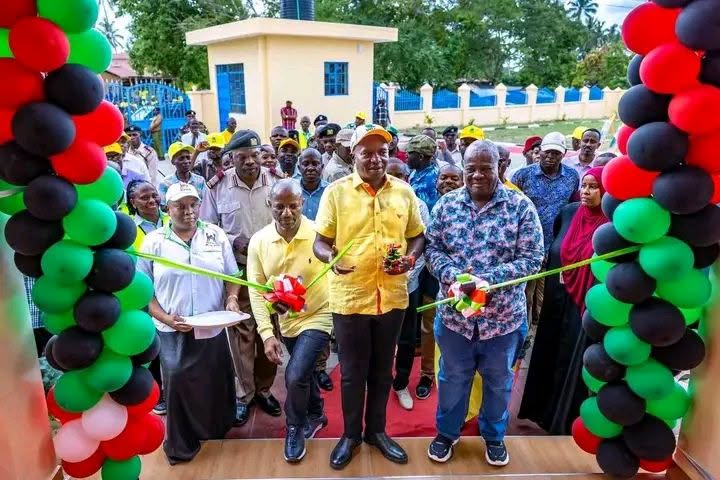
The visit also provided an opportunity for residents to raise their expectations concerning government services, infrastructure development and economic empowerment.One of the major highlights of President Ruto's visit to Kitutu Chache North was the attention given to healthcare and education infrastructure. The President's programme included the launch of the Marani Kenya Medical Training College (KMTC), an important investment expected to expand access to medical training in the region.
The establishment and development of medical training institutions is significant because Kenya continues to require skilled healthcare professionals to serve hospitals, health centres and communities. Through institutions such as KMTC, young people can acquire professional skills in nursing, clinical medicine, medical laboratory sciences and other healthcare-related disciplines.
The Marani KMTC project is expected to provide opportunities for students from Kisii and neighbouring counties who might otherwise have to travel long distances to access medical training. It could also stimulate economic activities in the surrounding community as students, lecturers and other workers interact with local businesses.The project is particularly important to families who want their children to pursue professional courses without facing the additional costs of travelling and living in distant towns.
President Ruto's attention to the education sector reflects the government's wider ambition of strengthening technical and vocational education. Medical training institutions are important in preparing young people for employment while supporting the country's healthcare system.
The President's visit also brought attention to the need for improved infrastructure connecting educational institutions to surrounding communities. Better roads, electricity and other essential services are necessary to ensure that colleges operate effectively and students have a suitable learning environment.However, poor road conditions can increase transportation costs, delay deliveries and make it difficult for farmers to access reliable markets. During rainy seasons, some rural roads become difficult to use, affecting both commercial activities and access to essential services.
The construction of the Kenyoro SDA–Riana Market–Kerina Road is therefore expected to address some of these challenges by improving movement within the constituency.
The project is also expected to benefit traders, boda boda operators, transporters and small businesses. Improved road infrastructure can encourage more businesses to establish themselves in rural trading centres because customers and suppliers can access them more easily.
President Ruto stated that the government had allocated KSh 22 billion towards road construction and rehabilitation across Kisii and Nyamira counties. The funding is intended to support a wider programme of infrastructure development in the Gusii region.The President explained that better roads would help farmers transport their produce without unnecessary difficulties while improving access to schools, hospitals and other public facilities.
The government also highlighted plans to upgrade Suneka Airstrip in Bonchari through the construction of a new runway and terminal building. The proposed improvements are expected to strengthen regional connectivity and create opportunities for trade, tourism and investment.
An upgraded airstrip could improve access to Kisii for business people, investors and visitors while supporting faster transportation between the region and other parts of the country.The government announced a Last Mile Electricity Connectivity programme targeting an additional 25,000 households across Kisii and Nyamira counties, with a reported investment of KSh 1.7 billion.
The initiative is intended to connect more homes and businesses to the national electricity grid, allowing residents to benefit from reliable power.
Electricity is an important requirement for economic development. Small businesses such as salons, welding workshops, shops, barbershops and food-processing enterprises depend on power to operate efficiently.
For students, electricity provides better opportunities for studying at night and accessing digital learning resources. It also supports schools, health facilities and other public institutions.
The President maintained that expanding electricity access would help create an environment where young people and entrepreneurs could establish businesses and improve their livelihoods.Among the projects identified during the Kisii development programme were the Mochengo–Ayora–Maroo Road and Nyabigena Road. The President also broke ground for the Omingo Bridge project in South Mugirango.
These infrastructure investments are expected to improve access between villages and trading centres while supporting the movement of agricultural produce and other goods.
The Omingo Bridge project is particularly important because bridges provide essential connections between communities that may otherwise experience transportation difficulties.
Reliable bridges help residents access schools, healthcare facilities, markets and other public services. They are also important during rainy seasons when swollen rivers and waterways can interrupt transportation.Healthcare was another important subject during President Ruto's visit.
The President highlighted the role of the Social Health Authority (SHA) in supporting healthcare facilities and improving access to medical services.
He stated that more than KSh 8.7 billion had been channelled to health facilities in Kisii County, while approximately KSh 190 billion had been sent to healthcare facilities nationally.
These figures were presented by the President as evidence of the government's efforts to strengthen healthcare financing.
The government has been working towards expanding health coverage and ensuring that Kenyans can access medical services without experiencing excessive financial difficulties.
For residents of Kisii, improved healthcare financing is important because hospitals require adequate resources to purchase medicines, maintain equipment, employ healthcare workers and provide services to patients.Their participation demonstrated the importance of cooperation between national and local leadership in implementing development programmes.
Governor Simba Arati welcomed the government's development engagements while emphasising the importance of ensuring that all areas receive fair consideration when national resources are distributed.
The President also used the visit to discuss national politics and the changing political landscape ahead of the 2027 General Election.
During his address in Bonchari, Ruto criticised his political opponents over their approach towards emerging young leaders. He specifically challenged Rigathi Gachagua to allow younger politicians to develop their leadership careers.The President mentioned several politicians, including South Mugirango MP Sylvanus Osoro and Kitutu Chache North MP Japheth Nyakundi, among those he described as emerging leaders facing political criticism.
Ruto maintained that experienced politicians should give younger generations an opportunity to participate in leadership and prepare to take over responsibility in the future.
He also said that his generation would leave the political stage in 2032 to allow younger leaders to take up leadership positions.
These remarks demonstrated that the Kisii development tour was not only about infrastructure but also provided an opportunity for the President to communicate his political position ahead of the next general election.In Kitutu Chache North, the Marani KMTC development offers an opportunity to expand access to professional medical training.
In Bonchari, the Kenyoro SDA–Riana Market–Kerina Road project is expected to improve transport and support agricultural activities. The proposed Suneka Airstrip upgrade could also strengthen regional connectivity.
In South Mugirango, the planned road improvements and Omingo Bridge project are expected to improve accessibility and support trade.
The projects demonstrate the importance of investing in infrastructure as a foundation for economic development.
For farmers, improved roads can reduce transportation challenges and make it easier to sell their produce. For young people, better access to education and electricity can create opportunities for learning, entrepreneurship and employment.Residents will want to see construction machinery on the ground, timely completion of roads, improved electricity connections and properly equipped educational institutions.
They will also expect the government to maintain transparency in the use of public funds and provide information about project costs and implementation timelines.
Local leaders will have an important responsibility in monitoring the progress of these developments and ensuring that the needs of their constituents are communicated to the national government.

You Might Also Like
-
Kenya is moving closer to being declared Ebola-free following the recovery and discharge of all nine confirmed patients who tested positive for Bundibugyo Virus Disease. Health Cabinet Secretary Aden Duale has confirmed that the final 11 contacts also completed their mandatory 21-day monitoring peri
-
Kenyan tea farmers and exporters are expected to benefit from renewed business opportunities following Sudan’s decision to lift its ban on tea imports from Kenya. The move paves the way for the resumption of tea shipments to the Sudanese market, which has traditionally been an important destinatio
-
Kenya has made a major breakthrough in its fight against the Ebola virus after Health Cabinet Secretary Aden Duale announced that the last patient receiving treatment for the disease had been discharged from hospital. The announcement marks an important milestone in the country's efforts to contain
-
The destruction of two classrooms at the school in Tilito village, Kipkelion East Constituency, following heavy rainfall and strong winds has left residents concerned about the future of learning facilities in their community. The incident, which occurred on November 9, 2026, also affected the schoo
-
Prime cabinet secretary Musalia Mudavadi opens national forum on county public service boards.His call for merit-based recruitment, performance-based promotions, independent public service boards and proper wage-bill management highlights the need for stronger human resource systems across all 47 co
-
Deputy President Kithure Kindiki has officially commissioned the Sh52 million Rabai Huduma Centre in Kilifi County, in a move aimed at bringing essential government services closer to residents while creating new opportunities for young people. During the launch, Kindiki announced plans to equip the