President William Ruto’s Visit to Kitui and Makueni: Major Development Projects, Road Construction, Housing and Electricity Connectivity
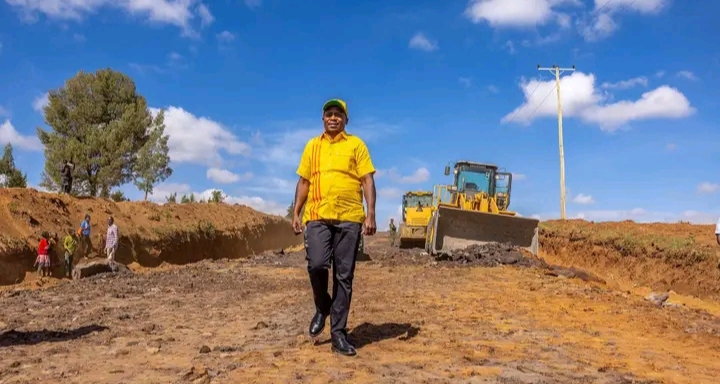
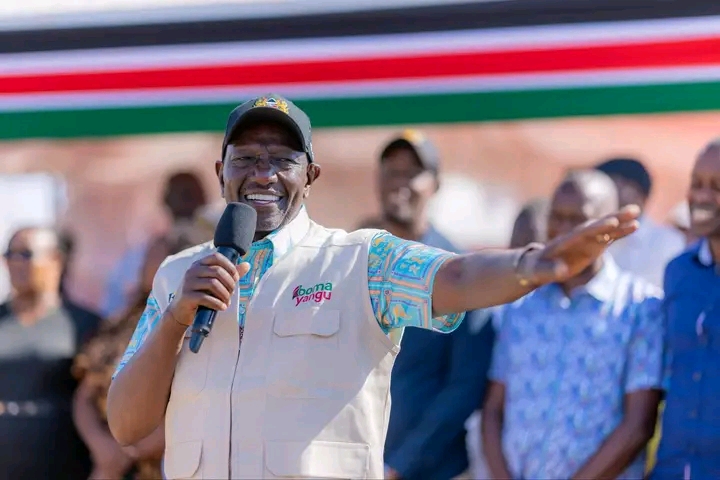
President William Ruto’s visit to Kitui and Makueni counties on October 24–26, 2026, forms part of a broader development programme covering the Ukambani region. The projects highlighted during the tour include the Wote–Kako–Ngoluni Road, Kyambeke–Kyuasini–Ukia Road, Kwa Vonza–Kanyangi–Kyandula Road, the planned Twimiwa–Tseikuru–Usweni Road, affordable housing developments, the Kitui KMTC campus, electricity connectivity initiatives and education and healthcare infrastructure. The President’s central message was that all regions deserve equitable development regardless of their political affiliation. He defended his administration’s investment plans and argued that infrastructure should be used to improve livelihoods and expand economic opportunities.
President William Ruto’s development tour of Kitui and Makueni counties forms part of his administration’s broader plan to expand infrastructure, improve access to essential services and create economic opportunities in Kenya’s traditionally underserved regions. The tour, which began on October 24, 2026, also covers Machakos County, with planned and ongoing projects in roads, affordable housing, education, electricity connectivity, water supply and land ownership.
The President’s programme includes the launch and commissioning of roads, visits to affordable housing developments, education infrastructure projects and the distribution of title deeds to residents. He has also used public meetings during the tour to defend his government’s development record and argue that every region deserves a fair share of national resources, regardless of its political affiliation. For many years, residents of parts of Kitui and Makueni have raised concerns about poor rural roads, unreliable water supplies, limited electricity access and the distance between communities and essential public services. These challenges affect farmers transporting produce, traders moving goods, students travelling to school and families seeking medical care.
The government’s announced programme seeks to address some of these concerns through road construction, electricity connections, education facilities and affordable housing.
The tour also carries political significance because Kitui and Makueni are part of the wider Ukambani region, where opposition leader Kalonzo Musyoka has traditionally enjoyed considerable political support. President Ruto has maintained that development should not be determined by which political party residents support.The President’s programme includes the launch and commissioning of roads, visits to affordable housing developments, education infrastructure projects and the distribution of title deeds to residents. He has also used public meetings during the tour to defend his government’s development record and argue that every region deserves a fair share of national resources, regardless of its political affiliation.
It is important to distinguish between projects already commissioned, those whose construction has been launched, and those that were scheduled for later stages of the tour. The following report covers the key projects and statements reported during the visit, with the latest available information on October 26, 2026.Kyambeke–Kikoko Road
The President’s programme also included the commissioning of the Kyambeke–Kikoko Road. The project is among the infrastructure developments intended to improve transport in the county.
Taken together, these roads demonstrate the government’s stated intention to prioritise rural connectivity in Makueni. Residents will be watching for timely completion, durable construction and continued investment in the smaller roads that connect villages to the main transport network.President Ruto was scheduled to inspect the Kwa Ngendu Affordable Housing Project in Kitui Central Constituency during the tour. The visit was intended to assess progress in the government’s housing programme.
The affordable housing initiative is designed to increase access to formal housing for households that may struggle to purchase homes through conventional property markets.
Housing construction can also create employment opportunities for construction workers, artisans, engineers, suppliers and transport operators. Local businesses may benefit from demand for building materials, food and other services during construction.
For Kitui residents, the project's long-term value will depend on the number of units delivered, affordability of the payment arrangements, eligibility criteria and access to essential services such as water, electricity, roads and sanitation.Kabati Affordable Housing Project
The President’s itinerary also included breaking ground for the Kabati Affordable Housing Project in Kitui West Constituency.
A groundbreaking ceremony marks the beginning of a project rather than its completion. The development is expected to contribute to the government’s efforts to expand access to affordable housing beyond major urban centres.
If implemented successfully, the project could support local employment and improve the availability of formal housing in the area.Education and skills development featured prominently in the President’s programme.
Kenya Medical Training College, Kitui Campus
President Ruto was scheduled to preside over the groundbreaking ceremony for the Kenya Medical Training College (KMTC) Kitui Campus.
The establishment and expansion of medical training facilities can help increase opportunities for students seeking careers in nursing and other health-related professions.
A local training institution can also make professional education more accessible to students who would otherwise have to travel to other counties, although actual access will depend on admissions requirements, available courses and student accommodation.Student hostels and skills training
The President’s wider Ukambani programme also includes student accommodation and technical training infrastructure. In Kitui County, the programme includes student hostels at South Eastern Kenya University and development plans associated with technical training in Tseikuru.
Student accommodation is important because the cost of renting rooms and travelling long distances can place pressure on learners and their families.
Additional hostel facilities could help students access education closer to their institutions while improving the environment for learning.During the tour, Ruto’s programme included flagging off additional Last Mile Connectivity projects intended to extend electricity access to households, businesses and public institutions. The programme also included the commissioning of the Kitui–Wote Power Sub-Station.
Kitui–Wote Power Sub-Station
The power sub-station is intended to strengthen electricity infrastructure serving Kitui and Makueni counties.
Reliable electricity is important for businesses, schools, health facilities, water supply systems and households. A stronger distribution network can also help support new investments in manufacturing, agriculture and commercial services.The President’s programme also includes infrastructure investments in Kibwezi East, an important area connecting communities and transport routes in Makueni County.
At Machinery Market, Ruto was scheduled to launch the Machinery–Kyumani–Tuberie Road. The tour also included the launch of the Kathekani area’s electricity connectivity activities.
The road project is expected to improve movement between settlements and trading centres, supporting the transport of agricultural produce and other goods.
Better access roads can help traders reach customers, improve connections to schools and healthcare facilities, and reduce some of the difficulties faced by residents in remote areas.Land ownership was another component of the President’s programme.
The tour included plans to issue title deeds to residents of Ilima Ward in Makueni County and to beneficiaries in other settlement areas. Reports also indicated that title deeds were scheduled for distribution during the visit to Kitui County.
Title deeds are important legal documents that help establish ownership of land. For eligible beneficiaries, receiving the documents can provide greater security and reduce uncertainty surrounding property rights.President Ruto used his public engagements to communicate his administration’s development priorities and respond to concerns about the historical distribution of government projects across Kenya.
Equal development for all regions
One of the central messages from the President was that development should not depend on political affiliation or ethnic background.
Speaking during the tour, he rejected the suggestion that Machakos, Makueni and Kitui should receive fewer government projects because of their political alignment.
He argued that the region was part of Kenya and deserved its fair share of national development. He also criticised divisive politics, saying communities should work together rather than be separated along tribal linesThe projects highlighted during the tour could produce benefits beyond the immediate construction activities.
Farmers: Improved roads can make it easier to transport produce and access buyers.
Traders: Better connectivity and electricity can support businesses and reduce some operating difficulties.
Students: Schools, college facilities and hostels can improve access to education and training.
Households: Electricity connections and improved water infrastructure can support everyday activities.
Healthcare users: Hospital infrastructure can improve access to medical services when properly equipped and staffed.
Young people: Construction, technical training and business opportunities could provide employment pathways.
Landowners: Valid title deeds can strengthen legal security over land.Political unity and the 2027 election
The tour also had a political dimension. Ruto called on Ukambani residents to reconsider their support for the opposition and argued that his administration offered a development agenda for the region.
He criticised opposition leader Kalonzo Musyoka’s political camp, arguing that it lacked a clear plan to transform Ukambani. He presented his government’s infrastructure investments as evidence of its commitment to the region.
The statements reflect the political competition ahead of Kenya’s 2027 General Election. While the President sought to persuade residents that his administration could deliver development, the ultimate assessment will depend on whether announced projects are implemented and produce measurable improvements.Road construction requires reliable funding, procurement oversight, quality control and regular maintenance. Housing developments need transparent beneficiary selection and clear information about prices and payment terms. Schools and hospitals require staff, equipment and operating budgets.
Electricity projects need to be assessed not only by the number of connections announced but also by the number of households actually connected and the reliability of the supply.
Similarly, title deed distribution should be accompanied by proper verification so that the documents issued provide genuine and legally recognised security of ownership.
County governments, national government agencies, elected representatives and local residents all have a role in monitoring implementation and raising concerns when projects are delayed.

You Might Also Like
-
The reported inspection by Deputy President Kithure Kindiki of the Njoro–Beeston–Lawina–Elburgon road on October 27, 2026, highlights an important infrastructure project in Nakuru County. Official records confirm that the wider road programme covers approximately 40 kilometres, has a listed c
-
Kenya’s Ministry of Health has confirmed the release of 20 Ebola contacts from quarantine after completing the required monitoring period without developing symptoms. However, the ministry warns that the outbreak is not yet contained, with 98 other contacts still under observation and expected to
-
Kenya's latest published forecast available for this report points to rainfall across numerous counties, including areas in the Coast, North Eastern, Eastern, Central, Western, Nyanza and Rift Valley regions. Particular attention is warranted in Mandera, Wajir and parts of the coastal region, where
-
The commencement of post-mortem examinations for the 24 victims of the Mtito Andei road accident is a crucial step in the process of identifying the deceased, documenting the causes of death and facilitating burial arrangements. The tragedy occurred at Kanga along the Nairobi–Mombasa Highway on Oc
-
The discharge of 20 people from Ebola quarantine on 26 October 2026 marks an important step in Kenya’s efforts to contain the Bundibugyo virus disease outbreak. The individuals completed the mandatory 21-day monitoring period without symptoms and were released after health assessments. However, 9
-
KeNHA Chairperson Winfrida Ngumi has praised President William Ruto for launching the Kandwia–Kyuso and Kyuso–Tseikuru B52 road projects.The projects are expected to improve connectivity and ease transportation across the region.Better roads could boost trade by making it easier for farmers and