President William Ruto Announces KSh100 Million Research Funding and Major University Reforms During National Defence University Graduation
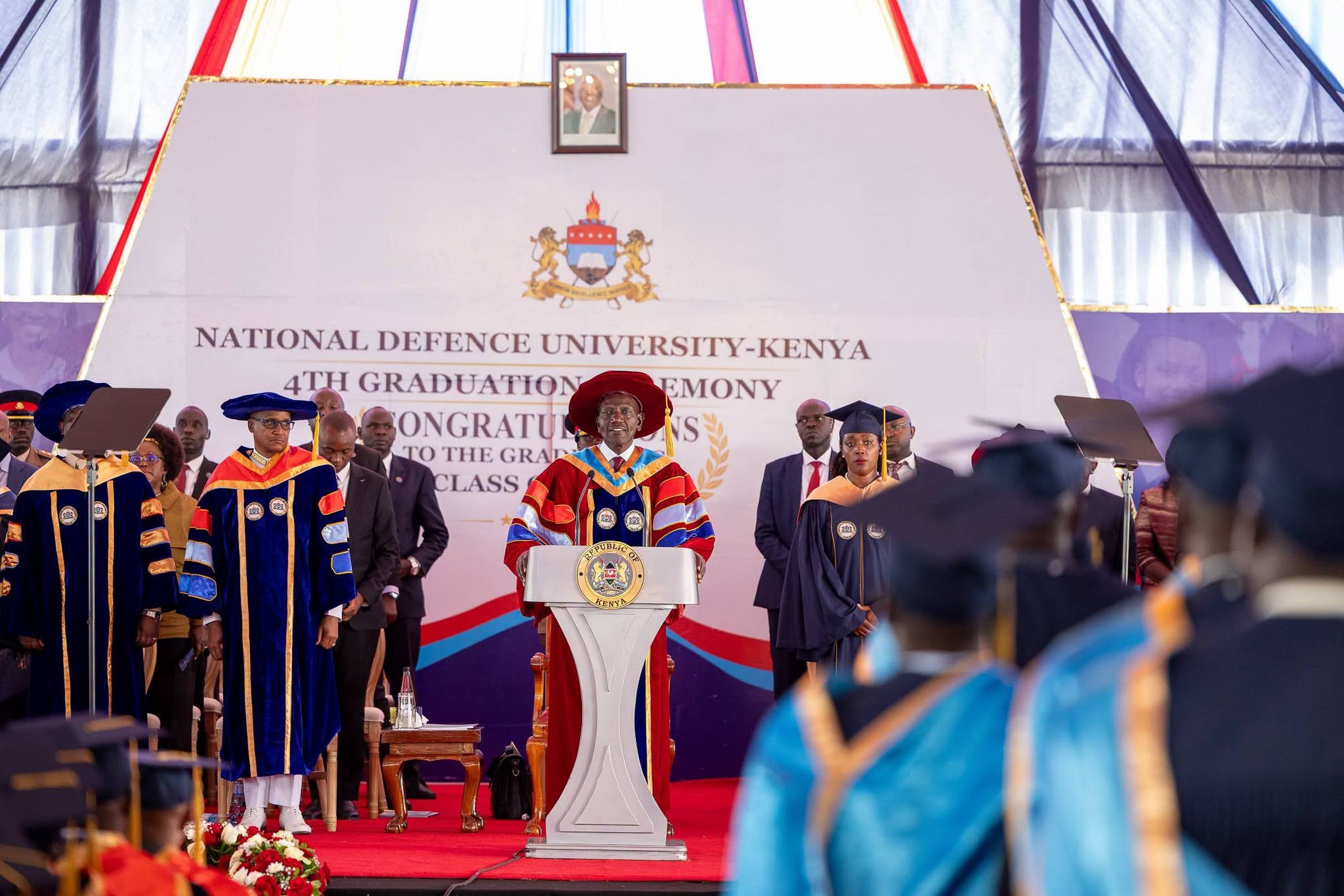
President William Ruto on Thursday, November 26, 2026, presided over the fourth graduation ceremony at the National Defence University-Kenya in Lanet, Nakuru County, where he announced major initiatives aimed at strengthening national security, research and higher education. The President committed KSh100 million towards four strategic research projects focusing on illicit alcohol and drug trafficking, climate-related conflicts, recurring fires in informal markets, and artificial intelligence and cybersecurity. He also directed the Commission for University Education (CUE) to review university programmes across the country to ensure they equip graduates with relevant skills that match the changing demands of the job market. During the ceremony, which saw more than 350 graduands receive their qualifications, Ruto challenged the university to become a centre of excellence that develops practical solutions to Kenya's challenges. His announcements highlighted the government's commitment to strengthening defence education, promoting technological innovation, improving research and preparing Kenya to address emerging security and economic challenges.
President William Ruto on Thursday, November 26, 2026, presided over the fourth graduation ceremony of the National Defence University-Kenya (NDU-K) at its Lanet campus in Nakuru County, where he announced significant government support for research, national security, technological innovation and higher education.The ceremony brought together senior government officials, military commanders, university administrators, graduating students, families and invited guests. More than 350 graduands received degrees, master's qualifications and diplomas across various academic programmes.
One of the major announcements made by the President was the allocation of KSh100 million towards four strategic research projects that will focus on some of the country's most pressing challenges. These include illicit drugs and organised crime, climate-related conflicts, recurring fires in informal markets, and artificial intelligence and cybersecurity.
Ruto, who serves as Chancellor of the National Defence University-Kenya, challenged the institution to become a centre of excellence that produces practical solutions to national problems rather than concentrating only on awarding academic qualifications.During the ceremony, graduands were awarded qualifications in different academic programmes, including degrees, master's qualifications and diplomas.
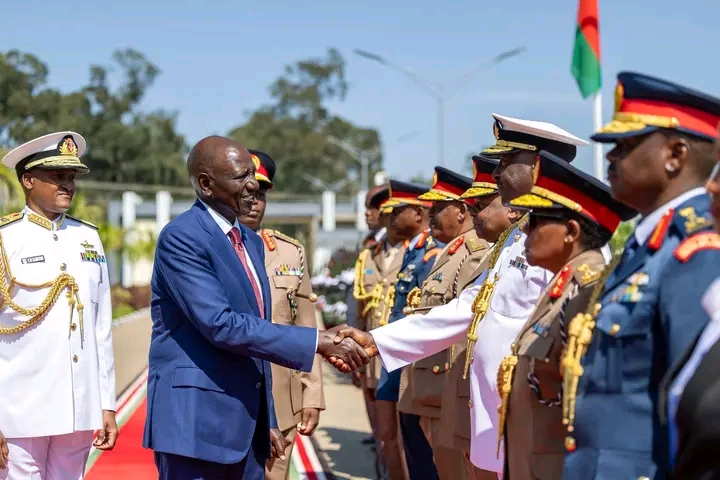
The President was received by senior military officers and university officials upon arrival at the institution. Among those present was Chief of the Defence Forces General Charles Kahariri, alongside other senior military commanders and government representatives.
The graduation ceremony provided an opportunity to recognise the commitment, discipline and academic achievements of the graduating officers and professionals.Illicit alcohol, narcotics and organised criminal networks.
Climate-related conflicts and national security.
Recurring fires in informal settlements and markets.
Artificial intelligence, cybersecurity and national technological sovereignty.
The funding is expected to strengthen the university's capacity to conduct research, work with relevant government agencies and develop solutions that can inform national policies.
Ruto emphasised that research institutions must contribute directly to solving problems affecting ordinary citizens.The research is expected to involve collaboration with the National Authority for the Campaign Against Alcohol and Drug Abuse (NACADA), the National Intelligence Service and the Ministry of Interior.
The study will investigate how illicit drug networks operate, how they obtain and distribute their financial resources, their connections to organised crime and how they sustain substance abuse.
This is important because fighting drug trafficking requires more than arresting individuals found selling illegal substances.
Authorities must understand the structures behind the trade, including financing, distribution networks and the individuals or organisations that may facilitate the business.
The findings are expected to help the government develop a coordinated, evidence-based approach to combating illicit drugs and protecting communities.Changing weather patterns, prolonged droughts and environmental pressures can make these problems worse by forcing communities to move in search of resources.
President Ruto challenged the university to investigate the relationship between climate pressures and insecurity and identify ways of preventing conflicts before they escalate.
He directed the institution to establish a Centre for Climate, Peace and Security.
The university has also been tasked with developing Kenya's first Climate Security Early Warning Model.
Such a model is intended to strengthen the country's ability to identify warning signs of climate-related conflicts and help authorities respond before violence occurs.Ruto challenges the university to become an intellectual powerhouse
During his address, President Ruto challenged the National Defence University-Kenya to measure its success through the practical impact of its research and training.
He made it clear that the institution should not concentrate exclusively on producing graduates and awarding academic certificates.Instead, he wants it to become an intellectual powerhouse capable of generating solutions to the country's most pressing defence and security challenges.
This message highlights the importance of connecting education with practical national needs.
Universities and other higher learning institutions are expected to produce graduates who can contribute to society through innovation, research, leadership and professional expertise.
For the National Defence University, this responsibility is particularly important because security challenges continue to evolve.
The institution must prepare professionals who understand traditional military responsibilities as well as modern challenges involving technology, climate change, organised crime and international security.The President wants universities to ensure that their courses remain relevant to the changing needs of the economy, employers and society.
He observed that knowledge can become outdated as technology and the global economy continue changing.
His directive calls for deeper examination of approved university programmes to establish whether they are producing meaningful outcomes.
The review is particularly significant because graduate unemployment and skills mismatch remain concerns in Kenya.
Many graduates continue experiencing difficulties securing employment after completing their studies.
Employers have also raised concerns about gaps in practical experience, communication, problem-solving and adaptability among some graduates.Its role extends beyond training military personnel because national security increasingly requires cooperation between different government institutions and professionals.
Kenya faces a range of security concerns, including terrorism, organised crime, cyber threats, regional instability and conflicts associated with competition over natural resources.
The university's research programmes are expected to help the country develop a deeper understanding of these challenges.
The institution also plays an important role in preparing leaders who can make informed decisions in complex security environments.President Ruto's announcements at the university also reflected the government's wider interest in strengthening education and research as foundations for national development.
Education remains important in preparing young people for employment, entrepreneurship and leadership.
However, the President's message was that academic qualifications must be accompanied by relevant skills and practical knowledge.
The directive to CUE to review university programmes is therefore an important development for students, lecturers, university administrators and employers.
The KSh100 million research allocation also demonstrates the importance of supporting institutions that can provide solutions to national challenges.
What the announcements mean for ordinary Kenyans
The announcements made by President Ruto at the National Defence University-Kenya have implications beyond the military and higher education sectors.First, the research into illicit alcohol and narcotics could help protect young people and communities from the effects of substance abuse. Understanding how criminal networks operate may help security agencies develop more effective strategies against drug trafficking.
Second, the climate security initiative could benefit communities affected by drought, resource shortages and conflicts. Early-warning systems could help authorities intervene before disagreements escalate into violence.
Third, investigations into market fires could provide answers to traders who have repeatedly lost their businesses and investments. Better safety measures could help prevent future disasters and protect livelihoods.
Fourth, the investment in artificial intelligence and cybersecurity could strengthen the country's digital infrastructure and create opportunities for technological innovation.
Finally, the university course review could influence the future of higher education by encouraging institutions to offer programmes that respond to the needs of employers and the changing economy.

You Might Also Like
-
A Nakuru court has found two Kenya Wildlife Service (KWS) officers guilty of abducting fisherman Brian Odhiambo, who went missing on January 18, 2025, near Lake Nakuru National Park. The ruling marks a significant development in a case that has raised concerns about the conduct of security officers,
-
President William Ruto has called for regular reviews of academic programmes offered by universities in Kenya to ensure they remain relevant, effective and responsive to the country's changing needs. Speaking during the National Defence University-Kenya graduation ceremony in Lanet, Nakuru County, t
-
Democracy for the Citizens Party (DCP) Leader Rigathi Gachagua has warned IEBC Chairperson Erastus Ethekon against presiding over an election marred by irregularities, insisting that Kenyans are determined to have a transparent, free and fair 2027 General Election. Gachagua maintained that there wou
-
The National Transport and Safety Authority (NTSA) has announced plans to suspend approximately 300,000 driving licences within seven days over unpaid traffic fines, giving affected motorists a limited period to clear their outstanding penalties and avoid losing their driving privileges. The planned
-
Energy and Petroleum Cabinet Secretary Opiyo Wandayi's appearance at the KenGen Sustainable Energy Conference in Olkaria on November 26, 2026, has highlighted the government's ambition to expand Kenya's energy industry. His announcement that KenGen could participate in oil drilling in the South Loki
-
Deputy President Kithure Kindiki has chaired a meeting of the United Democratic Alliance (UDA) National Steering Committee at Hustler Plaza in Nairobi to assess the party's preparedness for the 2027 General Election. The Thursday, November 26, 2026, meeting focused on strengthening party structures,