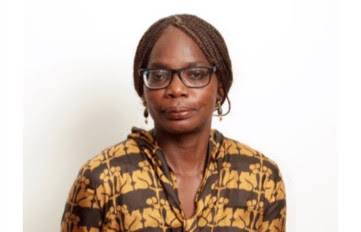
Professor Phoebe Okowa has been re-elected to the ICJ for another nine-year term until 2036.
Kenyan Professor Phoebe Okowa has been re-elected as a judge of the International Court of Justice (ICJ) for another nine-year term, extending Kenya’s representation at the United Nations’ principal judicial organ until 2036. Her re-election marks a significant achievement for Kenya and its legal profession, strengthening the country's presence in international judicial affairs. The ICJ plays a key role in resolving legal disputes between countries and providing advisory opinions on matters of international law. Okowa’s continued service is expected to contribute to the court’s work in promoting justice, peaceful dispute resolution and respect for international law.
Kenya’s election of Professor Phoebe Okowa as a judge of the International Court of Justice (ICJ) marks a significant achievement for the country’s legal profession and its representation in international institutions. Professor Okowa will serve a full nine-year term beginning in 2027, placing her among the judges responsible for handling some of the most important legal disputes involving countries around the world. Her election is also an important moment for Kenya’s presence in international justice and diplomacy, demonstrating the contribution that Kenyan legal professionals continue to make to global legal affairs.
The International Court of Justice is the principal judicial organ of the United Nations and plays a central role in resolving legal disputes between sovereign states. Established in 1945, the court is based in The Hague, Netherlands, and operates under the framework of the United Nations Charter. Its responsibilities include interpreting international law, settling disputes submitted by countries and providing advisory opinions on legal questions referred to it by authorised United Nations bodies and specialised agencies.
The court is made up of 15 judges who are elected to serve nine-year terms. The judges are expected to exercise their responsibilities independently and impartially, applying international law when considering cases brought before the institution. Their work covers a wide range of issues, including territorial disputes, maritime boundaries, diplomatic relations, treaty interpretation and questions concerning the rights and obligations of states under international law.
Judges are elected through a process involving both the United Nations General Assembly and the Security Council. Candidates must receive the required support from both organs to secure a position on the court. This process is designed to ensure that the bench represents different legal systems and regions of the world while maintaining the independence and credibility of the institution. Professor Okowa’s successful election therefore represents an important international endorsement of her candidacy and gives Kenya an opportunity to contribute to the work of the world's highest court.
Her nine-year term, which begins in 2027, will place her in a position to participate in deliberations and decisions involving complex questions of international law. The responsibilities of an ICJ judge require a strong understanding of legal principles, careful examination of evidence and the ability to assess arguments presented by countries involved in disputes. Judges must also consider the wider implications of their decisions because rulings can influence diplomatic relations, international cooperation and the interpretation of legal obligations between states.
The court does not operate like a domestic criminal or civil court. It deals primarily with disputes between countries rather than cases involving individuals or private organisations. When a country brings a case before the ICJ, the court examines the legal arguments, relevant treaties, evidence and principles of international law before reaching a decision. Its judgments are binding on the parties involved in a particular case, although the court does not have its own enforcement force.
The institution also provides advisory opinions on legal matters referred to it by authorised United Nations bodies and agencies. These opinions help clarify international legal questions and can guide governments and international organisations when dealing with complicated issues. Although advisory opinions are generally not binding in the same way as judgments in contentious cases, they carry significant legal authority and can influence international policy and diplomatic discussions.
Professor Okowa’s election comes at a time when international law continues to play an important role in addressing disputes and maintaining relations between countries. The international community faces several challenges, including territorial disagreements, conflicts, questions surrounding the interpretation of international agreements and disputes over access to natural resources. In such circumstances, institutions like the ICJ provide countries with a legal avenue for resolving disagreements without relying entirely on political negotiations or other forms of confrontation.
The court is particularly important because it offers a peaceful mechanism through which states can seek legal clarification and settlement of disputes. Countries may disagree over borders, maritime territories, diplomatic responsibilities or the interpretation of agreements they have signed. Instead of allowing such disagreements to escalate, they can use international judicial processes to seek a determination based on established legal principles.
Kenya's representation through Professor Okowa is therefore significant beyond the achievement of an individual appointment. It provides the country with an opportunity to be represented within an institution that contributes to the development and application of international law. Her participation will also place Kenya among the countries whose nationals have taken part in the work of one of the most important judicial institutions within the United Nations system.
The election is also likely to attract attention within Kenya's legal and academic communities, particularly among young people interested in pursuing careers in law, international relations and diplomacy. International judicial positions require years of professional development, specialised knowledge and an understanding of how legal systems operate across different countries. The achievement can serve as an example of the opportunities available to professionals who build careers in fields that extend beyond national borders.
For Kenyan law students, the development offers an opportunity to reflect on the importance of international law and the role that legal professionals can play in addressing global challenges. The work of the ICJ demonstrates that legal careers are not limited to local courts, government institutions or private legal practice. Qualified professionals can also contribute to international organisations where decisions and legal opinions have implications for countries across the world.
Universities and legal training institutions may also draw attention to the importance of preparing students for careers that involve international legal practice. Understanding international treaties, diplomatic relations, human rights frameworks, state responsibility and international dispute resolution is increasingly relevant in a world where countries maintain close economic and political relationships. Professionals with knowledge of these areas can contribute to discussions involving national interests and international obligations.
Kenya has an interest in the effective operation of international legal institutions because its relationships with other countries involve trade, diplomacy, security, environmental cooperation and regional integration. International law provides a framework for managing these relationships and addressing disagreements when they arise. Having a Kenyan national serving on the ICJ is therefore a notable development for the country's presence in global legal affairs, although judges are expected to act independently rather than represent the interests of their home countries.
This distinction is important because ICJ judges do not serve as delegates or political representatives of the governments that supported their election. Once elected, they are required to perform their judicial duties impartially and independently. Their decisions must be guided by international law and the evidence presented before the court rather than the political or economic interests of individual countries.
The independence of the judges is essential to maintaining public confidence in the institution. Countries appearing before the court must have confidence that their cases will be considered fairly, regardless of their political influence, economic strength or diplomatic relationships. The court's credibility depends on the ability of its judges to examine disputes objectively and reach decisions based on the applicable legal principles.
Professor Okowa's appointment will also be viewed within the wider context of Africa's participation in international institutions. African countries have an interest in ensuring that their legal perspectives and experiences are reflected in global discussions on international law. The continent has dealt with a range of legal and diplomatic questions involving borders, natural resources, sovereignty, armed conflicts and the interpretation of international agreements.
African representation in international judicial institutions provides an opportunity for professionals from the continent to contribute to the interpretation and development of international legal principles. However, judges serving in such institutions must apply the same standards of independence and impartiality regardless of their nationality or regional background. Their responsibility is to uphold the law and ensure that disputes are considered according to established legal standards.
The appointment also highlights the relationship between national legal development and international participation. A country that invests in education, professional training and strong legal institutions creates opportunities for its citizens to compete for positions in global organisations. International appointments can increase a country's visibility while demonstrating the value of developing professional expertise in areas that have an impact beyond its borders.
As the 2027 commencement of her term approaches, attention will turn to the responsibilities that come with serving on the ICJ and the cases that may come before the court during her tenure. The nature of the court's work means that judges must be prepared to examine difficult disputes involving different legal traditions, political interests and competing interpretations of international obligations.
Her nine-year tenure will also provide an opportunity to participate in the institution's long-term work, including the consideration of cases that may have significant consequences for international relations. Each case requires detailed legal examination, and decisions can contribute to how international law is understood and applied in the future.

You Might Also Like
-
The recovery of the second body from the collapsed Eastleigh building is a painful reminder of the devastating consequences of the October 23 disaster. As rescue teams continue clearing the rubble, families remain anxious about their missing relatives and are calling for faster efforts to establish
-
Police and Kenya Pipeline Corporation officials have uncovered a suspected major fuel-siphoning syndicate in Migadini, Changamwe, Mombasa County, after discovering an illegal connection to the corporation’s main petroleum pipeline inside a condemned building. The discovery has raised concerns over
-
A Narok man has been sentenced to life imprisonment after being convicted of sexually abusing his 10-year-old daughter on several occasions between 2024 and February 2026 in the Bulla Kipangas area of Narok Central. The sentence was delivered by Chief Magistrate H. Nyaberi following a successful pro
-
More than 350 Kenyan workers who travelled to Saudi Arabia in search of employment have been forced to return home after being denied entry over concerns linked to the Ebola outbreak in Kenya. The unexpected development has disrupted their employment plans, leaving many uncertain about when they wil
-
Dr Raymond Omollo hosted the 5th Kenya-European Union (EU) Security and Defence Dialogue, bringing together key stakeholders to strengthen cooperation between Kenya and the European Union in addressing emerging security challenges. The discussions focused on combating terrorism and violent extremism
-
Inspector General of Police Douglas Kanja has appeared in court to respond to concerns surrounding the disappearance of Tanzanian activist Twaha Mwaipaya, who was reportedly last seen in Nairobi's Kamulu area on October 25, 2026. During the court proceedings, Kanja denied allegations that police off