



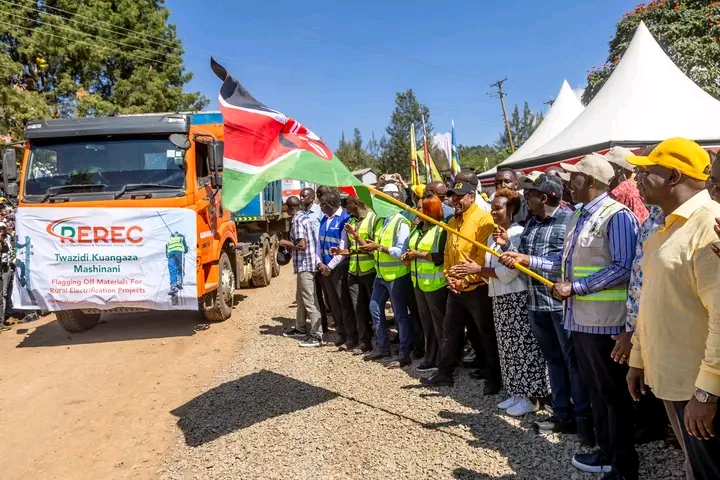
REREC Targets Over 50,000 Households in Bomet and Kericho for Electricity Connections Before Christmas
Rural Electrification and Renewable Energy Corporation (REREC) is targeting the connection of more than 50,000 households in Bomet and Kericho counties to electricity before Christmas, as part of the government’s wider push to expand electricity access in rural Kenya. The initiative is expected to benefit families, schools, health facilities, farmers and small businesses by providing reliable power for lighting, studying, refrigeration, agricultural value addition and income-generating activities. The programme also supports Kenya’s long-term goal of achieving universal electricity access by 2030, while REREC continues to promote renewable-energy solutions such as solar systems and mini-grids in areas where conventional grid extension is difficult.
The Rural Electrification and Renewable Energy Corporation (REREC) is intensifying its efforts to expand access to electricity in rural Kenya, with a current target of connecting more than 50,000 households in Bomet and Kericho counties before Christmas. The development is part of the government's wider effort to improve electricity access, particularly in rural and underserved communities where many households have historically remained outside the reach of reliable grid electricity. The latest report on the target was published on September 14, 2026, and indicates that the programme is expected to accelerate electrification in the two counties.
*What the REREC target means*
The target to connect over 50,000 households represents a significant push to bring electricity closer to families, businesses, schools and other institutions. For many rural households, access to electricity is no longer viewed simply as a matter of lighting homes at night. Electricity has become an important foundation for education, healthcare, communication, small businesses, agriculture and overall economic development.
REREC, whose full name is the Rural Electrification and Renewable Energy Corporation, is a government corporation responsible for promoting rural electrification and renewable-energy development in Kenya. Its mandate includes increasing electricity access in areas that may not receive adequate investment through conventional commercial electricity expansion.
The corporation's broader strategy is aligned with the government's goal of achieving universal access to electricity by 2030. REREC says the government has set a target of increasing connectivity and achieving universal electricity access by that year.
*Focus on Bomet and Kericho*
The latest 50,000-plus household target is particularly important for Bomet and Kericho counties, where rural settlements are spread across large agricultural areas. Electricity connectivity can have a direct effect on households that depend on farming and small-scale businesses.
The programme could help households that have electricity infrastructure passing near their homes but have not yet been connected. It can also support the expansion of distribution infrastructure into areas that have remained underserved.
Bomet and Kericho are economically important agricultural counties, with tea, dairy farming, livestock keeping, maize and other agricultural activities providing livelihoods to thousands of families. Reliable electricity can support value addition by enabling farmers and entrepreneurs to operate equipment such as milk coolers, grain-processing machines, welding equipment, refrigeration facilities and other electrically powered machinery.
The impact therefore goes beyond simply installing electricity poles and connecting meters. The objective is to create an environment in which rural communities can use electricity to improve their incomes and living standards.
Electricity and education
One of the most important benefits expected from increased electricity connectivity is improved education.
Children in households without electricity often depend on kerosene lamps, candles, rechargeable lamps or mobile-phone flashlights when studying after dark. Such arrangements can make studying difficult, particularly for pupils preparing for national examinations.
Electricity allows students to study for longer hours in better lighting conditions. It can also allow schools to use computers, internet services, digital learning equipment, printers and other educational technologies.
REREC has previously played an important role in connecting public institutions. According to recent reporting, the corporation had connected 64,395 public facilities to electricity against a target of 115,610 identified facilities.
This demonstrates that the corporation's work extends beyond individual homes to institutions that provide essential services.
*Benefits to small businesses*
Electricity connectivity can also transform rural businesses.
A shopkeeper who previously depended on kerosene lighting can operate later into the evening. A barber can use electric clippers and other equipment. Welding businesses can acquire electric welding machines, while restaurants and food businesses can use refrigerators and freezers.
For farmers, electricity can support agricultural value addition. Instead of selling milk immediately after production, dairy farmers can use cooling equipment to preserve milk and reduce losses. Small-scale processors can also use electric machinery to process agricultural products.
The availability of electricity can therefore encourage entrepreneurship and create employment opportunities within rural communities.
Supporting healthcare services
Electricity is equally important for health facilities.
Rural health centres require reliable power for lighting, refrigeration of medicines and vaccines, laboratory equipment, communication systems and other medical services. Where electricity supply is unreliable or unavailable, health workers can face difficulties providing services, especially at night.
Improved electricity access can therefore strengthen healthcare delivery in rural communities.
The government's rural electrification programme has historically included health facilities among the institutions targeted for electrification. Earlier REREC plans, for example, included thousands of health centres and dispensaries among the public facilities targeted for electricity connectivity.
*Part of a wider national electrification programme*
The 50,000-household target should also be viewed within the broader national electrification programme.
REREC's work is not limited to extending conventional electricity lines. The corporation is also involved in renewable-energy projects, including solar-powered systems and mini-grids.
A current programme involving 114 mini-grids is expected to connect approximately 50,000 households to electricity. The programme also includes electrification of hundreds of public facilities.
Mini-grids are particularly important in remote locations where extending the national electricity grid may be technically difficult or expensive. They can provide communities with locally generated electricity, often using solar energy and battery-storage systems.
This approach can help Kenya reach households that might otherwise wait many years for conventional grid extension.
Renewable energy component
REREC's mandate also places significant emphasis on renewable energy.
Kenya has developed a strong renewable-energy sector, with geothermal, hydro, wind and solar power playing important roles in the country's electricity supply. The expansion of rural electricity access therefore provides an opportunity to increase the use of clean-energy technologies.
Solar power is particularly useful in remote communities because solar systems can be installed without requiring long transmission lines.
REREC's strategic direction states that it is spearheading Kenya's green-energy drive while implementing rural electrification for sustainable development.
*Why the target matters to rural households*
For families receiving electricity for the first time, the change can be substantial.
Electricity can reduce dependence on kerosene and other traditional lighting sources. It can make homes safer and more comfortable, improve children's study conditions and enable families to charge mobile phones without travelling long distances.
In some remote communities, residents have traditionally had to walk considerable distances to charge phones or operate businesses that require electricity. REREC has highlighted beneficiaries who say electricity has helped them charge devices locally and gain access to computers and other technologies.
Electricity can also improve access to information. With reliable power, households can operate televisions, radios, computers and internet equipment, giving residents better access to news, education and government information.
Economic development
The programme could have a wider economic impact in Bomet and Kericho.
When more homes and businesses are connected, demand for electrical appliances and services is likely to increase. This can create opportunities for electricians, technicians, hardware businesses, appliance retailers and other local enterprises.
Electricity can also encourage businesses to establish themselves in rural trading centres. A trading centre with reliable power can support restaurants, salons, shops, workshops, cybercafés, cold-storage facilities and other enterprises.
This means that electrification can become an important component of local economic development.
Government's universal electricity-access ambition
The current initiative is consistent with Kenya's longer-term ambition of achieving universal electricity access.
REREC has previously stated that it is targeting 100 per cent electricity connection in rural Kenya by 2030. Achieving that objective requires continued investment in electricity distribution infrastructure, transformers, power lines, mini-grids and renewable-energy systems.
The 50,000-plus household target in Bomet and Kericho is therefore one component of a much larger national programme.
*Challenges facing the programme*
Despite the benefits, connecting thousands of households within a relatively short period presents several challenges.
One challenge is the availability of sufficient infrastructure. Electricity connections require poles, transformers, cables, meters and other equipment. Contractors must also complete surveys, erect infrastructure and ensure that installations meet safety standards.
Terrain can be another challenge. Some rural settlements are located far from existing power lines or in difficult-to-reach areas. Extending electricity to such locations can increase construction costs.
Financing is also important. Rural electrification requires significant capital investment, particularly where households are scattered over large geographical areas.
Maintenance is another consideration. Connecting households is only the beginning. The infrastructure must subsequently be maintained so that communities can enjoy reliable electricity over the long term.
Importance of coordination
Successful implementation will require cooperation between REREC, Kenya Power, county governments, contractors, local communities and other stakeholders.
REREC develops and implements rural electrification projects, while Kenya Power plays a major role in electricity distribution and customer connections. County governments can assist by facilitating access to project areas and working with communities.
Residents also have a role to play by protecting electricity infrastructure and reporting vandalism or faults.
Looking ahead
The plan to connect more than 50,000 households in Bomet and Kericho before Christmas represents an important step in Kenya's rural electrification campaign. If successfully implemented, thousands of families could gain access to electricity, while businesses, schools, health facilities and agricultural enterprises could benefit from improved energy access.
The programme also demonstrates how electricity connectivity is increasingly being linked to broader development objectives. The aim is not merely to put electricity poles in villages but to provide communities with the energy required to improve education, healthcare, agriculture, entrepreneurship and household welfare.
At the national level, the initiative contributes to Kenya's long-term objective of universal electricity access by 2030. REREC's strategic plan and ongoing renewable-energy projects indicate that rural electrification will continue to combine traditional grid expansion with solar systems and mini-grids.
In summary, REREC's target of connecting more than 50,000 households in Bomet and Kericho before Christmas is a major rural electrification initiative. The programme is expected to improve access to modern energy, support businesses and agriculture, improve learning conditions, strengthen healthcare services and contribute to economic development. More broadly, it forms part of Kenya's effort to achieve universal electricity access by 2030 while increasing the role of renewable energy in underserved communities.
You Might Also Like
-
EPRA has retained fuel prices for the September–October cycle, with petrol at KSh214.03, diesel at KSh217.86, and kerosene at KSh191.38 per litre.
-
Musalia Mudavadi's speech in Kapsengere, Nandi County, on September 13, 2026, was primarily about the 2027 General Election and President William Ruto's expected re-election campaign. Mudavadi firmly rejected suggestions that Ruto would need to rig the election or use electoral shortcuts. He urged p
-
President William Ruto's second day in Kisumu has been marked by a combination of major infrastructure launches, development announcements and strong political speeches. The biggest project commissioned today is the Sh8.4 billion Lake Victoria Water and Sanitation Project, which is expected to impr
-
Deputy Inspector General of Police Gilbert Masengeli urges Kenyans to work with security agencies, share information responsibly and help safeguard peaceful elections.
-
The Public Health Principal Secretary's warning highlights the growing importance of preparing Kenya's health system before the anticipated El Niño rains intensify. Mary Muthoni has called for stronger disease surveillance, safe water, improved sanitation, adequate medicine stocks and greater prepa
-
The arrest of two suspects marks the latest development in the investigation into the Nembure chaos in Embu County, where a UDA meeting attended by Deputy President Kithure Kindiki was violently disrupted on September 12, 2026. The incident resulted in one confirmed death, several injuries and six