



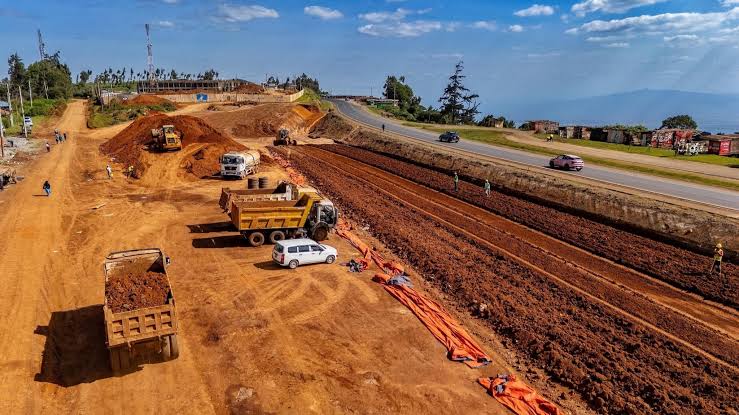
Rironi–Naivasha Road Tarmacking Set for Completion by December
The Chinese contractor undertaking the construction of the Rironi–Mau Summit road is expected to complete the tarmacking of the Rironi–Naivasha section by December, in a development that could provide major relief to motorists who have endured persistent traffic congestion along the busy route.
Rironi–Naivasha Road Tarmacking Set for Completion by December
The Chinese contractor undertaking the construction of the Rironi–Mau Summit road is expected to complete the tarmacking of the Rironi–Naivasha section by December, in a development that could provide major relief to motorists who have endured persistent traffic congestion along the busy route.
The project is part of ongoing efforts to improve one of Kenya’s key transport corridors, which serves thousands of motorists and facilitates the movement of people and goods between Nairobi, Naivasha, the western parts of the country and destinations beyond the Rift Valley.
The anticipated completion of the Rironi–Naivasha section is expected to significantly improve traffic flow and reduce the delays that motorists frequently experience, particularly during peak hours, weekends and holiday periods.
For years, congestion along the route has been a major concern for drivers, passengers and businesses that depend on the road for the transportation of goods and services. Long queues of vehicles have often resulted in lengthy travel times, increased fuel consumption and delays for motorists travelling between Nairobi and the Rift Valley.
The ongoing construction is therefore being closely followed by motorists and residents who hope that the upgraded road will address some of the challenges experienced along the busy corridor.
Once the tarmacking works are completed, motorists are expected to benefit from a smoother and more reliable road network. Improved road conditions could also enhance road safety and make journeys along the route more predictable.
The Rironi–Naivasha section is particularly important because of its strategic position within Kenya’s transport network. The road connects major urban centres and serves as an important route for commercial vehicles transporting agricultural produce, manufactured goods and other commodities.
A more efficient road would consequently benefit not only individual motorists but also businesses and communities that rely on the corridor for their daily economic activities.
Transport operators are among those expected to benefit from reduced congestion. Public service vehicles, trucks and other commercial vehicles frequently use the route, meaning that traffic delays can have a direct impact on operating costs and delivery schedules.
Reducing the amount of time spent in traffic could help operators save fuel and improve the efficiency of their journeys.
The project is also expected to support economic activity in areas along the corridor. Improved transport infrastructure generally makes it easier for people to access markets, workplaces, schools, health facilities and other essential services.
For communities located near the highway, the completion of the road could create new opportunities for businesses while improving connectivity with neighbouring towns and urban centres.
The announcement that the Rironi–Naivasha section is expected to be fully tarmacked by December has therefore generated optimism among road users who have long called for improvements along the corridor.
Traffic congestion has been particularly frustrating for motorists during busy periods, when large numbers of vehicles converge on the route. The situation can be worsened by accidents, breakdowns and heavy commercial traffic, causing delays that sometimes extend for several hours.
The upgraded road is expected to increase the efficiency of traffic movement and provide a better travelling experience once construction is completed.
However, motorists are likely to continue experiencing temporary disruptions as construction works progress. Drivers have been required to navigate construction zones, diversions and areas where roadworks are ongoing.
Such inconveniences are common during major infrastructure projects, with authorities and contractors expected to manage traffic carefully to minimise disruption while construction continues.
The December completion target will therefore be closely monitored as motorists wait to see whether the contractor will deliver the section within the expected timeframe.
The wider Rironi–Mau Summit road project is viewed as an important infrastructure undertaking because of the strategic role played by the corridor in connecting different parts of the country.
The route forms part of a major transportation link between Nairobi and western Kenya, making it critical for both passenger and freight movement.
Thousands of vehicles use the corridor, including private cars, buses, matatus and heavy trucks. As a result, improvements to the road have the potential to generate significant benefits beyond the immediate areas where construction is taking place.
The completion of the Rironi–Naivasha section could also contribute to improved movement of agricultural products from farming areas to major markets. Faster transportation can help businesses reduce delays and improve supply chains, particularly for goods that need to reach consumers within a specific period.
The road's improved condition may further enhance connectivity between Nairobi and Naivasha, supporting tourism, trade and other economic activities in the region.
Naivasha is an important economic centre with links to agriculture, tourism, manufacturing, transport and logistics. Better road connectivity could strengthen these sectors by making it easier for people and goods to move into and out of the town.
At the same time, improved infrastructure could benefit motorists travelling towards Nakuru and other destinations in the Rift Valley.
The expected completion also comes amid broader efforts to improve Kenya's road network and address congestion affecting major transport corridors.
Efficient highways are essential to economic development because they reduce transportation costs and improve access between markets. For a country such as Kenya, where road transport carries a significant share of passenger and freight traffic, investment in major highways remains important for economic growth.
The Rironi–Naivasha road works are therefore being viewed not simply as a construction project but as part of a broader effort to improve transport efficiency and connectivity.
For motorists, however, the most immediate benefit will be the possibility of shorter travel times and fewer traffic bottlenecks.
Drivers who regularly use the route are hopeful that the completion of the tarmacking works will bring an end to some of the frustrations associated with the current road conditions and congestion.
The December target will be particularly significant for travellers who use the road during the end-of-year period, when traffic volumes traditionally increase as people travel for holidays and other activities.
If completed as expected, the improved section could provide a major reprieve during a period when the number of vehicles on the road is likely to rise.
Beyond easing congestion, the completed road is expected to improve the overall quality of the transport corridor. Better road surfaces, improved traffic flow and modernised infrastructure could contribute to safer and more efficient journeys.
The project will also remain important for the movement of heavy commercial vehicles, which contribute significantly to congestion along major highways.
As construction progresses, motorists will be watching closely for updates on the project's completion. The success of the December target will depend on the pace of ongoing works and the contractor's ability to complete the remaining sections within the projected timeframe.
For now, the expected completion of the Rironi–Naivasha section represents a significant development for road users who have endured years of congestion.
Once the tarmacking is completed, motorists could enjoy smoother journeys, reduced delays and improved connectivity between Nairobi and the Rift Valley.
The project is consequently expected to provide a major boost to transportation and economic activity along the corridor, while offering much-needed relief to thousands of motorists who depend on the road every day.

You Might Also Like
-
Moi International Airport in Mombasa has been severely disrupted following the ongoing aviation workers’ strike that began on August 30, 2026. The industrial action by Kenya Aviation Workers Union (KAWU) members has affected airport operations, resulting in flight delays, cancellations and strande
-
Kipkelion elders today, August 31, 2026, held a crucial meeting to deliberate on the proposed Londiani Referral Hospital, amid growing concerns over the project's delayed implementation and reports of a possible change of location. The elders are said to have reaffirmed their interest in having the
-
Esther Passaris Explains Support for Ruto, Citing Development Projects in Nairobi
-
A 45-year-old woman identified as Doris Murei Nandi was allegedly shot dead on Sunday, August 30, 2026, at the GSU Mess near the Eldoret State Lodge following a dispute with Police Constable Nathan Kirwa. Police recovered seven spent 9mm cartridges and a rifle holster at the scene. Kirwa reportedly
-
Kenya's aviation sector is facing major disruption after Kenya Aviation Workers Union (KAWU) members resumed their strike on Sunday, August 30, 2026, with the industrial action entering its second day on Monday. The strike has disrupted operations at Jomo Kenyatta International Airport (JKIA), Moi I
-
Kelvin Kimwatu Withdraws Court Case Over Burial of Wife Rosemary Chemutai Koech