





Rosemary Koech: The Successful KCB Data Protection Expert Whose Tragic Death Shocked Kenya
Rosemary Koech Kimwatu was a respected Kenyan lawyer and data protection expert who rose to become Head of Data Protection at KCB Bank. She was also a mother of four and had nearly two decades of experience in law, technology, fintech and public policy. She died at her home in Ngong on Friday, August 21, reportedly after facing personal and professional difficulties. However, specific claims about what led to her death have not been independently confirmed. Her death has sparked conversations about mental health and the fact that career success, financial stability and a seemingly happy family life do not always reflect what someone may be experiencing privately. Her professional legacy remains significant in Kenyas data-protection sector.
Rosemary Koech: The Life and Legacy of a Kenyan Data Protection Champion
NAIROBI, Kenya — The death of Rosemary Koech Kimwatu, a senior Kenyan lawyer and data protection executive, has sent shockwaves through the countrys technology, banking, legal and policy communities, with tributes pouring in for a woman remembered for helping shape Kenyas emerging data privacy landscape.
Koech, who served as Head of Data Protection at KCB Bank Group, died at her home in Ngong on Friday, August 21, 2026. She was widely recognised as a leading voice in data protection, technology policy and digital governance, with a career spanning nearly two decades.
Her death has also prompted difficult questions about the private struggles that can exist behind professional success. However, while several reports have linked her death to personal, financial and workplace difficulties, some of the more detailed allegations circulating online have not been independently established. Her family and authorities had initially not publicly disclosed the circumstances surrounding her death. (Khusoko)
Who was Rosemary Koech?
Rosemary Koech-Kimwatu was a Kenyan advocate whose professional life sat at the intersection of law, technology, public policy, fintech and data protection.
She became particularly well known in technology and legal circles under the professional identity “TechWakili”, building a reputation around technology law, privacy and regulatory affairs.
Her career included senior roles at major Kenyan organisations. Before joining KCB, she worked at Safaricom, where she served as Public Policy Manager. She joined KCB Bank Group in June 2022 as Data Protection Officer and later became Head of Data Protection.
Her expertise extended beyond her banking role. According to her professional biography, Koech served as Chair of the Kenya Bankers Association Data Protection Working Group and was Vice Chair of the Data Privacy and Governance Society of Kenya. She was also associated with organisations including KICTANet, KeNIC, the Association of Fintechs in Kenya and Legal Hackers.
Her work focused on an increasingly important issue in Kenyas digital economy: how organisations collect, process, store and protect peoples personal information.
That role placed her at the centre of conversations about digital trust at a time when banks, telecommunications companies, government agencies and technology firms were dealing with increasingly complex data-protection obligations.
The Office of the Data Protection Commissioner has previously listed Koech as a participant in discussions marking the implementation of Kenyas Data Protection Act, 2019. She also appeared at professional conferences discussing privacy and data protection in financial institutions.
A career many professionals would envy
For many Kenyans, Koechs professional journey represented the kind of success that comes after years of education, experience and persistence.
She had built expertise in specialised areas of law and technology and eventually occupied a senior position at one of Kenyas biggest banking groups.
Her public professional profile showed someone deeply involved in shaping the countrys digital-policy ecosystem. In 2024, for example, she was listed as Head of Data Protection at KCB and participated in professional training and discussions on data privacy.
She was also listed as a panelist at the Connected Africa Summit, reflecting the level of recognition she had earned in technology and digital-governance circles. (Connected Africa Summit)
Yet the story that has emerged following her death is a reminder that professional achievement does not necessarily reveal what is happening in a persons private life.
A mother, wife and professional
Koech was also a mother of four and a wife.
Reports published after her death have described difficulties within her marriage and personal pressures in the period preceding her death. However, details about her private life should be treated carefully, particularly where they rely on unnamed sources or accounts that have not been independently verified.
What is established is that she died at her home in Ngong on August 21, leaving behind family, friends, colleagues and a professional community that knew her for her contribution to data protection.
The circumstances have since attracted intense public attention, partly because of the contrast between the image of professional success and reports of difficulties in her personal life.
That contrast has sparked a wider conversation in Kenya about the dangers of assuming that someones salary, job title, photographs or social-media presence tell the complete story of their life.
Questions surrounding her death
Initial reports about Koechs death did not provide a confirmed cause. Multiple news organisations reported that she died at her Ngong residence, while noting that the family had not initially disclosed the circumstances.
Subsequent reports have carried additional claims concerning the circumstances of her death and the pressures she may have been experiencing.
Because investigations and reporting have developed rapidly, it is important to distinguish between confirmed information and allegations.
Claims circulating online have included assertions about workplace pressure, heavy workloads, financial obligations and marital difficulties. Some publications have presented these as possible factors, while others have made stronger claims about workplace harassment. Those allegations have not been independently substantiated by the strongest publicly available sources.
For that reason, it would be premature to conclude that any single factor caused Koechs death.
Mental-health crises are complex and rarely have one simple explanation. A persons circumstances can involve several overlapping pressures, many of which may be invisible to colleagues, friends or even relatives.
The lesson behind the tragedy
Perhaps the most painful question raised by Koechs death is one that has no simple answer: how can someone who appears to have achieved so much be struggling so deeply?
The answer is that outward success and inner wellbeing are not the same thing.
A senior job does not make someone immune to emotional distress. A high income does not eliminate relationship problems. Professional recognition does not automatically provide protection from loneliness, anxiety, exhaustion or financial pressure.
And photographs of a happy family cannot tell us everything about what happens inside a home.
That is why mental health professionals and advocates have repeatedly encouraged people to take emotional distress seriously, even when the person experiencing it appears successful and functional.
Koechs professional life also highlights the pressures carried by people working in demanding senior positions. Leadership responsibilities, regulatory expectations, long working hours and the need to constantly perform can take a toll, particularly when combined with challenges outside the workplace.
But it is equally important not to turn speculation into fact simply because a tragic death demands an explanation.
A legacy beyond her final days
As Kenya mourns Koech, her professional legacy is likely to outlive the circumstances of her death.
She was part of a generation of Kenyan lawyers and technology professionals who helped establish data protection as a major issue in corporate governance.
Her work contributed to conversations around privacy, responsible use of personal information and compliance with Kenyas data-protection framework. The ODPC has remembered her as a valued participant in efforts to promote a culture of privacy and stronger data-protection practices.
For colleagues in technology, banking and legal circles, therefore, Rosemary Koech was more than a job title.
She was an advocate, policy professional, trainer, board member, mother and mentor whose career reflected the growing importance of technology law in modern Kenya.
Her death is now forcing a different conversation — one about the hidden burdens that successful people can carry and the importance of creating environments where people feel safe enough to seek help before a crisis becomes unbearable.
The circumstances surrounding Koechs final days remain a matter for her family, investigators and other relevant authorities to establish.
What should not be lost amid the speculation is the person who existed before the tragedy: a Kenyan lawyer who spent years building expertise, participating in national conversations about privacy and technology, and helping organisations understand the responsibilities that come with handling peoples personal information.
Rosemary Koechs story is therefore not only about how her life ended. It is also about the nearly two decades she spent building a career, the professional community she helped shape and the family and friends now left to remember her.

You Might Also Like
-
Country music legend Dolly Parton dies aged 80
-
Political leaders linked to goons, organised political violence or other forms of electoral violence could face serious consequences ahead of Kenya’s 2027 General Election, with the Independent Electoral and Boundaries Commission (IEBC) warning that candidates accused of promoting violence, hate s
-
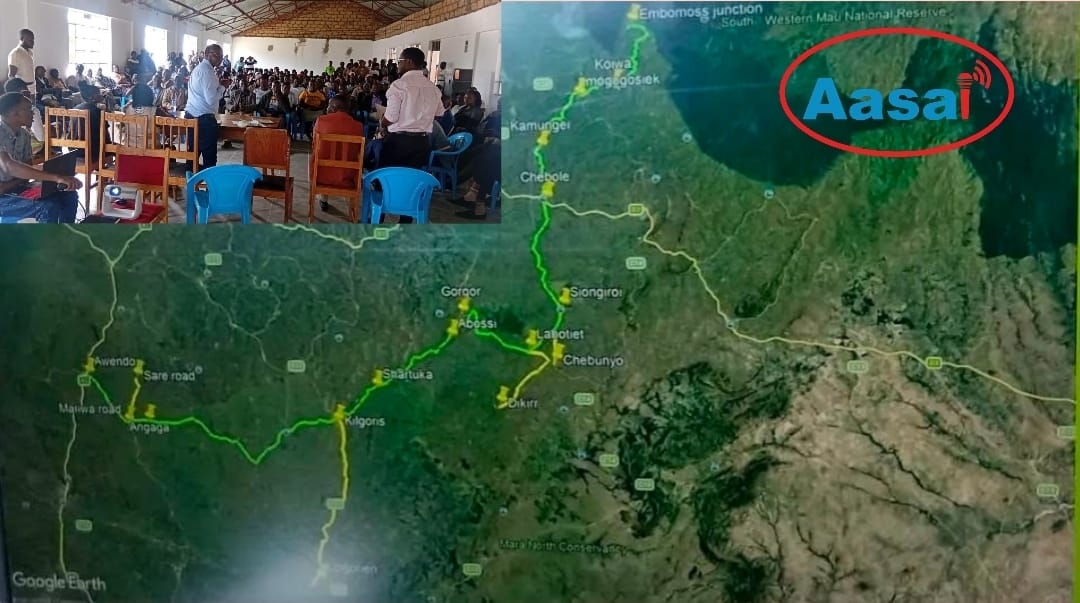
The proposed Chebole–Siongiroi–Labotiet–Kilgoris road upgrade has gained momentum following a public participation forum held yesterday at Siongiroi. The route, which connects the key centres of Chebole, Siongiroi, Labotiet and Kilgoris, was recently refilled with murram and is currently passa
-
President William Ruto has begun a two-day development tour of Narok County, with the visit expected to highlight the government’s efforts to accelerate development and address key priorities affecting residents. During the tour, the President is set to launch and inspect several projects focusing
-
IEBC Commissioner Ann Nderitu: University Degree Not Mandatory for Presidential, Gubernatorial or Parliamentary Candidates in 2027
-
Gachagua: Ruto’s Claim That He Cannot Work With Me Is Not About Willingness, But Because He Knows It Is Impossible.




.png)