RUTO, GERMAN PRESIDENT STEINMEIER HOLD TALKS TO BOOST TRADE, INVESTMENT AND JOB OPPORTUNITIES
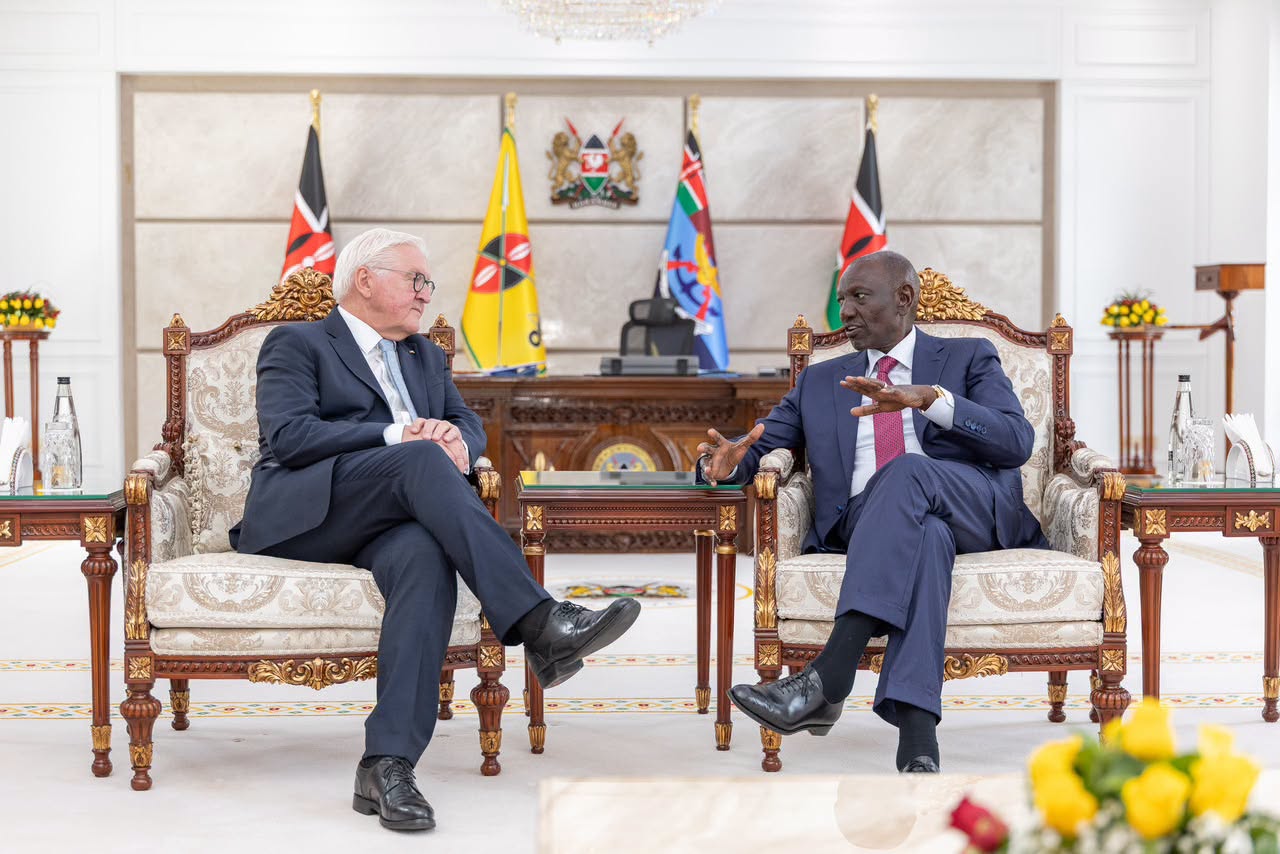
President William Ruto has held bilateral talks with German President Frank-Walter Steinmeier at State House, Nairobi, during his official visit to Kenya, with discussions focusing on strengthening diplomatic relations and expanding economic cooperation between the two countries. A key highlight was the signing of a Memorandum of Understanding between Kenya and German language certification institution telc to improve access to internationally recognised language examinations and prepare more Kenyans for employment opportunities in Germany. Ruto noted that the number of Kenyans working in Germany had increased from 7,170 in March 2024 to 9,500 in March 2026. The two leaders also discussed streamlining visa and recruitment procedures, expanding language training and accelerating the recognition of professional qualifications. Additionally, Ruto welcomed Germany's commitment of €52.5 million, approximately KSh7.8 billion, in development cooperation funding for 2026–2028 and called for increased German investment in manufacturing, agro-processing, infrastructure, healthcare, renewable energy and digital technology. The meeting reaffirmed the commitment by both countries to deepen more than six decades of diplomatic friendship and translate their partnership into meaningful employment, investment and development opportunities for their citizens.
President William Ruto has reaffirmed Kenya's commitment to strengthening diplomatic and economic relations with Germany following high-level talks with German President Frank-Walter Steinmeier at State House, Nairobi, during his official visit to the country.
The meeting focused on expanding cooperation in employment, trade, investment, education, skills development, healthcare, renewable energy, infrastructure and digital technology, as the two countries seek to transform their longstanding diplomatic relationship into practical benefits for their citizens.
A major highlight of the discussions was the signing of a Memorandum of Understanding between Kenya and telc, a German language examination and certification institution. The agreement is intended to improve access to internationally recognised German language certification and create additional opportunities for Kenyans seeking employment in Germany.
The partnership is expected to support Kenyans interested in pursuing careers in the German labour market by strengthening their language skills and making it easier for them to obtain recognised certification. Language proficiency is an important requirement in several employment sectors in Germany, and improved access to training and assessment could help Kenyan workers prepare for opportunities abroad.
The agreement also reflects the growing importance of skills development in Kenya's overseas employment strategy. As demand for qualified workers continues to create opportunities in international labour markets, the government is seeking partnerships that can prepare Kenyan professionals for employment beyond the country's borders.
President Ruto highlighted the progress made through the Kenya-Germany overseas employment partnership, noting that the number of Kenyans employed in Germany increased from 7,170 in March 2024 to 9,500 in March 2026.
The increase represents growing cooperation between the two countries in facilitating labour mobility and connecting Kenyan workers with employment opportunities in Germany. It also demonstrates the potential of international partnerships to create opportunities for skilled and qualified workers while strengthening economic relations between participating countries.
The growth in the number of Kenyans working in Germany has encouraged both governments to explore additional measures that could make the recruitment and deployment process more efficient. During the meeting, Ruto and Steinmeier discussed ways of streamlining visa procedures, improving recruitment systems, expanding language training and accelerating the recognition of professional qualifications.
Visa processing remains an important consideration for people seeking employment abroad. By improving the procedures involved, the two countries hope to make it easier for qualified Kenyan workers to access legitimate employment opportunities while ensuring that recruitment processes are properly coordinated.
The discussions also highlighted the importance of professional qualifications. Workers seeking employment in foreign countries may be required to have their academic certificates, technical training and professional experience assessed before they can take up certain positions. Faster and more efficient recognition of qualifications could therefore help reduce obstacles faced by Kenyan professionals seeking opportunities in Germany.
Kenya, expanding access to international employment markets is part of broader efforts to address unemployment and improve opportunities for young people and skilled professionals. The government has continued to pursue partnerships with foreign countries aimed at connecting Kenyan talent with available jobs while strengthening the country's position in the global labour market.
Germany presents opportunities in several sectors that require specialised skills and professional training. Improved cooperation in recruitment, certification and language preparation could help more Kenyans understand the requirements of the German employment market and prepare themselves accordingly.
Successful labour mobility requires more than identifying available vacancies. Workers must possess the necessary qualifications, understand the language requirements and follow the relevant immigration and employment procedures. The agreement with telc is therefore an important component of the broader cooperation discussions because it addresses one of the practical requirements facing people seeking to work in Germany.
The meeting also provided an opportunity for the two presidents to discuss economic cooperation beyond employment. Ruto welcomed Germany's commitment of €52.5 million, equivalent to approximately KSh7.8 billion, in development cooperation funding for the 2026–2028 period.
The commitment is expected to support cooperation between the two countries in development-related programmes and strengthen their longstanding partnership. Germany has remained an important development partner for Kenya, with bilateral engagement covering several areas of economic and social development.
Ruto also called for increased German investment in Kenya, particularly in manufacturing, agro-processing, infrastructure, healthcare, renewable energy and digital technology. These sectors have been identified as important areas for expanding economic activity, creating employment and strengthening the country's productive capacity.
Manufacturing remains a significant part of Kenya's ambition to build a more diversified economy. Greater investment in the sector could support the establishment and expansion of industries, create employment opportunities and increase the production of goods for local consumption and export markets.
Germany has a well-established industrial and manufacturing sector, making it a potential source of investment, technical expertise and technology for Kenyan industries. Stronger business relations could provide opportunities for partnerships between companies from the two countries, including cooperation in production, industrial skills and technology transfer.
Agro-processing was another important area highlighted during the discussions. Kenya has a substantial agricultural sector, but increasing the amount of produce processed locally remains an important development priority. Investment in processing facilities could help farmers and businesses access wider markets while increasing the value of agricultural products before they reach consumers.
Improved agro-processing capacity could also support employment across different stages of the agricultural value chain, including production, storage, transportation, packaging and distribution. Partnerships with international investors could contribute expertise and technology needed to strengthen these activities.
Infrastructure development was also identified as an area where stronger cooperation could deliver economic benefits. Reliable infrastructure is important for the movement of goods and people, the growth of industries and the expansion of business activities. Investment in transport and other essential infrastructure could help improve connectivity and support economic development.
Healthcare remains another important sector in Kenya's development agenda. Cooperation with Germany could create opportunities for investment, professional training, technology and improved healthcare services. Strengthening health systems requires continued attention to infrastructure, equipment, skilled personnel and access to essential services.
The two countries also discussed renewable energy, an area that continues to attract attention as governments seek sustainable ways of meeting growing energy demands. Kenya has made renewable energy an important part of its development priorities, while Germany has considerable experience in clean energy technologies and industrial innovation.
Stronger cooperation in this area could support investment, technical exchange and the development of solutions that contribute to sustainable energy production. It could also create opportunities for businesses involved in energy generation, equipment supply and related technologies.
Digital technology was also included among the sectors where Kenya is seeking greater German investment. The growth of digital services has created new opportunities in business, education, communication and public administration. Expanding cooperation in technology could help strengthen innovation and support the development of digital solutions for different sectors of the economy.
Kenya, attracting investment in digital technology is part of efforts to expand the country's participation in the global digital economy. Partnerships with international companies and institutions could support skills development, technology transfer and the creation of employment opportunities for young people with relevant expertise.
The discussions at State House demonstrated that the relationship between Kenya and Germany extends beyond traditional diplomatic engagement. Both countries are seeking to strengthen cooperation in areas that can generate economic opportunities, improve skills and support long-term development.
The presence of German business representatives and officials during the official visit also provided an opportunity to explore areas of mutual interest. Government-to-government discussions are important in setting the direction of bilateral relations, but cooperation with the private sector is equally significant in translating agreements into actual investments and employment opportunities.
Kenya, attracting foreign investment remains an important part of efforts to expand industrial production, strengthen local businesses and create jobs. German companies could find opportunities in sectors where Kenya is seeking additional capital, technical expertise and modern technology.
At the same time, stronger economic relations could provide German investors with access to opportunities in Kenya and the wider East African region. Kenya's position as a regional economic and commercial centre makes it an important destination for businesses seeking to expand their operations in Africa.
The discussions also reflected the importance of ensuring that diplomatic agreements produce measurable benefits for ordinary citizens. Increased trade, investment and employment opportunities can strengthen economic relations, but their long-term value depends on how effectively the commitments made by both governments are implemented.
The employment partnership is one area where the benefits of bilateral cooperation are already reflected in the reported increase in the number of Kenyans working in Germany. The rise from 7,170 workers in March 2024 to 9,500 in March 2026 indicates progress in connecting Kenyan professionals with opportunities in the European country.
The next phase of cooperation will require continued attention to recruitment procedures, language preparation and the recognition of professional qualifications. These measures are important in ensuring that Kenyan workers are adequately prepared for employment abroad and can navigate the requirements of the German labour market.
The telc agreement is expected to contribute to this effort by improving access to recognised language examinations and certification. For prospective workers, language skills can play an important role in communication, workplace integration and the ability to meet professional requirements.
The meeting further reinforced the importance of maintaining strong diplomatic relations between countries with shared development interests. Kenya and Germany have maintained diplomatic relations for more than six decades, providing a foundation for cooperation in development, trade, education, investment and other areas.
Ruto and Steinmeier agreed on the need to deepen these longstanding ties and ensure that the relationship continues to deliver practical economic and social benefits for citizens of both countries.
The official visit also offered an opportunity to review existing cooperation and identify areas where additional engagement could produce meaningful results. As global economic conditions continue to change, partnerships that promote investment, skills development and technological exchange remain important for countries seeking sustainable economic growth.
Kenya, Germany remains a significant partner in efforts to expand international employment opportunities, attract investment and strengthen development programmes. For Germany, closer relations with Kenya provide an opportunity to deepen engagement with an important African partner and explore new areas of economic cooperation.
The KSh7.8 billion development cooperation commitment for the 2026–2028 period adds to the range of initiatives through which the two countries intend to advance their partnership. Its impact will depend on how the agreed programmes are implemented and how effectively they respond to the development priorities identified by both governments.
The State House meeting placed employment, investment and development cooperation at the centre of Kenya and Germany's diplomatic engagement. The signing of the language certification agreement, discussions on streamlining labour mobility and Germany's development funding commitment all formed part of efforts to strengthen relations beyond diplomatic statements.
As Kenya seeks to create more opportunities for its citizens and attract investment into key economic sectors, cooperation with Germany is expected to remain an important part of its international partnerships.
Ruto said the two countries were committed to building on more than six decades of friendship and cooperation to deliver tangible benefits for their people. The discussions with Steinmeier therefore marked another step in efforts to transform longstanding diplomatic relations into expanded employment opportunities, stronger economic partnerships and shared prosperity.

You Might Also Like
-
The seven-day strike ultimatum issued by the Kenya Union of Clinical Officers on November 25, 2026, has placed the government, the Council of Governors and several county administrations under pressure to resolve longstanding labour disputes. KUCO is demanding full implementation of the January 28,
-
Aden Duale's meeting with Aga Khan University President and Vice-Chancellor Dr. Sulaiman Shahabuddin and Pakistan's Federal Health Minister Syed Mustafa Kamal in Karachi marks an important engagement in Kenya's efforts to strengthen international healthcare partnerships. The discussions focused on
-
Edwin Sifuna's engagement with Kenyans in the diaspora in Maryland, USA, marks an important part of the Linda Mwananchi Movement's international outreach programme ahead of the 2027 General Election.Through meetings with businesspeople, Maryland elected officials, Afri Thrive, women, the 6.25 Moveme
-
The Kenya National Highways Authority (KeNHA) has announced temporary traffic disruptions at the Lower Kabete–Ndumbuini–Kapenguria–Uthiru Road Interchange from November 26 to December 31, 2026, to facilitate reconstruction works on ramps, loops and slip roads. The planned works are expected to
-
South African President Cyril Ramaphosa has secured a significant legal victory after the Western Cape High Court overturned a parliamentary panel report linking him to the controversial theft of $580,000 (approximately KSh75.5 million) from his Phala Phala game farm in 2020. The court declared the
-
Veteran Nigerian actor Pete Edochie has passed away at the age of 79 following a prolonged battle with prostate cancer. His family confirmed that the legendary Nollywood star died at 12:30 a.m. on Wednesday, November 25, 2026, in Enugu, Nigeria. Born on March 7, 1947, in Zaria, Kaduna State, Edochie