



Ruto’s Bold Global Finance Push: President Demands Major Reforms to Unlock Africa’s Trillions
President William Ruto's recent message on global finance centres on the argument that Africa should not be viewed simply as a continent waiting for external financial assistance. He says Africa possesses substantial domestic financial resources but needs better systems for mobilising and investing them. His proposed approach includes reforming international financial institutions, strengthening African financial institutions, using guarantees and risk-sharing mechanisms, attracting pension and insurance funds into productive investment, addressing debt pressures and improving access to climate finance. At the heart of his message is a call for international financial institutions to become catalysts for investment rather than simply sources of loans. Ruto is also arguing that Africa should have a greater voice in setting the rules that govern global finance. The debate now moves from the principles Ruto has outlined to implementation: how international institutions, African governments, development banks and private investors can translate these proposals into financing that supports jobs, infrastructure, businesses, climate resilience and long-term economic growth.
President William Ruto has called for major reforms to the global financial system, arguing that the international financial architecture should do more to unlock capital already available in Africa and give developing countries a greater role in decisions that affect their economies.
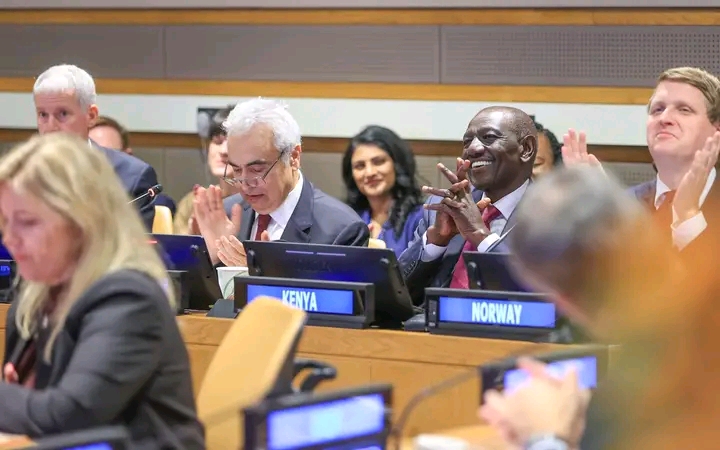
Ruto made the remarks in New York on September 22, 2026, during high-level meetings held on the sidelines of the 81st United Nations General Assembly. His comments placed global finance, development financing, debt and Africa’s ability to mobilise its own resources at the centre of Kenya’s international agenda.
Ruto calls for a change in the global financial system
One of the main arguments presented by President Ruto was that the global financial system needs to change because many of the institutions and rules governing international finance were created decades ago and do not adequately reflect today's economic realities.
According to reports on his New York engagements, Ruto argued that institutions that do not adequately represent the people and countries whose cooperation they need will eventually face difficulties maintaining trust. He linked the issue to the broader debate about reforming multilateral institutions and ensuring that developing countries have a stronger voice.
The President's argument is that global financial institutions should not simply continue operating according to arrangements established many decades ago. Instead, he wants them to respond to the needs of countries that are trying to finance infrastructure, create employment, expand businesses, deal with climate change and accelerate economic transformation.
Africa has capital, according to Ruto
A particularly important part of Ruto's message was his argument that Africa's development challenge should not be viewed simply as a shortage of money.
During an Africa Finance Corporation roundtable in New York on September 21, he said Africa has significant pools of domestic capital but faces difficulties in organising and directing that capital toward productive investment.
Ruto cited figures indicating that African non-bank domestic capital pools had surpassed $2 trillion, while pension and insurance assets had crossed $1 trillion. His argument was therefore that the continent possesses substantial financial resources that could contribute more strongly to development if appropriate investment structures and risk-sharing mechanisms were available.
This is significant because much of Africa's development financing discussion has traditionally focused on attracting money from outside the continent. Ruto is arguing for a complementary approach in which African savings, pension funds, insurance companies and other domestic investors become a much larger source of financing for African projects.
“How can we use the international financial architecture?”
At the Partners for Multilateralism Summit, Ruto framed the issue as a question of how international institutions can help unlock resources that already exist.
Rather than focusing only on how much additional money international partners can bring to Africa, he argued that attention should also be placed on how the international financial architecture can help mobilise African capital.
He further said multilateral and development finance institutions should operate not only as lenders but also as catalysts capable of attracting much larger amounts of private and domestic investment.
The idea is that institutions such as development banks could use their balance sheets and financial instruments to reduce investment risks. If the risks associated with infrastructure and other long-term projects are lowered, pension funds, insurance companies and other institutional investors may be more willing to invest.
Guarantees and risk-sharing
Another important element of Ruto's message concerns the role of guarantees and risk-sharing instruments.
African countries often have potentially profitable investment opportunities in areas such as energy, transport, manufacturing, technology and agriculture. However, investors can perceive some African markets as carrying high levels of political, currency, regulatory or project risk.
Reports on Ruto's remarks indicate that he wants multilateral and development finance institutions to use guarantees, credit enhancement and risk-sharing mechanisms to help attract African long-term capital into development projects.
Such instruments can be important because they can reduce the amount of risk that individual investors have to carry. The broader objective is to turn relatively small amounts of public or development-finance support into larger pools of private investment.
The issue of Africa's domestic savings
Ruto's comments also draw attention to the relationship between savings and development.
Across Africa, households, workers and businesses save money through banks, pension schemes, insurance companies and other financial institutions. The challenge is ensuring that a larger proportion of those savings can be channelled into long-term investments that support economic growth.
For Kenya, pension and insurance funds represent an important source of long-term capital. Ruto has similarly highlighted the growth of domestic savings in Kenya during his meetings with Kenyans abroad.
The President recently said Kenya's National Social Security Fund savings had grown from Sh320 billion in 2023 to Sh690 billion, and projected that national savings could reach Sh1 trillion by June 2027. Those figures were part of his broader argument that domestic resources can play a greater role in financing national development.
Global finance and Africa's development
Ruto's message comes at a time when African countries are looking for additional ways to finance development.
Governments across the continent need financing for roads, electricity, water systems, healthcare facilities, schools, digital infrastructure, manufacturing and climate-resilient projects. At the same time, governments face debt-service obligations and limited fiscal space.
The African Development Bank has estimated a substantial annual development financing gap on the continent and has increasingly emphasised the importance of mobilising Africa's own financial resources. Reuters reported in May 2026 that the bank was looking at ways to tap African resources to help address an estimated $400 billion annual development-financing gap.
This wider context helps explain why Ruto has placed domestic African capital at the centre of his message.
Debt is another major concern
Ruto has also connected the question of global finance with the growing burden of debt on developing countries.
On September 22, he warned that the global debt crisis could increasingly become a children's rights issue because governments facing large debt obligations may have less fiscal room to finance education, healthcare, nutrition and social protection.
His argument highlights the connection between financial decisions made by governments and everyday public services.
When governments devote a significant share of their revenues to debt repayment, they may have fewer resources available for development programmes. This creates pressure on countries to obtain financing at affordable rates and to ensure that debt contributes to productive economic activity.
The World Bank and International Monetary Fund also approved changes in September 2026 to their joint debt sustainability framework for low-income countries. The revised approach includes greater attention to domestic debt, climate-related challenges and improved forecasting, with implementation expected later in 2027.
Climate finance
Global finance was also closely connected to Ruto's climate agenda during his New York engagements.
As chair of the Committee of African Heads of State and Government on Climate Change, Ruto has been calling for climate commitments to be translated into actual financing for African countries.
On September 22, he argued that Africa needs affordable capital, guarantees and risk-sharing mechanisms to unlock investment in renewable energy, green industries and climate-resilient infrastructure.
For Ruto, climate finance is therefore not only about protecting the environment. He has presented it as a potential source of economic growth, employment and investment.
He argued that Africa should treat climate action as an opportunity to strengthen economies and create jobs rather than simply as an additional financial burden.
A stronger role for African institutions
Another element of Ruto's broader position is that African financial institutions should play a greater role in the international financial system.
His previous statements at the United Nations have included support for institutions such as the African Export-Import Bank, Trade and Development Bank and Africa Finance Corporation. He has argued that African institutions understand the continent's economic conditions and investment opportunities and should therefore be given greater recognition within the international financial architecture.
This approach would allow African institutions to participate more strongly in arranging financing, supporting businesses and mobilising investment.
Technology and finance
Ruto has also linked financial reform to technology and Africa's economic transformation.
During his New York engagements, he said Africa should be a builder of technologies shaping the current century and should participate in developing the rules governing them. He argued that African countries need to organise their capabilities at scale and turn innovation into productivity, businesses and opportunities.
Technology can therefore be viewed as another area where Ruto believes Africa needs greater participation rather than simply being a consumer of products and services developed elsewhere.
Digital financial services, artificial intelligence, technology businesses and digital infrastructure could potentially create new investment opportunities while expanding access to financial services.
Ruto's wider message to international partners
The President's comments in New York were part of a broader argument for a more inclusive international system.
He has also called for reforms of the United Nations Security Council, particularly greater African representation in global decision-making. His financial argument follows a similar principle: African countries should have a stronger voice in institutions that influence their economic futures.
Ruto's position is that development partnerships should move beyond traditional donor-recipient relationships. Instead, he wants international institutions and partners to help create systems through which African countries can mobilise their own resources and attract additional investment.
What the message means for Kenya
For Kenya, the global finance debate has direct implications.
Access to affordable financing affects infrastructure development, manufacturing, energy, housing, healthcare and other areas of the economy. It also affects the cost of government borrowing and the amount of money available for public programmes.
Ruto's emphasis on domestic savings could also encourage greater use of Kenyan pension and insurance funds as sources of long-term investment, provided that appropriate safeguards, investment rules and risk-management systems are in place.
His New York engagements therefore put Kenya's financial priorities within a wider African debate about how developing countries can finance their own transformation while dealing with global economic pressures.

You Might Also Like
-
 The Kenya Tourism Board (KTB) is intensifying efforts to promote Kenya as a leading tourism destination by showcasing the country’s diverse attractions, including wildlife, beaches, culture, adventure, sports, conferences and lesser-known destinations across the 47 counties. Through the Magical Ke
 -
Kipchumba Murkomen's presence in Igembe today was centred on the passing-out of National Police Reservists at Magado in Igembe North, Meru County. The ceremony follows the government's recruitment and training of additional NPRs and comes alongside wider reforms aimed at strengthening community poli
-
Former Kenyan athlete Beatrice Murugi has received a new lifeline after being transferred to Kenyatta National Hospital (KNH) for specialised treatment following years of health and financial struggles. Reports published on September 23, 2026, indicate that Murugi, who previously competed profession
-
The Turbo tanker tragedy has become one of the major recent road accidents in the Eldoret area, with the death toll now standing at six according to the latest Citizen TV update available on September 23, 2026. What began as a road collision involving a fuel tanker escalated into a deadly fire aft
-
PS Agriculture Dr. Kipronoh Ronoh says agriculture remains the backbone of Kenya’s economy, supporting food security, livelihoods, employment and economic growth.
-
Today's Safaricom news is dominated by the government's legal challenge over the KSh204.3 billion sale of a 15 percent stake in Safaricom. The government is asking the Court of Appeal to overturn the High Court ruling that declared the transaction null and void and to suspend implementation of that