



Ruto’s Coast Tour: Thousands Receive Title Deeds as President Unveils Major Roads, Housing, Education and Energy Projects
President William Ruto's visit to the Coast today comes as part of an extensive development tour covering all six coastal counties. In Kwale, the issuance of 94,175 title deeds has taken centre stage, giving thousands of beneficiaries formal documentation of their land ownership. Beyond land reforms, the tour is addressing roads, affordable housing, education, water infrastructure, markets, renewable energy and major investments such as the proposed Lamu refinery. The government has presented the programme as an effort to address historical challenges while opening new opportunities for economic growth. For residents, the practical impact will depend on the completion and operation of the projects, as well as the continued processing of land documents in areas still undergoing adjudication and registration.
President William Ruto is continuing his development tour of Kenya’s coastal region, with land ownership, roads, housing, education, energy and other infrastructure projects forming a major part of the agenda. On Monday, September 28, 2026, the President was in Kwale County, where he presided over a major title-deed issuance exercise before proceeding to inspect and launch development projects in the Coast region.
The wider tour covers the six coastal counties of Taita-Taveta, Kwale, Kilifi, Mombasa, Tana River and Lamu. It is expected to run for several days and includes the launch of new projects, inspection of ongoing works and commissioning of completed developments.
94,175 title deeds issued in Kwale
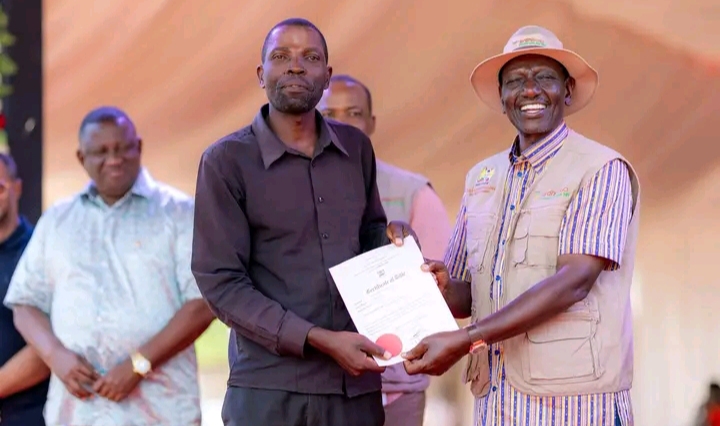
One of the most significant activities during President Ruto’s visit today was the issuance of 94,175 title deeds to residents of Kwale County. The documents are being distributed to beneficiaries in Lunga Lunga, Msambweni and Kinango constituencies.
The exercise is part of a broader government programme intended to address longstanding land-ownership challenges at the Coast. Land ownership has remained an important issue in many coastal communities, with some families occupying land for decades without having formal documentation proving ownership.
According to reports from the event, residents in Lunga Lunga and other parts of Kwale welcomed the issuance of the documents, describing them as an important step toward securing their property rights.
President Ruto has linked the title-deed programme to the government's broader efforts to resolve historical land issues and provide greater security of tenure.
The President's office has also said that additional title deeds are being processed in various coastal counties. In a statement on land reforms, State House said ongoing adjudication and registration processes in several areas are expected to result in more than 55,000 additional title deeds.
Nearly 190,000 title deeds across the Coast
The Kwale allocation is part of a larger Coast-wide programme. The announced distribution includes 31,318 title deeds in Taita-Taveta, covering beneficiaries in Mwatate and Voi constituencies.
In Kilifi, 36,826 title deeds are scheduled for beneficiaries in areas including Kaloleni, Rabai, Ganze, Kilifi South and Malindi. Mombasa has been allocated about 4,360 title deeds, while 22,770 are earmarked for beneficiaries in Lamu and Tana River.
Together, these announced allocations amount to approximately 189,449 title deeds.
The importance of the programme goes beyond the physical document. A registered title provides formal evidence of land ownership and can give beneficiaries greater security when developing their property. It can also make it easier for landowners to use property for investment or, where legally applicable, access financing.
However, the issuance of a title deed does not necessarily resolve every possible land dispute. Questions involving boundaries, succession or competing ownership claims may still require separate legal or administrative processes.
Road projects receive attention
President Ruto's Coast tour is also focusing heavily on transport infrastructure.
In Taita-Taveta, the President has been inspecting and launching road projects, including the Mto Mwagodi-Wundanyi Road and projects around Voi and Taveta. The programme also includes the Maungu-Kasighau Road and Voi-Sagala Road.
The roads are expected to improve connectivity between communities and economic centres while making it easier to transport agricultural products and other goods to markets. Better roads can also improve access to schools, hospitals and other public services.
Reports indicate that the President is also scheduled to inspect the progress of Vindo Stadium and the Voi Affordable Housing Project during the Coast tour.
Affordable housing projects
Affordable housing is another major component of the President's coastal development programme.
In Taita-Taveta, Ruto has inspected the Taveta Affordable Housing Programme, while in Mombasa he is expected to focus on housing developments, including the Hobley Road Affordable Housing Estate.
The government has presented affordable housing as both a housing and employment programme, with construction expected to create opportunities for workers and businesses involved in the building industry.
The projects are also intended to provide formal housing options for residents in urban areas where demand for decent and affordable homes has continued to grow.
Education projects
Education infrastructure is also featuring prominently in the Coast tour.
In Taita-Taveta, President Ruto laid the foundation stone for new student hostels at Wumingu Technical and Vocational College in Wundanyi. He also commissioned Lesisia School in Taveta.
The President is scheduled to undertake additional education-related activities during the wider tour, including the commissioning of Fulugani Comprehensive School in Kwale and the opening of the Kenya Coast National Polytechnic's Kwale Campus Maritime Logistics Training Centre.
The maritime training component is particularly relevant to the Coast because of the region's proximity to the Indian Ocean and its role in Kenya's port, shipping, logistics and blue-economy activities.
Mwache Dam and water infrastructure
Water infrastructure is another important area on the President's programme.
Ruto is scheduled to inspect the progress of the Mwache Dam project in Kwale. The project has been associated with efforts to improve water supply and support economic development in the region.
Water infrastructure is particularly significant for communities facing challenges related to reliable water supply, agricultural production and rapidly growing urban populations.
The government has also included water projects among the broader development priorities of the Coast tour.
Lamu refinery remains a major highlight
One of the biggest projects associated with President Ruto's Coast tour is the proposed East Africa Refinery in Lamu.
The President is expected to preside over the groundbreaking ceremony on September 30. The proposed refinery has been valued at approximately $16 billion, or about KSh2 trillion, and is being developed in partnership with Nigerian businessman Aliko Dangote.
According to the government, the project is expected to process crude oil and supply petroleum products to markets across East and Central Africa. It is also being presented as an investment that could expand industrial activity around Lamu Port and create employment opportunities.
The refinery forms part of a broader effort to position Lamu and the Coast as important centres for energy, logistics, trade and investment.
President Ruto recently visited the Dangote Petroleum Refinery in Lagos, Nigeria, ahead of the planned groundbreaking in Lamu.
Energy projects in Tana River
The Coast tour will also include renewable-energy development.
In Tana River, the President is expected to launch construction of the Nanighi Solar Generation Plant in Bura constituency. The project is intended to contribute to Kenya's renewable-energy capacity while supporting increased electricity availability and economic activity.
Renewable energy is an increasingly important part of Kenya's development strategy, particularly as the country seeks to expand electricity access and reduce dependence on fossil fuels.
Economic stimulus and markets
The President's programme also includes several Economic Stimulus Programme projects.
In Taita-Taveta, Ruto launched an Economic Stimulus Programme market in Wundanyi. Other planned activities include the Watamu Economic Stimulus Programme Market in Kilifi and the Mazeras Economic Stimulus Programme Market.
Markets are important to small traders because they provide formal spaces for businesses to operate, potentially improving sanitation, security and access to customers.
Infrastructure and regional development
The Coast tour therefore brings together several areas of government investment rather than focusing on a single sector.
The programme includes land reforms, roads, affordable housing, education, water, energy, markets and port-related economic activities. The government says these interventions are intended to accelerate development while addressing some of the longstanding challenges experienced by coastal communities.
The title-deed programme remains one of the most visible components because land ownership has historically been a major concern in the region.
The issuance of 94,175 title deeds in Kwale today therefore represents a significant moment for beneficiaries in Lunga Lunga, Msambweni and Kinango. It also forms part of a much wider national effort to formalise land ownership.

You Might Also Like
-
The High Court's decision on September 28, 2026, has brought an important stage of the contempt proceedings involving Inspector General Douglas Kanja to a close. Kanja was found in contempt over the failure by police to comply with an existing court order concerning timely public advisories before
-
 Residents of Bureti in Kericho County have come together to support Joseph Ngeno by helping construct a new house for him, demonstrating the power of unity, compassion and community solidarity. Through contributions of building materials, financial assistance and labour, the residents have shared th
 -
The coming together of political leaders from Emurua Dikirr during a Sunday church service provides an important picture of community interaction at a time when the constituency has experienced significant political changes. The presence and involvement of Aaron Cheruiyot, together with other leade
-
IEBC has expanded diaspora voter registration from 12 to 26 countries ahead of the August 2027 General Election, giving more Kenyans abroad an opportunity to participate in the polls.
-
Murkomen's latest statements present national security as a major government priority. He has maintained that the government will continue confronting banditry, recovering illegal firearms and dismantling criminal networks while strengthening the capacity of security agencies. His remarks about the
-
SHA has directed healthcare providers to renew their service contracts by September 30, 2026, to continue serving beneficiaries under the 2026–2029 contracting cycle.