




Ruto’s Kericho Visit: President Unveils Major Development Plans as South Rift Tour Concludes
President William Ruto's visit to Kericho on September 12, 2026, marked the conclusion of his four-day development tour of the South Rift and brought a mixture of development announcements, project launches, political engagements and meetings with local leaders. The launch of the Chelimo Special Economic Zone stood out as one of the most important events because of its potential to transform Kericho from primarily an agricultural production centre into a stronger agro-processing and manufacturing hub. The project is expected to support tea value addition, attract investment and create more than 10,000 jobs. The affordable housing programme, road improvements, healthcare and education investments, together with the proposal to elevate Kericho town to city status, form part of a broader vision for the county's development. The visit also demonstrated the political importance of Kericho and the wider South Rift ahead of the 2027 General Election. President Ruto combined his development message with direct engagement with residents and local leaders, while defending his administration's record and criticising the opposition. Ultimately, the success of the President's Kericho agenda will be measured by what happens after the launches and announcements. Residents will be looking for completed projects, new jobs, improved infrastructure, better healthcare, stronger markets for farmers and increased investment. If the planned projects are implemented as promised, Kericho could strengthen its position as one of Kenya's leading agricultural, industrial and commercial centres in the coming years.
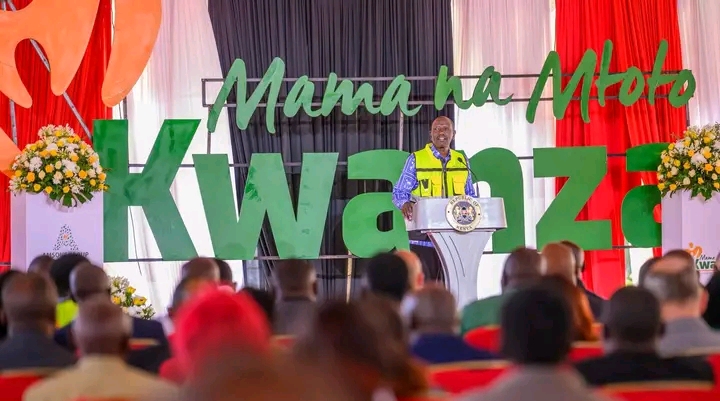
President William Ruto on Saturday, September 12, 2026, concluded his four-day development tour of Kenya’s South Rift region with a major visit to Kericho County, where he launched and inspected several development projects while addressing residents and local leaders. The Kericho visit came at the end of a wider tour that had taken the President through Bomet and Kericho counties, with roads, affordable housing, healthcare, electricity, markets and economic development featuring prominently on his agenda.
The visit was significant because Kericho is one of Kenya’s most important agricultural counties, particularly because of its contribution to the country’s tea industry. The President used the opportunity to emphasise the need for greater investment, value addition and job creation, while also highlighting infrastructure projects that his administration says are intended to transform the county's economy.
Chelimo Special Economic Zone
One of the major highlights of President Ruto’s visit was the launch of the Chelimo Special Economic Zone (SEZ) in Kericho. The project is expected to provide a platform for industries involved in agro-processing, manufacturing, technology and other forms of value addition.
The Special Economic Zone is particularly important to Kericho because of the county's strong connection to the tea industry. For decades, much of Kenya's tea has been exported as a relatively basic commodity. The government has increasingly promoted local processing, packaging, branding and diversification as a way of increasing the amount of money that farmers and the country can earn from agricultural products.
Reports following Saturday's launch indicated that the Chelimo SEZ is projected to create more than 10,000 jobs. It is also expected to provide opportunities for young people and businesses by attracting investors and encouraging companies to establish processing and manufacturing facilities in the region.
For tea farmers, the significance of such an industrial zone goes beyond employment. Increased local processing could create a larger domestic market for agricultural products while encouraging the development of businesses involved in packaging, transportation, logistics, machinery, technology and other services.
The project also fits into the government's broader argument that Kenya should move away from exporting raw or minimally processed agricultural commodities and instead focus on value addition. In the case of tea, this could involve blending, packaging and developing branded and specialty products for international markets.
Affordable housing in Chelimo
Affordable housing was another important component of the Kericho development agenda. Preparations for the President's visit had identified the Chelimo Affordable Housing Project as one of the major projects in the county.
The project is expected to provide thousands of housing units, with plans indicating a mixture of one-bedroom, two-bedroom and three-bedroom houses. Reports before the visit put the planned number of units at about 2,300.
Affordable housing has been one of the flagship programmes of President Ruto's administration. The government argues that the programme can address Kenya's housing shortage while simultaneously creating employment in the construction industry.
In Kericho, the housing project is also expected to contribute to the expansion and modernisation of the town. The President has linked the development of housing, roads, electricity and other infrastructure to his broader plans for the town.
Plans to elevate Kericho to city status
Another major announcement associated with the President's Kericho engagements was the proposal to elevate Kericho town to city status.
The plan is significant because Kericho is already an important commercial and administrative centre in the South Rift. The proposed elevation is expected to come with increased attention to urban infrastructure, housing, roads, healthcare, education and economic activities.
For residents and business people, city status could potentially strengthen Kericho's position as a regional commercial centre. However, such a transition would require continued investment in urban planning, drainage, roads, waste management, water, sanitation, public transport and other services.
The President's development agenda therefore presents city status not simply as a change in name but as part of a wider effort to expand the economic potential of Kericho.
Roads and transport infrastructure
Road development was another major issue during Ruto's South Rift tour. Several roads and infrastructure projects in Bomet and Kericho featured in the President's programme, reflecting the government's emphasis on improving connectivity.
Better roads are particularly important in an agricultural county such as Kericho because farmers need reliable transportation networks to move tea, milk, vegetables and other agricultural products from farms to markets and processing facilities.
Improved roads can also reduce travel time and transportation costs while making it easier for businesses to operate. The government's development programme in the region has therefore linked road construction with agricultural production, trade and employment.
The wider four-day tour included the inspection and commissioning of several infrastructure projects across Bomet and Kericho. The President's programme had been designed around healthcare, roads, affordable housing and markets.
Healthcare and education
Healthcare and education were also part of the broader development programme associated with the South Rift tour.
The government has been presenting healthcare infrastructure as one of its priorities, particularly through investment in hospitals and the expansion of access to medical services.
In Kericho, the development agenda has also included plans associated with medical education and health infrastructure. The objective is to ensure that residents do not have to travel long distances to access specialised medical care.
Education remains equally important to the county's future. Investment in schools and other educational facilities is intended to give young people better opportunities while providing the skilled workforce needed by industries expected to emerge around projects such as the Special Economic Zone.
Agriculture and the tea economy
President Ruto's visit to Kericho carried particular significance for the agricultural sector because the county is synonymous with tea farming.
Tea remains a major source of income for thousands of households in the region. Consequently, any government policy affecting tea marketing, processing, value addition and exports has a direct impact on farmers.
The Chelimo Special Economic Zone could potentially change the economic relationship between agricultural production and industrialisation by creating additional opportunities for processing and manufacturing close to the source of raw materials.
The Tea Board of Kenya was represented during the launch of the SEZ, underlining the importance of the project to the tea value chain. Tea Board chief executive Willy Mutai joined the President during the launch.
The government's larger objective is to ensure that Kenya benefits more from its agricultural products by increasing the amount of value retained within the country.
Political dimension of the visit
Although the President's visit was presented primarily as a development tour, it also carried a political dimension.
The South Rift has traditionally been an important political support base for President Ruto. His four-day tour of Bomet and Kericho therefore provided an opportunity not only to launch projects but also to interact directly with residents and local leaders.
Recent reporting has noted that Ruto's engagements in the region included appeals for political support ahead of the 2027 General Election, including calls for residents to ensure they have identification documents and register as voters.
On Saturday, the President also criticised the opposition, arguing that rival political groups lacked a clear alternative agenda. His remarks demonstrated that the Kericho visit was not limited to development issues and that political mobilisation was also part of the President's public engagements.
The political significance of the South Rift has increased as Kenya moves closer to the 2027 elections. President Ruto's decision to spend four days in Bomet and Kericho demonstrates the importance his administration attaches to the region.
Leaders accompany the President
A number of national and regional leaders accompanied President Ruto during his South Rift engagements.
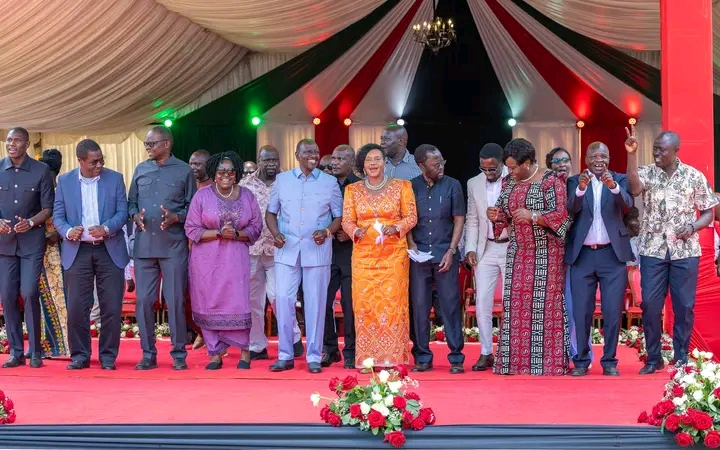
After completing his final engagements in Kericho on Saturday, the President held an informal gathering with several leaders in Kericho town. Among those present were Transport Cabinet Secretary Davis Chirchir, Senate Majority Leader Aaron Cheruiyot and Uasin Gishu Senator Jackson Mandago. Several Members of Parliament and Principal Secretaries also attended the gathering.
The gathering provided a relaxed conclusion to the President's busy four-day programme in the region.
Economic expectations for Kericho
The development projects announced and launched during the President's visit are expected to have long-term economic implications for Kericho.
The Special Economic Zone is perhaps the most important from an industrialisation perspective because it is intended to attract investors and encourage manufacturing. If successfully implemented, it could create employment opportunities while increasing demand for services and products supplied by local businesses.
The affordable housing programme could similarly stimulate construction-related economic activity. Contractors, suppliers, artisans, transporters and other businesses can benefit from large-scale construction projects.
Road development could further strengthen these economic benefits by improving movement between farms, markets, towns and industrial centres.
What the visit means for residents
For ordinary residents of Kericho, the importance of the President's visit will ultimately depend on whether the announced and ongoing projects are completed and whether they deliver tangible benefits.
Residents are likely to be particularly interested in employment opportunities, improved roads, affordable housing, reliable electricity, healthcare services and better markets for agricultural products.
Young people are expected to be among the major beneficiaries if the Special Economic Zone succeeds in attracting industries and creating thousands of jobs. Farmers, meanwhile, could benefit from stronger agricultural value chains if more tea and other agricultural products are processed locally.
Businesses in Kericho could also benefit from increased economic activity as housing, roads and industrial projects expand.

You Might Also Like
-
President William Ruto's visit to Kisumu today marks the beginning of an important four-day development tour of Nyanza. The President started the day at the Voice of Salvation and Healing Church, where he worshipped alongside senior national and county leaders, including Governor Anyang' Nyong'o, Go
-
President William Ruto’s visit to Chebunyo in Bomet County on Saturday, September 12, 2026, marked an important moment in his four-day South Rift development tour. The laying of the foundation stone for the Chebunyo Mother and Child Hospital was the major highlight of the visit. The planned Level
-
The death of Dr David Silverstein at the age of 82 on September 13, 2026, brings to an end the life of a physician whose story was deeply intertwined with Kenya's political and medical history. He will particularly be remembered as the longtime personal physician of the late President Daniel arap Mo
-
Tension erupted at a UDA meeting after hundreds of youths reportedly attempted to force their way into a gathering restricted to invited officials. The confrontation allegedly led to the burning of several vehicles, with two people feared dead and others reportedly injured as security efforts to con
-
The Kenya Dairy Board's warning about declining milk supplies comes at a critical time for Kenya's agricultural sector. The country is not facing a situation where milk has completely disappeared, but there is a genuine reduction in formal milk deliveries and supply constraints in several parts of t
-
Kenya is entering another period of uncertainty in the petroleum market. While pump prices under the current EPRA cycle have remained relatively stable, international crude oil prices have surged above $100 per barrel because of geopolitical tensions, tanker disruptions and fears of tighter global s