



Ruto’s Mombasa Development Push: Major Projects Set to Transform the Coast
President Ruto's current Coast programme is therefore broader than a single-day project launch in Mombasa. It combines land titling, port and maritime development, railway connectivity, Dongo Kundu SEZ, water infrastructure, affordable housing, electricity expansion and regional trade. Mombasa's position as Kenya's principal maritime gateway makes it central to many of these plans. At the same time, today's reported presidential activities have been centred on Taita-Taveta, where Ruto issued more than 31,000 title deeds and launched the Iperanyi-Mwandala Last Mile Electricity Connectivity Project, following the September 30 groundbreaking of the major refinery project in Lamu. The Coast tour therefore presents a multi-county development programme in which Mombasa serves as a major transport, trade, energy and investment centre. The practical impact of the projects will ultimately depend on implementation, completion timelines, financing and the extent to which residents and businesses benefit from the infrastructure and economic opportunities being developed.
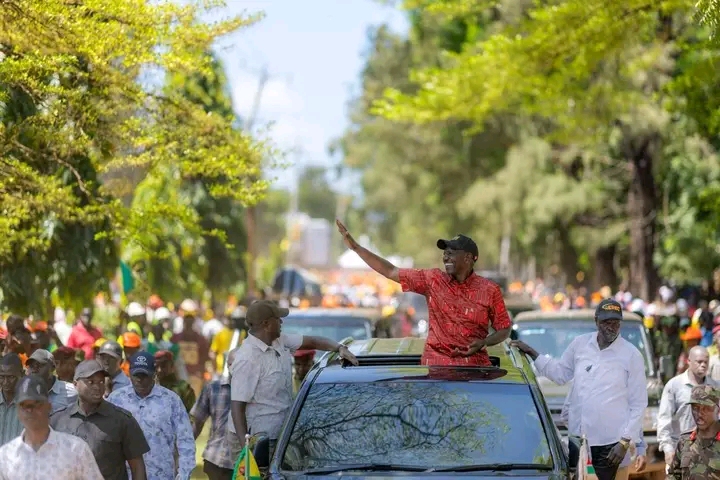
President William Ruto’s ongoing Coast development tour has placed Mombasa at the centre of a wider government programme covering infrastructure, land ownership, transport, energy, housing, trade and economic development. The tour is running across all six Coast counties, with Mombasa forming an important part of the administration’s plans because of its position as Kenya’s main maritime gateway and a major centre for tourism, trade and logistics. Recent reporting confirms that the broader tour is focused on infrastructure, affordable housing, education, land reforms, energy, water projects and economic empowerment.
However, there is an important timing point: today, Thursday, October 1, 2026, the President’s publicly reported engagements are primarily in Taita-Taveta, following the groundbreaking of the major East Africa Petroleum Refinery project in Lamu on September 30. Therefore, the projects below are the key Mombasa projects and programmes associated with Ruto’s current Coast development agenda, rather than claiming that every one was physically launched in Mombasa today. �
Radio Generation +1
Mombasa’s strategic position
Mombasa remains one of the most important economic centres in Kenya. The Port of Mombasa handles cargo destined for Kenya and several landlocked countries in the region, making investment in port infrastructure, roads, railways and logistics important to the national economy.
One of the developments highlighted during the current Coast programme is the strengthening of Mombasa’s role as a regional energy and trade hub. On October 1, Rwanda began using the Port of Mombasa for petroleum imports under a new energy cooperation framework. A maiden consignment of about 40,000 tonnes of diesel and petrol was received at the Kipevu Oil Terminal 2. The development is expected to deepen the role of Mombasa as a gateway for petroleum products serving the wider East African region.
The development is particularly significant because Kipevu Oil Terminal 2 was designed to increase the port's capacity to handle petroleum vessels. According to reports, the facility can accommodate multiple vessels, providing additional capacity compared with the older terminal.
Dongo Kundu Special Economic Zone
Another major project connected to Mombasa's development agenda is the Dongo Kundu Special Economic Zone (SEZ).
The zone is part of the government's broader strategy to expand manufacturing, logistics, trade and investment at the Coast. The Dongo Kundu area is expected to benefit from improved transport connections and infrastructure, creating space for industries and businesses that can take advantage of Mombasa's proximity to the port.
The project is also linked to the wider effort to transform the Coast into an economic and logistics hub. Current reporting on Ruto's Coast programme identifies Dongo Kundu, together with roads and the Mwache Dam, among major projects being presented as part of the development agenda for the region.
For Mombasa residents, the significance of such a project goes beyond construction. A functioning SEZ can create demand for warehouses, transport services, manufacturing, accommodation, food businesses and other support services. The government has also linked its broader Coast investment programme with employment opportunities for young people.
Mombasa title-deed programme
Land ownership has also become a major part of President Ruto's Coast programme. The government has been implementing an accelerated title-deed issuance programme across the six coastal counties, including Mombasa.
According to the State Department for Lands, 4,360 title deeds are allocated to Mombasa under the current Coast-wide programme. Across the six counties, 101,889 title deeds were reported as ready for issuance to 192,166 beneficiaries.
The land programme is aimed at addressing long-running problems involving families that have occupied land for many years without formal ownership documents.
For beneficiaries, receiving a title deed provides documentary evidence of ownership and can make it easier to plan investments on the land. It can also provide greater security of tenure and reduce disputes associated with unclear ownership.
Ruto has set a broader target of issuing hundreds of thousands of title deeds across the Coast. The government says the programme is intended to address historical land challenges that have affected communities in the region for decades.
Mombasa commuter rail and railway connectivity
Transport remains another important part of Mombasa's development programme.
The President's administration has previously commissioned the Mombasa Commuter Rail Service, involving rehabilitation of the 13.8-kilometre metre-gauge railway from Kilometre Zero to Miritini and construction of a 2.8-kilometre link to the Standard Gauge Railway. The government said the service was designed to improve first- and last-mile connectivity for commuters, visitors and tourists.
The railway is particularly relevant to Mombasa because traffic congestion is a major challenge in the city. Increased use of commuter rail can provide residents with another means of moving between different parts of the metropolitan area.
The railway also connects to Kenya's wider SGR network, allowing Mombasa to remain connected to Nairobi and other parts of the country.
Port of Mombasa and regional trade
President Ruto's Coast development agenda also places considerable attention on the Port of Mombasa.
The port is central to the government's strategy of strengthening Kenya's position as a regional trade gateway. The latest development involving Rwanda's petroleum imports demonstrates how the port can serve markets beyond Kenya.
There are also new developments in international shipping. On October 1, reports indicated that shipping companies are expanding services linking Mombasa with Asian ports, including a new weekly service connecting Mombasa with India's Nhava Sheva. Another shipping company has also introduced a weekly service at Mombasa. These developments reflect growing interest in the port's role in East African trade.
Housing and urban development
Affordable housing is another component of the wider Coast development agenda.
The government has been linking affordable housing with employment opportunities, urban development and provision of accommodation for workers and students. Although several specific housing projects are spread across the Coast rather than being launched exclusively in Mombasa today, affordable housing remains part of the infrastructure programme announced for the region.
For Mombasa, affordable housing is particularly relevant because of rapid urbanisation and the high demand for decent housing in the city and surrounding areas.
Energy and electricity connections
Energy infrastructure is also being developed across the Coast. While one of today's reported electricity projects is in Mwatate, Taita-Taveta, the wider Coast programme includes electricity expansion and infrastructure intended to support households, businesses and public institutions.
On October 1, Ruto launched the Iperanyi-Mwandala Last Mile Electricity Connectivity Project in Mwatate. The programme is designed to improve electricity access for households, businesses and community facilities.
The broader significance for Mombasa is that improved electricity infrastructure supports industrialisation, small businesses, digital services and investment.
Mwache Dam and water infrastructure
Water infrastructure is another major component of the Coast development agenda. The Mwache Dam has been repeatedly associated with the government's plans for improving water supply and supporting economic activity in the region.
The project is particularly significant because reliable water is essential for households, industries, agriculture and urban development. Current reporting identifies Mwache Dam alongside Dongo Kundu and road infrastructure as major projects forming part of the government's wider Coast development programme.
The Lamu refinery and Mombasa's economic role
Although the refinery is in Lamu rather than Mombasa, its development has implications for the entire Coast, including Mombasa.
On September 30, Ruto and Nigerian industrialist Aliko Dangote broke ground for the proposed East Africa Petroleum Refinery and Petrochemicals Special Economic Zone in Lamu. The project has been reported at about Sh2 trillion, with plans to supply petroleum products to Kenya and other East and Central African markets.
For Mombasa, the project could have implications for transport, petroleum logistics and regional trade because the city already hosts major port and petroleum-handling infrastructure.
You Might Also Like
-
Health CS Aden Duale says the Ministry of Health has extended the HMIS transition period by one month, giving Level 5 and 6, private and faith-based facilities more time to complete the migration while ensuring uninterrupted healthcare services.
-
The St. Kizito Litein School for the Deaf eight-kilometre awareness walk gave students and teachers an opportunity to take their message beyond the school compound and into the streets of Litein. The October 1, 2026 activity was aimed at raising awareness about hearing impairment while promoting gre
-
The survey indicates that 52% of respondents support the idea. Among those open to a female Deputy President, Kirinyaga Governor Anne Waiguru leads with 36%, followed by former Deputy President candidate Martha Karua at 27% and Homa Bay Governor Gladys Wanga at 15%.
-
Murkomen's presence in Kiminini and now Saboti places attention on several issues affecting residents of Trans Nzoia: roads and bridges, agricultural development, youth training, public services, security and cooperation between national and county governments. While the exact list of projects he ha
-
The Ogiek meeting in Nandi brought together members of a community that is geographically dispersed across several parts of the Rift Valley, including Kericho, Uasin Gishu and Nandi itself. The gathering came at a time when Ogiek communities continue to discuss ancestral land, historical displacemen
-
The Senate Education Committee has directed the Inspector General of Police to issue an arrest warrant for Tharaka Nithi Governor Muthomi Njuki over his repeated failure to honour summonses since March 2026.