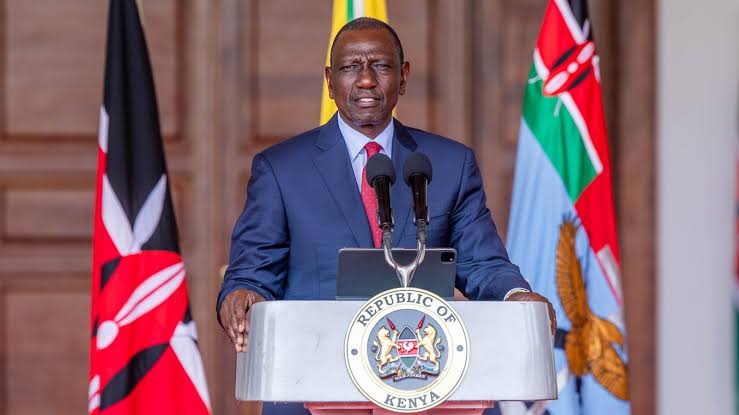
RUTO ANNOUNCES KSH1.2 BILLION BONUS FOR SUGARCANE FARMERS, KSH57 BILLION MODERN MARKETS PROGRAMME
President William Ruto has announced a KSh1.2 billion bonus package for sugarcane farmers, with disbursement expected to begin next week, as the government seeks to ensure that the ongoing revival of the sugar industry translates into better earnings and improved livelihoods for farmers. The President also highlighted the government's livestock insurance programme, revealing that more than 245,000 pastoralists have accessed insurance and savings incentives under the DRIVE programme, protecting approximately 3.3 million animals against drought-related losses. In the blue economy, investments in landing sites, cold storage facilities, markets and fishing equipment are helping fishing communities improve preservation and increase earnings, with the Shanga Ishakani Fishers Women Group in Lamu doubling its average octopus selling price. Ruto further announced that KSh8.5 billion has been invested in county aggregation and industrial parks across 34 counties, with 15 completed, alongside the construction of 600 modern markets countrywide at a cost of KSh57 billion. He also highlighted the inauguration of the first county aggregation and industrial park in Kisii, which has attracted a proposed KSh1.2 billion investment in avocado processing.
RUTO ANNOUNCES KSH1.2 BILLION BONUS FOR SUGARCANE FARMERS, OUTLINES LIVESTOCK, FISHERIES AND MARKET DEVELOPMENT INITIATIVES
President William Ruto has announced that sugarcane farmers across the country will receive a KSh1.2 billion bonus package this year, as the government moves to ensure that the ongoing revival of the sugar industry translates into improved livelihoods for farmers and their families.
The President said the government would begin distributing the money next week, describing the payment as part of its commitment to ensure that farmers benefit directly from the improving performance of the sugar industry. He maintained that the success of reviving sugar factories should not only be measured by the restoration of industrial operations but also by the economic benefits reaching the farmers who supply the raw materials.
According to Ruto, the recovery of the sugar sector must create meaningful improvements in household incomes, reward farmers for their hard work and restore economic opportunities in communities that depend on sugarcane farming.
He observed that farmers are central to the industry's recovery and should therefore receive a fair share of the benefits generated by improved factory operations and increased production. The KSh1.2 billion bonus is intended to demonstrate the government's commitment to ensuring that the revival of sugar factories produces tangible benefits beyond the industrial facilities.
The President said the government wants sugarcane-growing communities to experience renewed economic activity through better earnings, improved livelihoods and increased opportunities for local businesses.
For many households in sugar-producing regions, sugarcane farming remains a major source of income, supporting education, healthcare, food security and other family responsibilities. Payments to farmers therefore have the potential to stimulate economic activity across entire communities.
Ruto's announcement comes amid the government's wider efforts to strengthen agricultural production, improve farmers' earnings and establish sustainable markets for agricultural products.
He said the administration was also implementing programmes aimed at protecting pastoral communities against the economic effects of drought while supporting fishing communities through investments in infrastructure, equipment and market access.
The President noted that the government was pursuing different interventions to ensure that people involved in agriculture, livestock production and fishing receive better economic returns from their activities.
These interventions are intended to strengthen rural economies, protect household assets and improve the ability of producers to withstand economic and environmental challenges.
LIVESTOCK INSURANCE PROGRAMME SUPPORTING PASTORAL COMMUNITIES
In addition to the sugar industry interventions, President Ruto highlighted the government's efforts to protect pastoral communities from the devastating effects of drought through livestock insurance programmes.
He said more than 245,000 pastoralists have benefited from insurance coverage and savings incentives under the government's De-Risking, Inclusion and Value Enhancement of Pastoral Economies in the Horn of Africa (DRIVE) programme.
The initiative is aimed at protecting the livelihoods of pastoral households by reducing the financial risks associated with prolonged dry spells, which frequently lead to the loss of livestock and undermine economic stability in pastoral regions.
According to the President, the programme has helped protect approximately 3.3 million animals, providing an important safety net for communities whose livelihoods depend largely on livestock keeping.
Livestock remains a critical economic asset for pastoral households, serving as a source of income, food, savings and social security. However, recurring drought conditions continue to threaten these livelihoods, leaving many families exposed to significant financial losses.
The government is therefore using livestock insurance and savings incentives to strengthen the resilience of pastoral communities and ensure that households have mechanisms to recover when drought affects their animals.
Ruto explained that protecting livestock is equivalent to protecting the economic foundation of pastoral families. Through insurance coverage, pastoralists can access financial support when their insured animals are affected by drought-related losses.
The programme also seeks to encourage a savings culture among pastoral households, helping them prepare for future uncertainties rather than relying entirely on emergency assistance when disasters occur.
The President said the government's interventions are intended to ensure that pastoral communities are not left behind in the country's economic transformation agenda.
The initiative is particularly important in areas where livestock production is the main economic activity, supporting thousands of households and contributing to food security and trade.
By expanding insurance coverage and encouraging savings, the government hopes to reduce vulnerability among pastoralists while supporting the long-term sustainability of livestock production.
GOVERNMENT INVESTS IN THE BLUE ECONOMY TO IMPROVE FISHERMEN'S EARNINGS
President Ruto also outlined progress in the blue economy, saying the government is investing in fishing infrastructure and equipment to improve the livelihoods of communities that depend on water resources.
He said investments in fish landing sites, cold storage facilities, markets and fishing equipment are helping fishing communities preserve more of their catch, reduce post-harvest losses and negotiate better prices for their products.
The President noted that improved preservation facilities are particularly important because fish and other marine products are highly perishable and can lose significant value when proper storage facilities are unavailable.
For many fishing communities, the absence of reliable cold storage infrastructure has historically affected their ability to preserve their catch and access markets beyond their immediate surroundings.
The government's interventions are aimed at addressing these challenges by improving facilities that allow fishermen and women involved in the fishing industry to handle, preserve and transport their products more effectively.
Ruto highlighted the experience of the Shanga Ishakani Fishers Women Group in Lamu County, whose members have benefited from improved preservation equipment.
He said the equipment has enabled the group to double its average selling price for octopus, demonstrating how investment in appropriate technology can improve the earnings of small-scale producers.
The development illustrates the importance of supporting women-led economic groups through infrastructure, modern equipment and access to better markets.
For fishing communities along Kenya's coastline, improved preservation systems can create opportunities to increase household incomes while reducing the losses associated with poor handling and storage of marine products.
The President said the government remains committed to developing the blue economy by supporting fishing activities and improving the infrastructure required to make the sector more productive.
The blue economy presents significant opportunities for Kenya, particularly in coastal counties where fishing supports livelihoods, employment and commercial activities.
Investments in landing sites and cold storage facilities are expected to strengthen the connection between fishermen, traders, processors and consumers.
Improved access to markets can also allow fishing groups to obtain better prices and expand their businesses, creating additional opportunities for women and young people.
The government is therefore positioning the blue economy as an important contributor to national economic growth, with emphasis on improving the productivity and incomes of communities that depend on fisheries.
KSH8.5 BILLION INVESTED IN COUNTY AGGREGATION AND INDUSTRIAL PARKS
The President further announced that the national government has invested KSh8.5 billion in the development of county aggregation and industrial parks across 34 counties.
He said 15 of the parks have already been completed, with the projects intended to bring processing facilities closer to farmers and other producers.
The initiative is designed to address longstanding challenges faced by agricultural producers, particularly the difficulties associated with transporting raw materials over long distances before they can be processed or sold.
Through the establishment of county aggregation and industrial parks, the government aims to create facilities where agricultural products can be collected, sorted, stored, processed and prepared for different markets.
The parks are also expected to attract investors and encourage the establishment of industries that utilise locally available agricultural produce.
Ruto said bringing processing facilities closer to producers would help farmers obtain better value from their products while reducing losses and creating additional economic opportunities within counties.
For many farmers, the challenge has not always been production but the availability of reliable markets and processing facilities that can accommodate their produce.
Agricultural products that are sold without processing often fetch lower prices compared to those that undergo value addition.
The government is therefore seeking to strengthen the agricultural value chain by supporting infrastructure that connects farmers to processors, manufacturers and consumers.
The county aggregation and industrial parks are expected to provide an environment where investors can establish processing businesses while sourcing raw materials directly from local producers.
Such investments could also create employment opportunities for residents, particularly young people seeking opportunities in manufacturing, logistics, packaging and other related industries.
The President said the national government is working with county administrations to ensure that these facilities contribute to economic development at the grassroots level.
The partnership is intended to ensure that investments in infrastructure translate into increased production, improved market access and better incomes for local communities.
600 MODERN MARKETS UNDER DEVELOPMENT AT KSH57 BILLION
Ruto also highlighted the government's ongoing programme to construct 600 modern markets across the country at an estimated cost of KSh57 billion.
He said the markets are part of efforts to improve trading infrastructure, provide better working conditions for traders and strengthen the connection between producers and consumers.
The President noted that the government is prioritising modern market facilities to address challenges experienced by traders operating in overcrowded and poorly equipped trading spaces.
The modern markets are expected to provide improved facilities for small-scale traders, farmers, retailers and other business operators.
The facilities are intended to offer better sanitation, organised trading spaces and infrastructure that supports the efficient movement and sale of goods.
For farmers, access to modern markets can provide opportunities to sell their produce in better environments while reaching a wider customer base.
Small-scale traders are also expected to benefit from improved working conditions and facilities that can support the growth of their businesses.
Ruto cited the Motonto Market in Kisii County as one of the projects forming part of the government's market development programme.
He said he inaugurated the facility during his recent visit to the county, describing the investment as part of the administration's commitment to expanding economic opportunities through modern infrastructure.
The market is expected to support traders and agricultural producers by providing an organised environment for commercial activities.
The government maintains that modern markets are an important component of its broader economic transformation agenda because they create spaces where farmers, traders and consumers can interact more efficiently.
The KSh57 billion programme is expected to support economic activities across different counties while improving the infrastructure available to small businesses.
KISII GETS FIRST COUNTY AGGREGATION AND INDUSTRIAL PARK
During his recent visit to Kisii County, President Ruto also inaugurated the first county aggregation and industrial park, marking another development in the government's efforts to expand agricultural processing and industrial activities at the county level.
The President announced that the facility had already attracted an investor who plans to inject KSh1.2 billion into an avocado-processing project in the county.
The proposed investment is expected to strengthen the avocado value chain by creating opportunities for farmers to supply their produce to a processing facility located closer to their farms.
Avocado farming has become an important agricultural activity in several parts of Kenya, with farmers benefiting from growing demand in both domestic and international markets.
However, producers continue to face challenges associated with market access, post-harvest losses, transportation costs and fluctuations in farm-gate prices.
The establishment of an avocado-processing facility in Kisii is expected to provide additional opportunities for value addition while supporting the development of a more organised agricultural supply chain.
Instead of relying entirely on the sale of raw produce, farmers could benefit from a market environment where their products are collected and processed into goods with additional commercial value.
The KSh1.2 billion investment also demonstrates the potential of county aggregation and industrial parks to attract private investors into agricultural production and processing.
The facility is expected to create opportunities across different stages of the avocado value chain, including collection, sorting, transportation, processing and marketing.
For local farmers, the availability of a nearby processing facility could help strengthen demand for their produce while reducing some of the logistical challenges associated with accessing distant markets.
The investment is also expected to contribute to job creation and stimulate economic activities in Kisii County.
Ruto said the inauguration of the park represents the government's commitment to ensuring that counties become centres of production, processing and industrial development.
He maintained that the government wants farmers to benefit from the value generated by their agricultural products rather than remaining limited to selling raw commodities.
The broader objective is to establish a system in which agricultural production is supported by reliable markets, modern processing facilities and private sector investment.
GOVERNMENT SEEKS TO CONNECT FARMERS TO BETTER MARKETS
The President's announcements reflect the administration's broader strategy of improving agricultural productivity while addressing challenges that have historically limited farmers' earnings.
Through investments in sugar factories, livestock insurance, fishing infrastructure, modern markets and industrial parks, the government is seeking to strengthen different sectors of the economy.
The initiatives are also intended to ensure that economic development reaches communities outside major urban centres, particularly those whose livelihoods depend on agriculture, livestock production and fishing.
The government maintains that improving the incomes of producers requires more than increasing production. Farmers and other producers must also have access to reliable markets, appropriate technology, storage facilities and processing industries.
The planned KSh1.2 billion sugarcane farmers' bonus, the protection of 3.3 million livestock animals through the DRIVE programme and the expansion of modern trading and processing infrastructure form part of this wider approach.
The administration is also seeking to encourage private sector participation by creating opportunities for investors to establish industries that utilise locally available resources.
As the government continues implementing these programmes, attention will remain on their impact on farmers' incomes, employment creation, market access and the resilience of rural communities.
Ruto maintained that the true measure of agricultural recovery should be the benefits reaching ordinary producers and households.
He said the government would continue pursuing interventions aimed at ensuring that farmers, pastoralists, fishermen and traders receive better returns from their economic activities.
The President's remarks underline the administration's position that economic transformation must be felt at the grassroots level through improved livelihoods, increased household incomes and sustainable opportunities for communities across the country.

You Might Also Like
-
President William Ruto has defended the constitutional mandate of security agencies to maintain law and order, protect lives and property, and safeguard national security while acknowledging that police officers who use unlawful force during demonstrations must be held accountable. The President's r
-
The Longisa Boys High School community is mourning the death of a student who reportedly fell ill in the morning during the examination period and later passed away while receiving treatment at a hospital. The incident has left fellow students, teachers and the wider school fraternity in shock as in
-
The Ministry of Labour and Social Protection has signed its Second-Level Ministerial and Agency/Semi-Autonomous Government Agencies (AGA/SAGA) Performance Contracts for the 2026/2027 Financial Year in a ceremony held at NSSF Building, Social Security House, Nairobi. The exercise was presided over by
-
President William Ruto has announced that, for the first time in 65 years, national examination papers have been printed locally in Kenya. The President highlighted the achievement during his State of the Nation Address, describing it as a significant milestone in strengthening local production, pro
-
President William Ruto is today expected to deliver his fourth State of the Nation Address before a joint sitting of the National Assembly and the Senate at 2:30 PM. The highly anticipated address will provide the Head of State with an opportunity to outline his administration’s achievements, asse
-
President William Ruto has met elected leaders from Nyandarua County at State House, Nairobi, for discussions centred on boosting agricultural production, increasing farmers’ incomes and accelerating the implementation of key development projects across the county. During the meeting, the Presiden