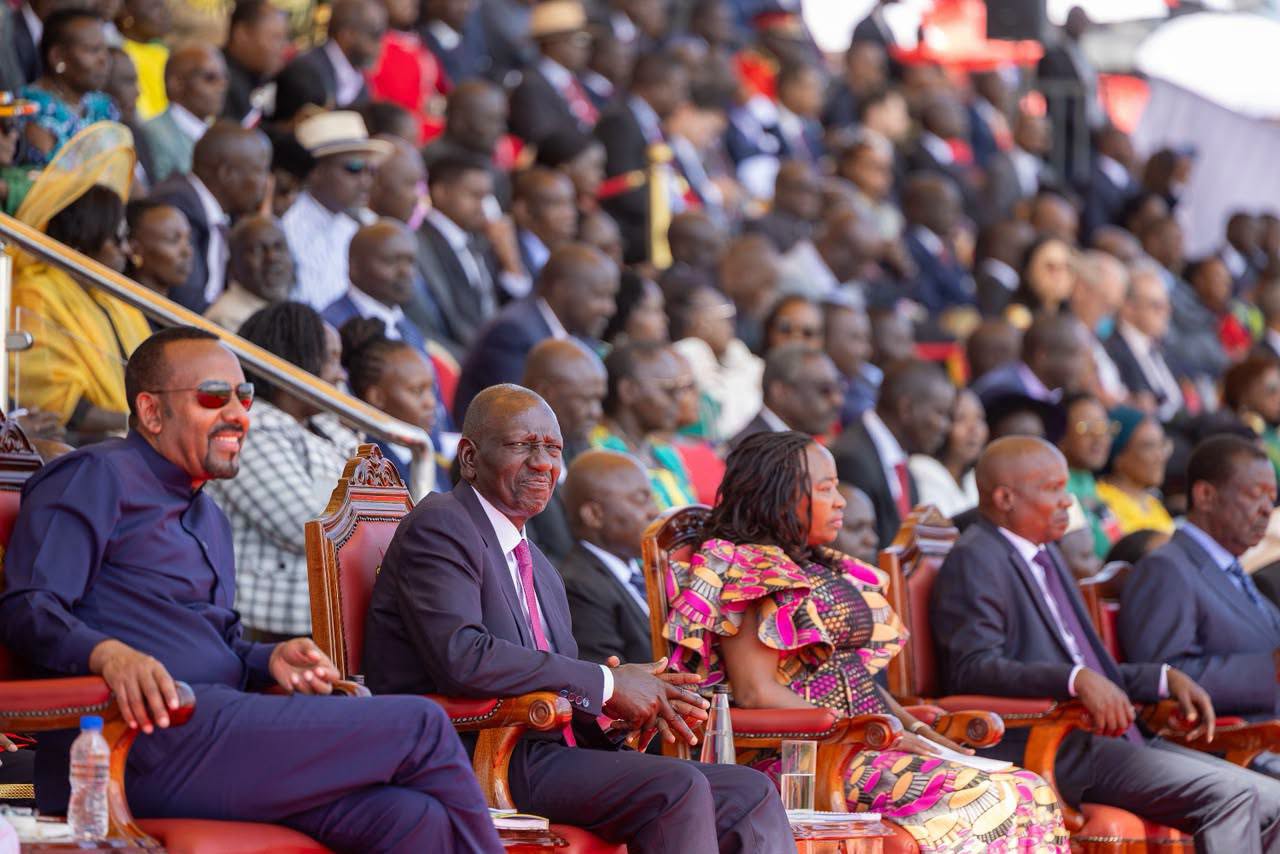
Ruto Calls for Constructive Debate, Accountability and Better Policies in National Leadership
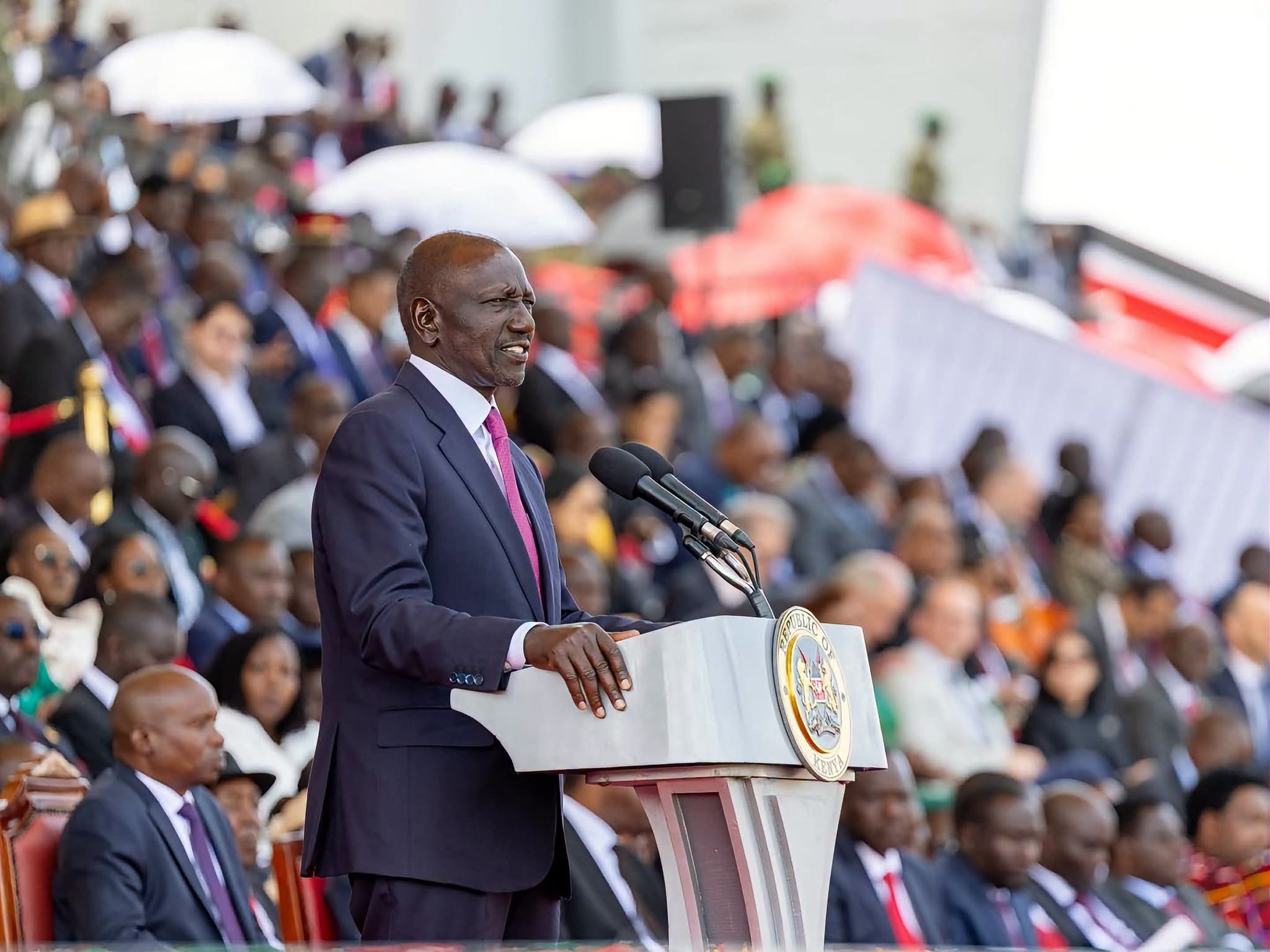
President William Ruto has called for constructive political debate, greater accountability and transparency in government, emphasising that no public programme or leader should be exempt from scrutiny. He urged leaders and Kenyans to examine competing policies, question their costs and demand measurable results, stressing that political disagreements should lead to better decisions and improved service delivery rather than deepen divisions. His remarks highlight the importance of responsible leadership, public participation and national unity in driving Kenya’s development.
President William Ruto has emphasised the importance of accountability, transparency and constructive political debate, maintaining that no government programme should be shielded from criticism and no leader should be exempt from scrutiny.
The President has urged Kenyans to evaluate government policies based on their merits, question the costs involved and demand measurable results from those entrusted with public responsibility. He stressed that disagreements over national issues should provide an opportunity to improve policies rather than deepen divisions among citizens.
Ruto's message highlights the importance of open discussion in a democratic society, where leaders are expected to explain their decisions and members of the public have the right to question the effectiveness of government programmes.
His remarks also point to the need for political competition that prioritises practical solutions to the country's challenges instead of focusing entirely on disagreements between rival leaders and political groups.
The President's position comes amid ongoing national conversations about the direction of government policies, the management of public resources and the responsibility of elected leaders to deliver meaningful improvements in people's lives.
For many Kenyans, issues such as employment, the cost of living, healthcare, education, housing and infrastructure remain central to evaluating the performance of the government. These concerns often shape public discussions about whether existing programmes are achieving their objectives and whether alternative approaches could deliver better outcomes.
Ruto's call for constructive debate suggests that government initiatives should be assessed through evidence, public feedback and their actual impact on communities.
At the same time, his message places responsibility on political leaders and critics to ensure that disagreements contribute to solutions rather than create unnecessary hostility.
Government Programmes Must Remain Open to Criticism
One of the central messages in Ruto's remarks is that no government initiative should be considered beyond criticism.
Public programmes are usually introduced to address specific challenges, support economic development or improve access to essential services. However, their objectives alone do not guarantee that they will succeed.
A programme may have ambitious goals but still encounter difficulties during implementation. It may also require adjustments because of changing economic conditions, administrative weaknesses or concerns raised by the people it is intended to serve.
Allowing public scrutiny can help identify these shortcomings and create opportunities for improvement.
Citizens, civil society organisations, professionals, the media and political representatives all have a role to play in examining government policies and assessing whether public resources are being used effectively.
Such scrutiny can help reveal whether a programme is reaching its intended beneficiaries, whether its costs are reasonable and whether its results justify the investment.
For instance, a housing initiative can be assessed by examining the affordability of the homes being developed, the number of people benefiting and the quality of the completed buildings.
Healthcare reforms can be evaluated by considering access to treatment, the availability of medicines, the experience of patients and the reliability of payments to medical facilities.
Similarly, agricultural programmes can be assessed through their effects on production costs, farmers' incomes, access to markets and food availability.
These evaluations help move public debate beyond political statements and towards questions that can be answered through evidence.
Constructive criticism should therefore be viewed as an important part of improving public administration rather than automatically being interpreted as opposition to development.
When weaknesses are identified early, the government has an opportunity to correct mistakes, strengthen implementation and ensure that public resources deliver greater value.
Accountability Is Essential for Effective Leadership
Ruto has also emphasised that no leader should be beyond accountability, reinforcing the principle that public office comes with responsibilities that must be fulfilled.
Elected leaders receive authority through the democratic process, but that authority is accompanied by an obligation to serve the public and explain decisions made in the exercise of their duties.
Accountability involves more than making promises during political campaigns. It requires leaders to demonstrate what they have achieved, explain challenges encountered and provide clear information about how public resources are being managed.
Citizens need to understand whether commitments made by their representatives are being fulfilled and what steps are being taken when targets are missed.
Effective accountability can strengthen public confidence by showing that leaders are answerable for their decisions and that concerns raised by citizens are taken seriously.
It also helps discourage waste, misuse of public funds and administrative practices that fail to serve the public interest.
Government institutions, oversight bodies and elected representatives all have important roles in ensuring that public officials operate within the law and fulfil their responsibilities.
At the same time, accountability should be applied fairly and consistently. Public criticism should be supported by credible information, while allegations of wrongdoing should be handled through appropriate procedures.
The objective should be to establish the facts, correct failures and ensure that those responsible for misconduct face the consequences provided for by law.
When accountability mechanisms function effectively, they can help improve service delivery and encourage leaders to make decisions that prioritise public welfare.
Examining the Costs and Benefits of Government Policies
Another important element of the President's message is the need to examine the costs of competing proposals.
Government policies require resources, and public funds are limited. Decisions about spending therefore involve choices about which priorities should receive funding and how much money should be allocated to each programme.
A proposal may promise substantial benefits, but those benefits must be considered alongside the financial costs, implementation requirements and possible unintended consequences.
Examining costs helps determine whether a programme is affordable and whether it represents an effective use of public resources.
For example, a major infrastructure project may improve transport and support economic activity, but it also requires careful planning, financing and oversight to ensure that its benefits justify its cost.
A social support programme may help vulnerable households, but policymakers must consider how beneficiaries will be identified, how payments will be administered and whether funding can be sustained over time.
Likewise, a tax relief proposal may reduce financial pressure on citizens, but it can also affect government revenue and the resources available for public services.
Comparing different proposals can help policymakers identify the most effective approach to achieving a particular objective.
Such comparisons should consider not only immediate expenses but also long-term benefits, maintenance requirements and the effects on different groups of people.
Transparent information about costs can also help citizens understand the trade-offs involved in government decisions.
When the public has access to reliable information, debate can focus more closely on whether a programme is delivering value and how it might be improved.
Demanding Tangible Results From Government
Ruto's message also stresses the importance of demanding results from government programmes.
The success of a policy should not be measured solely by announcements, budget allocations or the intentions behind its introduction. It should also be judged by the changes it produces in people's lives.
Citizens need to know whether promised projects are being completed, whether services are improving and whether public investment is addressing the problems it was designed to solve.
Measurable targets can help establish whether a programme is progressing as expected.
In the education sector, for example, results might include improved access to learning facilities, better school infrastructure and the availability of teaching resources.
In healthcare, relevant measures could include shorter waiting times, access to essential medicines and improvements in the availability of medical services.
Employment initiatives could be evaluated by examining the number and quality of jobs created, the duration of those opportunities and the extent to which workers acquire useful skills.
Housing programmes could be assessed through the number of completed homes, their affordability and the ability of intended beneficiaries to obtain them.
Regular reporting on these outcomes would enable citizens to compare government commitments with actual performance.
It would also help identify programmes that are not meeting their targets and determine whether they require additional resources, administrative changes or a different approach.
Demanding results does not mean expecting every programme to succeed immediately. Some initiatives require time to produce meaningful outcomes, while others encounter challenges that cannot be resolved quickly.
However, the government should communicate progress honestly, explain delays and demonstrate that corrective action is being taken where necessary.
Political Disagreements Should Lead to Better Policies
The President has urged political leaders to ensure that disagreements produce stronger policies instead of deeper divisions.
Political competition is an important feature of democratic government. Different leaders and parties may have contrasting views about taxation, economic development, public spending and the best ways to address national challenges.
These differences can be valuable when they encourage the examination of alternatives and help identify approaches that might otherwise be overlooked.
However, disagreements become less productive when political debate focuses entirely on personalities, hostility or attempts to discredit opponents without examining the substance of their proposals.
Constructive political competition requires leaders to explain their positions, defend their decisions and consider evidence that may challenge their assumptions.
It also requires a willingness to acknowledge when an alternative proposal offers a better way to address a particular problem.
For citizens, the most useful political debate is one that explains how competing ideas would affect their daily lives.
A discussion about economic policy, for instance, should consider the likely effects on employment, household incomes, businesses and the cost of essential goods.
Debate about healthcare should focus on access, quality, affordability and the sustainability of financing arrangements.
When discussions are centred on these practical questions, political competition can help voters make informed decisions and encourage leaders to improve their proposals.
The President's message therefore highlights the importance of maintaining a distinction between firm political disagreement and divisions that undermine cooperation among citizens.
The Role of Opposition Leaders
Opposition leaders have an important responsibility in examining government policies and presenting alternatives.
Their role includes questioning decisions, identifying potential weaknesses and ensuring that public concerns receive attention.
A strong opposition can help strengthen democratic accountability by requiring the government to explain its priorities and justify the use of public resources.
However, effective scrutiny is most useful when criticism is accompanied by evidence and practical recommendations.
Opposition leaders can contribute to national development by presenting alternative policies, explaining how those proposals would be financed and outlining the results they expect to achieve.
They can also highlight problems experienced by communities and suggest ways to improve access to public services.
The government, in turn, has a responsibility to listen to legitimate concerns and respond with clear explanations rather than dismissing every criticism as political opposition.
This exchange can help improve policymaking by exposing weaknesses and encouraging the consideration of different perspectives.
Ultimately, democratic accountability is strengthened when both the government and opposition recognise that their primary responsibility is to the public.
The Importance of National Unity
Ruto's call for disagreements to produce better policies also highlights the importance of national unity.
Kenya is home to communities with different cultural backgrounds, economic circumstances, political preferences and regional priorities. These differences are part of the country's social and political landscape.
Political disagreements are inevitable in such a diverse society, particularly when public resources must be distributed among competing needs.
However, differences of opinion do not have to become sources of hostility.
Citizens can disagree over particular policies while maintaining a shared commitment to the country's stability, development and constitutional principles.
National unity does not require everyone to support the same political party or agree with every government decision. Instead, it involves respecting the rights of others, accepting lawful democratic processes and addressing disagreements through peaceful and constructive means.
Leaders have a significant influence on the tone of national discussions because their statements can either encourage cooperation or intensify tensions.
Responsible leadership requires acknowledging legitimate concerns, avoiding unnecessary hostility and creating opportunities for people with different views to participate in public discussions.
Unity is particularly important when the country faces challenges that require cooperation across political, social and regional boundaries.
Issues such as drought, unemployment, public health emergencies and economic hardship often affect people regardless of their political affiliations.
Addressing such challenges requires practical cooperation and a willingness to focus on shared interests.
Citizens Have a Role in Holding Leaders Accountable
The President's message also highlights the role ordinary Kenyans play in ensuring that government policies remain effective.
Citizens can participate in public discussions, attend consultation forums, engage their elected representatives and examine information about government spending and development projects.
They can also raise concerns about service delivery and ask questions about commitments made by national and county governments.
Public participation allows communities to communicate their needs and contribute ideas that may improve government programmes.
For example, residents may identify problems with the location of a public facility, the accessibility of a service or the way a development project is being implemented.
Their feedback can help authorities understand local circumstances and adjust programmes accordingly.
Access to reliable information is essential to this process. Citizens need clear explanations of government plans, budgets, implementation timelines and performance results.
Independent oversight and responsible reporting can further help the public understand whether public commitments are being fulfilled.
Accountability should not be limited to election periods. Continuous engagement allows citizens to monitor progress and raise concerns before problems become more difficult to resolve.
When people participate actively and leaders respond constructively, the relationship between government and the public can become more transparent and productive.
Conclusion
President William Ruto has called for a political environment in which government programmes remain open to criticism, leaders are held accountable and competing policies are assessed according to their merits, costs and results.
His message emphasises that disagreements should contribute to better decisions and more effective public programmes rather than create deeper divisions among Kenyans.
The approach places responsibility on the government to explain its policies and demonstrate their impact, while encouraging critics and opposition leaders to present credible alternatives.
It also highlights the importance of evidence-based debate, transparent spending and measurable outcomes in evaluating national development initiatives.
For Kenya, constructive political engagement can provide an opportunity to identify weaknesses, improve public services and ensure that government decisions respond to the needs of citizens.
The ultimate measure of leadership is not simply the ability to defend a policy or win a political argument, but the ability to deliver meaningful improvements in people's lives.
As national discussions continue, the challenge for leaders, institutions and citizens will be to maintain open debate, demand accountability and pursue solutions that strengthen public trust and support the country's long-term development.

You Might Also Like
-
The decision by the PCEA congregation in Narok to break a longstanding taboo restricting unmarried men from church leadership marks a notable development in local religious life.A report on October 20 and another on October 19, 2026, the move challenges a tradition that treated marriage as a pre
-
President William Ruto has honoured nurse Jacobeth Jeptoo for her courage, compassion, and selfless service following the tragic February helicopter crash in Nandi County that claimed the lives of Emurua Dikirr MP Johana Ng’eno and five other people. The recognition highlights the vital role playe
-
Inspector General Douglas Kanja's approval of promotions for 1,948 police officers marks a significant development in Kenya's police administration following the Court of Appeal's October 16, 2026, judgment. The ruling resolved a major dispute over the authority to manage uniformed police officers,
-
Governor Jonathan Bii's speech during the October 20, 2026, Mashujaa Day celebrations in Eldoret placed the protection of fertile agricultural land and support for farmers at the centre of an important national discussion. His appeal was for Kenyans to balance the growing demand for housing with th
-
Ethiopian Prime Minister Abiy Ahmed's address at the 2026 Mashujaa Day celebrations in Eldoret centred on a clear message: Kenya and Ethiopia should transform their historical friendship into shared economic progress. He called for stronger trade, improved opportunities for farmers and producers, c
-
President William Ruto has praised Kenya’s broad-based government, commending leaders who set aside political differences to promote cooperation and national development. He noted that the partnership demonstrates how political competition can coexist with collective efforts to address the country