RUTO DEFENDS POLICE MANDATE TO MAINTAIN LAW AND ORDER, INSISTS OFFICERS MUST ANSWER FOR UNLAWFUL FORCE
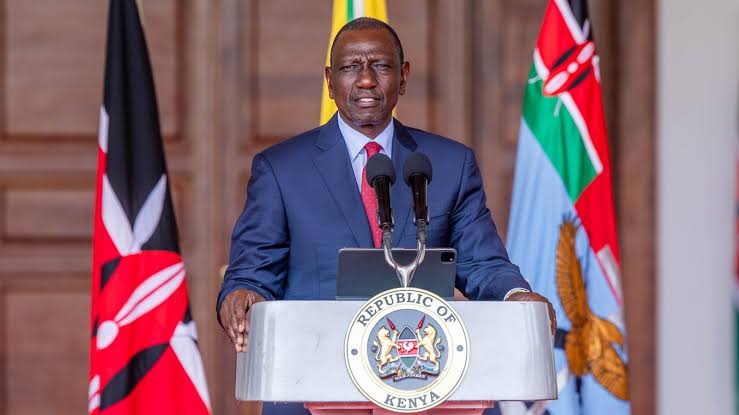
President William Ruto has defended the constitutional mandate of security agencies to maintain law and order, protect lives and property, and safeguard national security while acknowledging that police officers who use unlawful force during demonstrations must be held accountable. The President's remarks highlight the importance of balancing the responsibilities of law enforcement officers with the constitutional rights and freedoms of citizens, including the right to peaceful assembly and demonstration. He maintained that security agencies must be allowed to perform their duties within the law, while officers found responsible for misconduct should face appropriate accountability measures.
RUTO DEFENDS SECURITY AGENCIES' CONSTITUTIONAL MANDATE TO MAINTAIN LAW AND ORDER, INSISTS POLICE MUST BE ACCOUNTABLE FOR UNLAWFUL FORCE
President William Ruto has defended the constitutional mandate of Kenya's security agencies to maintain law and order, protect lives and property, and ensure the safety of citizens, while acknowledging that police officers who use unlawful force during demonstrations must be held accountable for their actions.
The President maintained that security agencies have an important responsibility in safeguarding the country against insecurity, violence and other threats that could disrupt peace and stability. However, he acknowledged that the exercise of these responsibilities must remain within the limits established by the Constitution and the law.
Ruto's remarks highlight the delicate balance between maintaining public order and protecting the fundamental rights and freedoms of citizens, particularly during demonstrations and other forms of public expression.
He emphasised the importance of allowing security agencies to discharge their constitutional responsibilities while ensuring that individual officers remain answerable whenever their actions violate established legal standards.
The President's position comes amid continued national discussions surrounding the conduct of police officers during demonstrations, the protection of human rights and the responsibility of security agencies in managing public gatherings.
Demonstrations remain an important part of Kenya's democratic system, providing citizens with an opportunity to express their concerns, communicate grievances and demand accountability from those entrusted with public leadership.
At the same time, the government has a responsibility to ensure that public gatherings do not result in violence, destruction of property or threats to the safety of individuals.
The President's remarks therefore underline the need for a security framework that protects the rights of demonstrators while enabling law enforcement officers to respond appropriately to situations that threaten public safety.
President Ruto defended the role of security agencies, maintaining that their responsibility to maintain law and order is provided for under the Constitution and must be respected.
Security agencies play a central role in protecting the country, preventing crime, responding to emergencies and ensuring that citizens can go about their daily activities without unnecessary threats to their safety.
The National Police Service is among the institutions entrusted with maintaining public order and enforcing the law. Its responsibilities include protecting life and property, preventing and detecting crime, and supporting the administration of justice.
The President's remarks emphasise that these responsibilities should not be undermined, particularly when officers are responding to situations that require the restoration of public order.
However, the exercise of police powers must be guided by constitutional principles, including respect for human dignity, equality, freedom and the rule of law.
The Constitution provides that national security organs must respect human rights and fundamental freedoms and operate in accordance with the law.
This means that police officers are expected to exercise their authority professionally and ensure that their actions remain within the boundaries of their legal responsibilities.
Ruto's position recognises the importance of allowing security agencies to perform their duties while ensuring that the authority granted to them is not misused.
The government is therefore expected to maintain an environment in which law enforcement officers can effectively protect the public without violating the rights of the people they are mandated to serve.
While defending the constitutional responsibilities of security agencies, President Ruto acknowledged that police officers who use unlawful force during demonstrations must face accountability.
The President's remarks reinforce the principle that wearing a police uniform does not place an officer above the law.
Law enforcement officers are expected to exercise restraint, professionalism and sound judgment when dealing with members of the public, particularly during emotionally charged situations such as demonstrations.
The use of force by police officers is subject to legal restrictions, and any intervention must be justified by the circumstances and comply with established standards.
Officers are required to respect the rights of individuals, regardless of whether they are participating in demonstrations or carrying out their ordinary activities.
Where allegations of excessive or unlawful force arise, the circumstances should be independently investigated to establish what happened and determine whether the officers involved acted within the law.
Accountability is an important component of public confidence in security institutions because citizens must have confidence that complaints involving police misconduct will be handled fairly and transparently.
The President's acknowledgment that officers who act unlawfully should be held responsible highlights the importance of ensuring that disciplinary and legal processes are applied whenever violations are established.
It also reinforces the distinction between legitimate law enforcement operations and actions that go beyond the authority granted to individual officers.
The responsibility to maintain law and order cannot be interpreted as permission to violate the rights of citizens.
Similarly, the protection of constitutional freedoms does not eliminate the responsibility of individuals participating in demonstrations to respect the law and the rights of others.
The relationship between public security and individual freedoms remains an important issue in Kenya's democratic development.
The Constitution guarantees citizens the right to assemble, demonstrate, picket and present petitions to public authorities peacefully and unarmed.
These freedoms provide an important platform through which citizens can express dissatisfaction, raise concerns and participate in national conversations on issues affecting their lives.
Demonstrations can also provide an avenue for citizens to demand explanations from government institutions and call for action on matters of public interest.
However, the exercise of these freedoms must take place within the constitutional framework, which also protects the rights and freedoms of other individuals.
The government has a responsibility to protect peaceful demonstrators and ensure that security operations do not unnecessarily interfere with constitutionally protected activities.
Police officers, on the other hand, are expected to respond appropriately whenever there are genuine threats to public safety, while observing the legal limits governing the use of force.
Ruto's remarks bring attention to the need for cooperation between security agencies, citizens and other stakeholders in promoting peaceful public participation.
The President's position suggests that maintaining law and order and protecting individual freedoms should not be treated as competing responsibilities.
Instead, both should operate together within the framework of the Constitution.
A democratic society requires effective security institutions as well as safeguards that prevent the misuse of state authority.
The conduct of police officers during demonstrations can significantly influence public confidence in security institutions.
Professional policing requires officers to exercise restraint, communicate effectively and respond to situations according to the level of threat presented.
The use of force should remain subject to established legal principles, with officers expected to employ only lawful and necessary measures in carrying out their responsibilities.
Police training, supervision and accountability mechanisms are important in ensuring that officers understand their responsibilities and respect the rights of citizens.
Security agencies must also maintain clear operational standards to guide officers during public gatherings and other potentially sensitive situations.
These standards are intended to protect both members of the public and officers responsible for maintaining security.
The President's acknowledgment of the need to hold officers accountable for unlawful force places emphasis on the importance of strengthening institutional discipline.
It also highlights the need for effective mechanisms through which complaints against police officers can be reported, investigated and addressed.
Such mechanisms are essential in ensuring that allegations of misconduct are not ignored and that officers found responsible for violations face appropriate consequences.
At the same time, investigations must be conducted fairly, with decisions based on evidence and established legal procedures.
This approach helps protect the rights of victims while also safeguarding officers against unfair accusations.
Public confidence remains an important foundation of effective policing.
Citizens are more likely to cooperate with security agencies when they believe that officers act professionally, respect the law and treat members of the public fairly.
Where allegations of unlawful conduct are not addressed, public trust can be weakened, making it more difficult for security institutions to fulfil their responsibilities.
The government's commitment to accountability is therefore important in strengthening the relationship between law enforcement agencies and the communities they serve.
Ruto's remarks highlight the need for security institutions to remain accountable while continuing to perform their constitutional duties.
The National Police Service and other security agencies are expected to uphold the rule of law and ensure that their operations are guided by professionalism and respect for human rights.
The principle of accountability also applies to public institutions more broadly, reinforcing the understanding that the authority exercised by government officers must always remain subject to the Constitution.
For Kenya, maintaining this balance is particularly important in protecting democratic institutions and ensuring that citizens can exercise their rights without unnecessary interference.
Kenya's Constitution establishes the legal framework governing the responsibilities of security agencies and the rights of citizens.
Article 238 provides the national security principles that guide the country's security operations, including the protection of human rights and fundamental freedoms.
Article 244 also outlines the responsibilities of the National Police Service, including professionalism, discipline, accountability and respect for human rights and fundamental freedoms.
These provisions establish that the responsibility of maintaining security must be exercised within the law.
They also provide safeguards against the misuse of authority by individuals entrusted with enforcing the law.
The President's remarks are therefore linked to two important constitutional responsibilities: ensuring that security agencies maintain public order and guaranteeing that citizens' rights are respected.
The two responsibilities require consistent commitment from government institutions, police leadership and individual officers.
The government must ensure that security agencies receive the necessary support to perform their duties while strengthening oversight mechanisms that promote accountability.
Citizens, meanwhile, have a responsibility to exercise their freedoms peacefully and respect the rights of other members of society.
The President's remarks underscore the importance of maintaining effective security operations while ensuring that officers who violate the law are held responsible.
The government faces the responsibility of protecting public safety, maintaining stability and safeguarding the constitutional freedoms enjoyed by Kenyans.
Achieving these objectives requires cooperation between security agencies, independent oversight institutions and the public.
It also requires continuous efforts to improve police professionalism, strengthen institutional accountability and ensure that complaints involving unlawful conduct receive appropriate attention.
The debate surrounding police conduct during demonstrations remains an important part of Kenya's wider discussion on democracy, constitutionalism and the protection of human rights.
Ruto's position acknowledges that security agencies must continue performing their constitutional responsibilities but cannot be exempted from accountability when individual officers act outside the law.
The effectiveness of security institutions depends not only on their ability to maintain order but also on their commitment to respecting the rights and dignity of every Kenyan.
The President's message reinforces the need for a security system that protects citizens, upholds the Constitution and ensures that public officers remain answerable for their actions.
As discussions on policing and public demonstrations continue, the focus remains on achieving a balance between national security, public order, constitutional freedoms and accountability.

You Might Also Like
-
The Longisa Boys High School community is mourning the death of a student who reportedly fell ill in the morning during the examination period and later passed away while receiving treatment at a hospital. The incident has left fellow students, teachers and the wider school fraternity in shock as in
-
The Ministry of Labour and Social Protection has signed its Second-Level Ministerial and Agency/Semi-Autonomous Government Agencies (AGA/SAGA) Performance Contracts for the 2026/2027 Financial Year in a ceremony held at NSSF Building, Social Security House, Nairobi. The exercise was presided over by
-
President William Ruto has announced a KSh1.2 billion bonus package for sugarcane farmers, with disbursement expected to begin next week, as the government seeks to ensure that the ongoing revival of the sugar industry translates into better earnings and improved livelihoods for farmers. The Preside
-
President William Ruto has announced that, for the first time in 65 years, national examination papers have been printed locally in Kenya. The President highlighted the achievement during his State of the Nation Address, describing it as a significant milestone in strengthening local production, pro
-
President William Ruto is today expected to deliver his fourth State of the Nation Address before a joint sitting of the National Assembly and the Senate at 2:30 PM. The highly anticipated address will provide the Head of State with an opportunity to outline his administration’s achievements, asse
-
President William Ruto has met elected leaders from Nyandarua County at State House, Nairobi, for discussions centred on boosting agricultural production, increasing farmers’ incomes and accelerating the implementation of key development projects across the county. During the meeting, the Presiden