RUTO INCREASES HUSTLER FUND LOAN LIMITS FOR 4.5 MILLION KENYANS
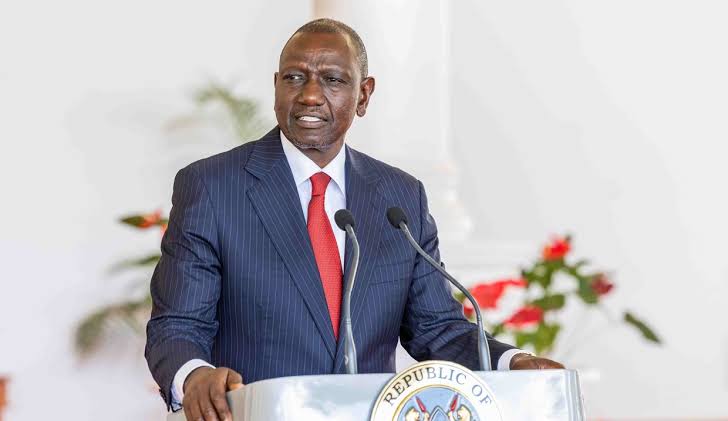
President William Ruto has announced an increase in Hustler Fund borrowing limits for approximately 4.5 million Kenyans who have demonstrated responsible repayment behaviour. The move is aimed at expanding access to affordable credit, supporting small-scale traders and entrepreneurs, and strengthening financial inclusion across the country. The beneficiaries are expected to access higher loan amounts based on their credit ratings and repayment histories. The government says the initiative is part of its Bottom-Up Economic Transformation Agenda, which seeks to empower small businesses, promote savings and provide financial opportunities to Kenyans who have traditionally struggled to access loans from conventional banking institutions.
President William Ruto has announced an increase in Hustler Fund borrowing limits for approximately 4.5 million Kenyans, in a move aimed at expanding access to affordable credit and supporting individuals engaged in small businesses and income-generating activities.
The development is part of the government's broader financial inclusion programme, which seeks to provide affordable financing to Kenyans who have traditionally faced difficulties accessing loans from conventional financial institutions.
Through the Hustler Fund, the government intends to enable individuals, small-scale traders, entrepreneurs and other low-income earners to access credit without the strict collateral requirements commonly associated with traditional bank loans.
The increase in borrowing limits is expected to benefit qualifying borrowers who have demonstrated responsible borrowing behaviour, particularly those who have consistently repaid their previous loans.
The programme is designed to reward borrowers who demonstrate financial discipline by making it possible for them to access higher amounts as their creditworthiness improves.
The beneficiaries are among millions of Kenyans who have used the government-backed financial facility since its introduction in November 2022. The programme was established to address barriers that have traditionally prevented low-income earners and small business operators from accessing affordable financing through conventional banking institutions.
The increase in borrowing limits is linked to a credit-rating system introduced to assess the financial behaviour of Hustler Fund users. Under the arrangement, borrowers are evaluated according to their repayment history and other credit-related indicators, allowing those who demonstrate responsible financial behaviour to qualify for improved borrowing opportunities.
During an update on the programme's progress in July 2026, President Ruto said the fund had reached approximately 28 million borrowers and disbursed about KSh90 billion through its different lending products.
He further indicated that the programme had attracted approximately 10 million repeat borrowers, with 4.5 million attaining favourable A and B credit ratings following their borrowing and repayment records.
The credit-rating arrangement is intended to give borrowers an opportunity to build a financial history even when they do not possess traditional forms of collateral such as land title deeds, vehicle logbooks or formal employment payslips.
many small-scale entrepreneurs, access to credit has historically been a major challenge. Conventional financial institutions often require applicants to demonstrate stable income, provide security or meet other lending conditions that can be difficult for people operating informal businesses.
Through the Hustler Fund, the government seeks to provide an alternative pathway for such individuals to access financing and gradually establish their creditworthiness.
The facility offers different lending products designed to serve individuals, organised groups and entrepreneurs whose financing needs may exceed the amounts available through ordinary personal loans.
One of the products is the personal loan facility, which provides relatively small amounts to individuals who need money for immediate financial needs or small income-generating activities.
Another component is the Bridge Loan facility, which is intended to help borrowers with stronger credit profiles access larger amounts of financing as they expand their businesses.
Under the Bridge Loan arrangement, eligible borrowers can access financing of up to KSh150,000 without providing conventional collateral, subject to the programme's assessment requirements.
The product is also intended to help responsible borrowers establish relationships with commercial banks and gradually transition into the wider formal financial system.
According to government figures presented in 2025, more than 4.5 million borrowers had qualified for the higher credit categories, while approximately 400,000 had become eligible for Bridge Loans of up to KSh150,000.
The latest expansion of borrowing opportunities is therefore part of a broader government effort to use credit histories to improve access to financing for individuals who have previously struggled to secure loans.
The government has maintained that the credit-rating system will allow borrowers to improve their financial standing through consistent repayment rather than depending entirely on their ability to provide physical security.
Under the arrangement, borrowers who regularly repay their loans are positioned to benefit from higher credit limits during subsequent assessments. Those who fail to meet repayment obligations may, however, face limitations when seeking additional financing.
The system is intended to encourage financial discipline while ensuring that the fund remains sustainable and continues supporting other Kenyans who need affordable credit.
The Hustler Fund was introduced with the objective of supporting people operating at the lower levels of the economy, particularly those who depend on small businesses and informal employment for their daily income.
Among the intended beneficiaries are market traders, boda boda operators, mama mboga, small-scale farmers, artisans, food vendors and other entrepreneurs who require working capital to sustain their activities.
For example, a small-scale trader dealing in vegetables may require additional money to purchase stock, expand their business or meet transportation expenses. Similarly, a boda boda operator may need financing to repair a motorcycle or meet other operational costs.
Access to affordable credit can provide such individuals with an opportunity to address financial challenges without necessarily relying on expensive borrowing arrangements.
The government believes that increasing borrowing limits for qualified beneficiaries will enable some entrepreneurs to move beyond small daily transactions and invest in activities capable of generating higher incomes.
However, the impact of the loans will depend on how beneficiaries utilise the money and whether their businesses generate sufficient returns to support repayment.
Apart from providing credit, the programme also seeks to promote a savings culture among Kenyans.
The savings component allows borrowers to put aside part of their money while building a financial record that could support their future borrowing opportunities.
During his July 2026 update, Ruto reported that savings accumulated through the Hustler Fund had reached approximately KSh7 billion.
The savings initiative is intended to encourage beneficiaries to develop long-term financial habits instead of depending entirely on borrowed money to meet their needs.
The government has also presented the programme as part of its wider efforts to improve financial inclusion and encourage individuals operating outside the formal banking system to participate in structured financial services.
By combining lending with savings, the administration hopes to create opportunities for small entrepreneurs to strengthen their financial positions and gradually become eligible for larger financing facilities.
Hustler Fund and the government's economic agenda
The expansion of borrowing limits forms part of President Ruto's Bottom-Up Economic Transformation Agenda, which places emphasis on supporting small businesses and individuals at the lower levels of the economy.
The administration has consistently argued that economic growth should extend beyond large companies and established businesses to include ordinary citizens who depend on small-scale economic activities.
Under this approach, access to affordable credit is considered an important tool for supporting entrepreneurship, creating employment opportunities and improving household incomes.
The government has also maintained that improving access to financing could help address the challenges faced by millions of Kenyans who have previously been excluded from conventional lending systems.
The Hustler Fund is therefore being positioned as one of the programmes through which the administration intends to strengthen small enterprises and increase economic participation.
Nevertheless, the programme has also attracted discussions about loan recovery, responsible borrowing and the need to ensure that public funds are properly managed.
Since the facility operates as a revolving fund, repayment remains essential to ensuring that money borrowed by one beneficiary can eventually become available to another applicant.
Financial discipline is therefore important for both borrowers and the institutions responsible for administering the programme.
The government will also need to maintain proper monitoring systems to ensure that the increased borrowing limits do not expose beneficiaries to unnecessary financial difficulties.
Despite the expansion of the programme, questions have continued to emerge regarding loan defaults, the recovery of outstanding amounts and the long-term sustainability of the fund.
Some borrowers may experience difficulties repaying their loans because of unstable business incomes, unexpected expenses or unfavourable economic conditions.
For small businesses operating with limited financial reserves, even a relatively modest loan can become difficult to repay when expected earnings fail to materialise.
This makes financial education and responsible borrowing important components of the programme.
Beneficiaries need to understand the repayment conditions, applicable charges and consequences of failing to meet their obligations before taking additional loans.
The government also faces the responsibility of ensuring that the credit-rating system is transparent and that borrowers understand how their repayment behaviour affects their borrowing limits.
There have also been calls for the programme to complement access to credit with business training, mentorship and financial management support.
Such interventions could help beneficiaries make informed investment decisions, manage their earnings and avoid borrowing beyond their ability to repay.
As the Hustler Fund continues expanding, its overall success will depend not only on the amount of money disbursed but also on whether beneficiaries can use the financing to establish sustainable businesses and improve their financial circumstances.
The increase in borrowing opportunities for approximately 4.5 million Kenyans represents another phase in the government's financial inclusion programme.
For eligible borrowers, higher credit limits could provide additional financing for business expansion, stock purchases and other income-generating activities.
The development also reflects the growing importance of digital lending platforms in providing financial services to individuals who may not meet the requirements of traditional banks.
However, borrowers are expected to exercise caution and ensure that any additional financing is directed towards activities that can generate sufficient income to support repayment.
As the administration continues investing in the Hustler Fund, attention will remain on the programme's ability to improve access to credit while maintaining responsible lending practices.
The government maintains that the initiative is intended to create a pathway through which ordinary Kenyans can build financial records, access larger loans and gradually participate in the formal financial sector.
With millions of borrowers already registered and billions of shillings disbursed, the Hustler Fund remains a significant component of the administration's economic empowerment strategy.
President Ruto's latest announcement reinforces the government's intention to expand access to affordable financing and reward borrowers who demonstrate responsible financial behaviour.

You Might Also Like
-
**HEADLINE:** IEBC CHAIRPERSON ETHEKON QUESTIONS PRACTICALITY AND COST OF LIVESTREAMING RESULTS FROM 50,000 POLLING STATIONS **NEWS ARTICLE:** Independent Electoral and Boundaries Commission (IEBC) Chairperson Erastus Ethekon has questioned the practicality of livestreaming electoral activi
-
The meeting convened by Interior Cabinet Secretary Kipchumba Murkomen, attended by PS Raymond Omollo, IG Douglas Kanja, DIG Eliud Lagat, DIG Gilbert Masengeli and leaders from Isiolo and Garissa, marks an important government intervention following the recent deadly inter-community clashes. The eig
-
Football Kenya Federation (FKF) has partnered with the Kenya Red Cross Society in an agreement valued at approximately KSh54 million aimed at strengthening medical preparedness and emergency response across Kenyan football. The collaboration seeks to improve the safety and welfare of players, coache
-
The 17th anniversary celebrations of Joyful Women Organization at State House on November 24, 2026, mark an important chapter in Kenya's efforts to promote women's economic independence. With President William Ruto leading the celebrations, the occasion recognises an organisation that began with app
-
By combining KIMC's expertise in media and communication with TSC's responsibility for teacher development, the initiative seeks to prepare educators for emerging learning areas under the Competency-Based Education curriculum. The training in Media Technology, Theatre and Film, Creative Arts, Music
-
The Kenya Defence Forces (KDF) has announced that candidates shortlisted for the December 2026 recruitment exercise will not be issued with physical calling letters. Instead, applicants will undergo biometric verification to confirm their identities when reporting for the recruitment process. The cl