



Ruto Meets FIFA Boss Infantino: Major Plans for Kenya’s Football Future and AFCON 2027 Revealed
President William Ruto's meeting with FIFA President Gianni Infantino in New York focused on strengthening the partnership between Kenya and FIFA and accelerating football development in the country. The discussions covered regional technical centres for young players, the FIFA Arena project, a modern technical centre, a possible FIFA-standard stadium in Mombasa and Kenya's preparations for the 2027 Africa Cup of Nations. The proposed regional centres could provide a stronger pathway for young Kenyan footballers, while improved stadiums and technical facilities could strengthen the country's ability to host international competitions. The Mombasa proposal could also link football development with sports tourism and provide the Coast region with a major international sporting facility. The meeting also demonstrated the importance Kenya is placing on its relationship with FIFA as the country prepares for major football events. FIFA's previous support for Kenya's national technical-centre project shows that the relationship already extends beyond ceremonial meetings to specific football-development projects. Ultimately, the outcome of the Ruto-Infantino meeting is centred on continued cooperation, football infrastructure, youth talent development and preparations for AFCON 2027. The next stage will be implementation—turning the proposals and commitments discussed in New York into functioning facilities, stronger grassroots programmes and sustainable opportunities for Kenyan footballers.
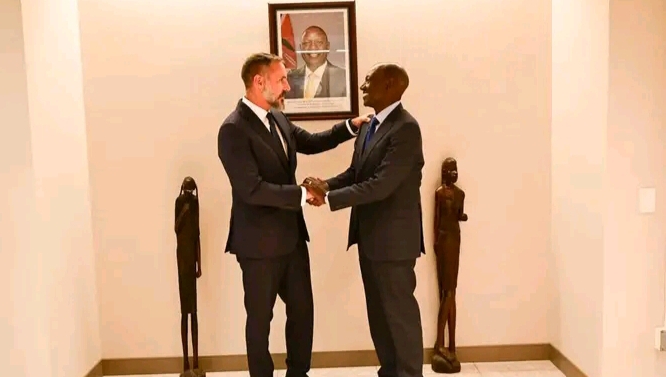
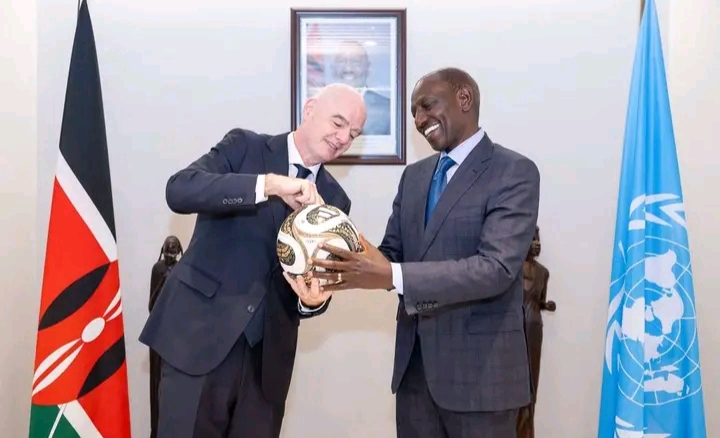
President William Ruto met FIFA President Gianni Infantino on the sidelines of the 81st United Nations General Assembly in New York on September 24, 2026, in talks that focused on the future of football in Kenya. The meeting brought together Kenya’s political and football leadership and centred on strengthening cooperation between Kenya and FIFA, developing young talent, improving football infrastructure and preparing for the 2027 Africa Cup of Nations, which Kenya will co-host with Tanzania and Uganda.
The discussions are significant because Kenya is seeking to use football not only as a sporting activity but also as a platform for youth development, employment, tourism, infrastructure development and international engagement. The meeting therefore went beyond the performance of the national team and considered how the country can build a stronger football system from the grassroots to the international level.
The meeting in New York
President Ruto held the meeting with Infantino while attending the United Nations General Assembly in New York. Also involved were Football Kenya Federation President Hussein Mohammed, Prime Cabinet Secretary Musalia Mudavadi, Kisii Governor Simba Arati and Foreign Affairs Principal Secretary Korir Sing’Oei, among other officials.
FIFA President Gianni Infantino described the discussions as productive and reaffirmed FIFA's commitment to supporting football development in Kenya. The engagement also followed earlier discussions between Ruto and Infantino, including a 2025 meeting in Nairobi that focused on the development of a national technical centre supported through FIFA Forward funding.
The latest meeting consequently provided an opportunity to review progress and discuss additional projects that could strengthen Kenya's football ecosystem.
Regional technical centres for young talent
One of the major issues discussed was the establishment of regional technical centres across Kenya.
President Ruto said the centres would help identify and nurture young footballers, strengthen grassroots football and create clearer pathways for talented players to progress towards professional and national-team football.
This is important because Kenya has a large population of young people who participate in football at schools, community clubs and local competitions. However, talented players can face difficulties accessing professional coaching, quality facilities, medical support and organised pathways into elite football.
Regional technical centres could provide a structured environment where promising players receive specialised training. They could also help coaches identify talent outside the major urban centres.
The proposal therefore represents an attempt to make football development more systematic. Instead of depending largely on individual clubs or schools to discover players, regional structures could provide opportunities for young footballers from different parts of the country.
Proposed FIFA-standard stadium in Mombasa
Another significant outcome was discussion around the possibility of constructing a FIFA-standard stadium in Mombasa.
FKF President Hussein Mohammed said the proposed facility would serve the Coast region and could help position Kenya as a hub for international football and sports tourism.
The proposal is particularly important for the Coast region because Mombasa has a major tourism industry and international connectivity. A modern football stadium could potentially support international matches, regional tournaments, concerts and other major sporting events.
However, the reports describe the Mombasa facility as a possibility under discussion, rather than a completed or fully confirmed construction project. This distinction is important when discussing the outcome of the Ruto-Infantino meeting.
The government has already been pursuing a wider stadium-development programme. President Ruto said the government is investing in sports infrastructure, including plans for 32 new stadia across the country.
Progress on the FIFA Arena project
The meeting also covered progress on the FIFA Arena project.
FIFA Arena is connected to FIFA's broader effort to expand access to football facilities, particularly for children and young people. Kenya's participation in the programme is expected to provide additional spaces where young people can play football and engage in structured community activities.
The importance of such facilities extends beyond professional football. Small football pitches can give children and teenagers safe places to participate in sport while developing skills, teamwork and discipline.
For Kenya, the project could complement existing school and community football programmes and contribute to the development of players who may eventually progress to professional or national teams.
Modern technical centre
The leaders also discussed plans for a modern technical centre.
This builds on the FIFA-supported national technical-centre project in Machakos. FIFA previously announced that the facility would be developed with FIFA Forward support and would serve as a hub for Kenya's national teams. The project was estimated at about US$4.6 million and was planned to include a natural-grass pitch, two artificial-turf pitches, administration facilities and conference facilities.
The technical centre is important because successful football nations generally require more than stadiums. They need training facilities where national teams can prepare, coaches can develop their skills and young players can be assessed.
The latest discussions indicate that Kenya and FIFA are looking at how to expand this type of technical infrastructure as part of the wider development of the game.
2027 AFCON preparations
Another important subject was Kenya's preparations for the 2027 Africa Cup of Nations.
Kenya will co-host AFCON 2027 alongside Tanzania and Uganda. FKF President Hussein Mohammed briefed Infantino on Kenya's preparations and the country's ambition to become a competitive football nation.
The tournament is expected to be one of the biggest sporting events ever staged in the region, making preparations particularly important.
Kenya's preparations involve stadiums, training facilities, transport, accommodation, security and other logistical requirements. The development of stadium infrastructure is therefore connected directly to the country's ability to host international football.
The meeting with Infantino provided an opportunity for Kenya's football leadership to update FIFA on the progress being made.
It also followed a recent visit to Kenya by CAF President Patrice Motsepe, who inspected facilities including Talanta Sports International Stadium and Kasarani Stadium and discussed preparations for AFCON 2027 with President Ruto.
Kenya's ambition to become a football and sports-tourism hub
A broader outcome of the discussions was the continued emphasis on positioning Kenya as an international football and sports-tourism destination.
Sports tourism can generate economic activity through visitors attending matches, accommodation, transportation, restaurants, entertainment and other services.
The proposed Mombasa stadium, improved national facilities and preparations for major tournaments could therefore form part of a broader strategy to connect sport with tourism.
Kenya already has a strong international tourism profile, and football provides another potential attraction. Hosting international matches can bring supporters from other countries while giving Kenyan businesses opportunities to benefit from increased visitor numbers.
What the meeting means for grassroots football
The emphasis on regional technical centres is particularly relevant to grassroots football.
For many young Kenyans, football begins at school, in neighbourhoods or through local clubs. The challenge is creating a reliable pathway from these informal beginnings to organised competitive football.
If the proposed technical centres are implemented effectively, they could provide more structured opportunities for talented players.
The centres could also contribute to coach development, player assessment and better football standards in different regions.
However, the actual impact will depend on implementation, funding, qualified personnel and long-term management. The announcement of a project by itself does not guarantee that every region will receive a fully operational facility.
The role of FIFA
FIFA's involvement is significant because the organisation has development programmes that support football associations around the world.
The FIFA Forward programme has previously supported Kenya's technical-centre plans. FIFA said in 2025 that the Machakos project was intended to become a hub for national teams and a development centre for future Kenyan footballers.
Continued cooperation with FIFA could therefore provide Kenya with technical expertise, development support and international connections.
At the same time, Kenya's government and FKF remain responsible for ensuring that projects are properly implemented and maintained.
What was actually achieved?
The meeting produced several areas of agreement and continued cooperation, rather than a single new financial package being announced.
The main outcomes reported were:
Continued Kenya-FIFA cooperation on football development.
Regional technical centres to identify and nurture young talent.
Progress on the FIFA Arena project.
Discussions on a modern technical centre.
Discussion of a possible FIFA-standard stadium in Mombasa.
Briefing FIFA on Kenya's preparations for AFCON 2027.
A broader ambition to position Kenya as an international football and sports-tourism hub.
These outcomes should be understood as development plans and ongoing projects. Not every proposal discussed has reached the construction or implementation stage.
Why the meeting matters to Kenyan football fans
For Kenyan football supporters, the significance of the meeting goes beyond politics.
Kenya's football development has long faced challenges involving infrastructure, talent development, administration and investment. Better facilities and stronger international partnerships could help address some of these challenges.
Young players could benefit from improved training facilities, while national teams could have better places to prepare for international competitions.
Clubs and football academies could also potentially benefit from a stronger football ecosystem.
For fans, modern stadiums could improve the experience of watching international matches, while successful hosting of major tournaments could expose Kenyan football to a larger global audience.
Looking ahead
The real measure of the meeting will be what happens after the discussions.
Regional technical centres will need funding, land, coaches and operating structures. The FIFA Arena project will need to move from plans to completed facilities. The proposed Mombasa stadium will require further decisions on its location, financing, design and implementation.
Similarly, preparations for AFCON 2027 will require continued coordination between Kenya, Tanzania, Uganda, CAF, FIFA and national football authorities.
Kenya's existing stadium projects will also need to meet the required standards and timelines.
Therefore, the New York meeting can be viewed as part of a longer process rather than the final stage of Kenya's football transformation.

You Might Also Like
-
Deputy President Kithure Kindiki's call for Mount Kenya elders to take a leading role in fighting illicit drinks comes amid an intensified national crackdown on illegal alcohol. The government's approach involves police raids, closure of unlicensed outlets, investigations into suspected counterfeit
-
As Kenya moves toward the 2027 General Election, the Kenya National Association of the Deaf and other Deaf organisations are seeking an electoral process in which communication barriers do not prevent citizens from exercising their democratic rights. The key areas include Kenyan Sign Language inter
-
The agro-business expo during Day Three of World Tourism Week at the University of Eldoret has highlighted an important opportunity for the Rift Valley: using agriculture as part of the region's tourism story. By connecting farmers, entrepreneurs, food producers, hospitality businesses, students, i
-
Deputy President Kithure Kindiki's visit to Nyeri County on September 25, 2026, has placed the issue of Mt Kenya unity at the centre of his public message. He urged leaders and residents not to allow political differences to create permanent divisions between communities and rejected attempts to spl
-
President William Ruto’s engagement with Prince Rahim Aga Khan reflects the long-standing partnership between Kenya and the Aga Khan institutions. The relationship has contributed to important sectors including healthcare, education, economic development, climate resilience and community empowerme
-
President William Ruto's visit to the WNBA game in Brooklyn and his subsequent meeting with NBA Deputy Commissioner Mark Tatum placed Kenyan basketball on an international platform. The visit was especially significant because Ruto was there to support Madina Okot, the Kenyan player representing th