



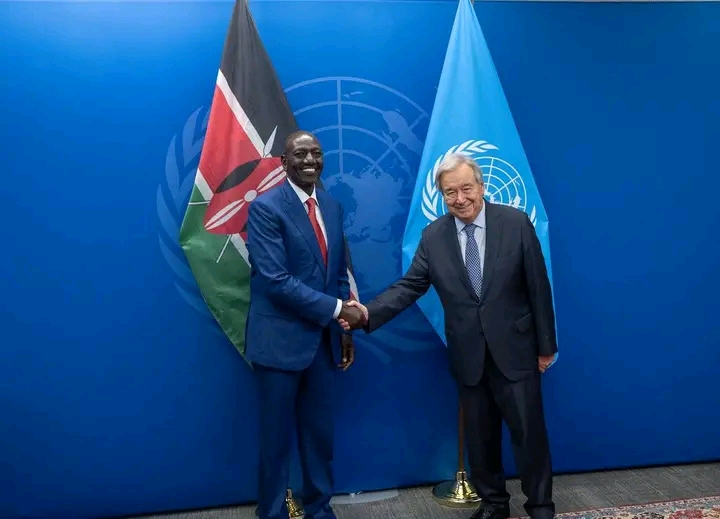
Ruto Meets UN Chief Guterres: Kenya Pushes for Stronger African Voice at the Global Table
President William Ruto's engagement with United Nations Secretary-General António Guterres in New York comes at a time when Kenya is strongly advocating for reforms to global governance. The most prominent issue is Africa's lack of a permanent seat on the UN Security Council. Guterres has publicly supported the principle of permanent African representation, describing the continent's continued exclusion as unjust and calling for reforms that would make the Council more representative and effective. Ruto's broader UN message has also focused on international financial reform, climate financing, Africa's economic transformation, value addition, global trade and greater participation by developing countries in international decision-making. His appearance at the 81st UN General Assembly therefore goes beyond a single meeting and forms part of Kenya's wider diplomatic effort to promote African interests on the global stage. The key question now is how these calls for reform will translate into negotiations among UN member states. While the Secretary-General's support is significant, changes to the Security Council require agreement through the established UN reform process. For Kenya and other African countries, the discussions represent an ongoing effort to secure a greater role in shaping international decisions that affect the continent.
President William Ruto’s engagement with United Nations Secretary-General António Guterres comes against the backdrop of the 81st United Nations General Assembly taking place in New York this week. The meeting and their wider diplomatic engagement have placed Kenya’s concerns about Africa’s representation in global institutions, international peace and security, development financing and the future of multilateralism at the centre of attention. The UN itself lists a readout of a meeting between Secretary-General Guterres and President Ruto in New York on September 23, 2026.
President Ruto’s talks with UN Secretary-General António Guterres
President William Ruto is in New York for the high-level week of the United Nations General Assembly, where world leaders are discussing major international challenges. The 81st General Assembly’s high-level week runs from September 22 to 29, 2026, bringing heads of state and government together at UN Headquarters.
Ruto’s engagement with Secretary-General António Guterres is particularly significant because Kenya has increasingly used international forums to call for changes to the global governance system. One of the major issues associated with Ruto’s UN engagement has been Africa’s representation on the United Nations Security Council.
The Security Council currently has 15 members. Five countries — China, France, Russia, the United Kingdom and the United States — are permanent members and possess veto powers. The other 10 members are elected for two-year terms. Africa does not currently have a permanent seat on the Council.
Push for permanent African representation
A central issue surrounding Ruto’s discussions at the United Nations is the longstanding African demand for greater representation in global decision-making.
During his UN engagements, Ruto has argued that Africa should not continue to be excluded from permanent representation on the Security Council despite the continent’s importance to international peace and security.
On September 23, Guterres publicly expressed support for reform of the Security Council. He said Africa still had no permanent seat and argued that a 21st-century Security Council without permanent African representation was unjust and indefensible. He also called for reforms intended to make the Council more representative, legitimate and effective.
This position closely corresponds with Ruto’s longstanding argument that African countries should have a stronger voice in decisions affecting international peace, security and development.
Ruto has previously called for at least two permanent African seats on the Security Council, accompanied by the same rights and privileges enjoyed by existing permanent members, including veto rights. He has also advocated for additional non-permanent African seats.
The issue is important to Kenya because African countries frequently appear on the Security Council agenda, particularly in discussions concerning conflicts, peacekeeping, terrorism, humanitarian emergencies and development challenges.
Ruto challenges the existing global order
Ruto’s UN appearance has also focused on what he sees as inequalities within international institutions.
In his address to the 81st General Assembly, Ruto questioned whether the current global governance arrangements adequately reflect the world of the 21st century. He argued that although all UN member states are formally sovereign and equal, power within some of the most important international institutions remains concentrated among a small number of countries.
The President’s argument goes beyond the Security Council. Kenya has also called for reforms to the international financial system, particularly in relation to developing countries' access to financing.
Ruto has repeatedly argued that developing nations face difficulties accessing affordable financing for infrastructure, climate action, health, education and other development priorities. His UN message therefore links political representation with economic representation.
Guterres' position on Security Council reform
Guterres' comments are notable because the UN Secretary-General occupies a central position in discussions about reform of the international organisation.
According to reporting on his September 23 statement, Guterres said the current composition of the Security Council does not adequately reflect contemporary realities. He argued that reform is necessary if the Council is to maintain legitimacy and effectiveness when dealing with modern global challenges.
However, the Secretary-General's support for reform does not itself change the composition of the Security Council. Changes to the Council's permanent membership and veto arrangements require a much broader intergovernmental process and agreement among UN member states.
Therefore, while Guterres' position provides diplomatic support for the principle of greater African representation, it should not be interpreted as an immediate creation of an African permanent seat.
Africa's role in global peace and security
Another important part of Ruto's message is the role African countries already play in international peace and security.
African countries contribute troops and personnel to international and regional peace-support operations. Kenya has itself played an active role in regional security efforts, including peace and stabilisation initiatives in East Africa.
Ruto has therefore argued that Africa should have a stronger institutional voice in deciding how international peace and security policies are formulated.
The argument is based on the principle that countries and regions affected by international decisions should have meaningful participation in making those decisions.
The debate also comes at a time when the international community is dealing with conflicts and humanitarian crises in different parts of the world. This has increased calls from various countries for the UN system to become more representative and responsive.
International financial system
Ruto's discussions at the UN have also been connected to international economic reform.
During his General Assembly address, he highlighted the need for developing countries to have greater opportunities to participate in the global economy. He has argued that Africa should not remain primarily an exporter of raw materials while importing finished products.
On September 24, reports from the General Assembly said Ruto was emphasising Africa's mineral wealth, agricultural potential, renewable-energy resources and youthful population. He called for investment that would help African countries add value to their resources and participate more substantially in manufacturing and global supply chains.
For Kenya, this discussion is relevant because the country is seeking greater foreign investment, stronger trade links and opportunities for local industries.
Climate change and development
Climate change is another major issue being discussed during the UN General Assembly's high-level week.
The official UN programme lists September 24 as the date for a high-level plenary meeting addressing the existential threats posed by sea-level rise. The meeting is intended to promote coordinated and adequately financed international action.
Climate financing is particularly important for developing countries because many face significant climate-related risks while having comparatively limited financial resources to respond.
Kenya has repeatedly participated in international climate discussions, with issues such as renewable energy, climate financing, droughts, floods and food security forming part of its international development agenda.
Ruto's wider message at the UN therefore places climate action within the broader question of international financing and development.
Kenya's diplomatic position
The meeting between Ruto and Guterres also reflects Kenya's broader diplomatic role within the United Nations.
Kenya hosts the United Nations Office at Nairobi, one of the organisation's major headquarters outside New York, Geneva and Vienna. This gives Kenya a distinctive relationship with the UN system and strengthens the country's interest in multilateral diplomacy.
Kenya has also sought to position itself as a participant in peace and security initiatives in Africa and beyond.
The Ruto administration has consequently used international forums to present Kenya as a country seeking partnerships on security, trade, climate change, development and multilateral reform.
Why the meeting matters to Kenya
For ordinary Kenyans, discussions between the President and the UN Secretary-General may appear distant from domestic issues, but decisions made through international institutions can have implications for the country.
Kenya depends on international cooperation in areas such as development financing, climate programmes, trade, security, humanitarian assistance and health.
The country also participates in UN programmes and international peace-support operations.
Consequently, Kenya's diplomatic relationships can influence the opportunities available for cooperation and international partnerships.
The Ruto-Guterres engagement also gives Kenya an opportunity to place African priorities before one of the world's most important international institutions.
The wider UN General Assembly agenda
Ruto's meeting with Guterres is taking place during a particularly busy UN week.
According to the official General Assembly calendar, leaders are participating in the general debate and several high-level meetings between September 22 and 29. The programme includes discussions on the right to development, sea-level rise, pandemic prevention and preparedness, the Durban Declaration and Programme of Action, and nuclear disarmament.
These discussions provide a broader setting for Ruto's message about reforming international institutions.
His position is that the global system should better reflect contemporary economic, demographic and geopolitical realities.
What the engagement could mean going forward
The most immediate outcome of Ruto's engagement with Guterres is the increased visibility of Africa's demand for permanent representation on the Security Council.
Guterres' public support for African permanent representation gives the issue additional attention, although the actual reform process remains dependent on negotiations among UN member states.
The discussions also demonstrate that Kenya is seeking to connect political reform with economic and development reform.
Ruto's argument is essentially that developing countries should have a stronger voice in institutions that make decisions affecting their economies, security and development.
For Kenya, this creates an opportunity to advocate for African interests while also pursuing bilateral and multilateral partnerships.

You Might Also Like
-
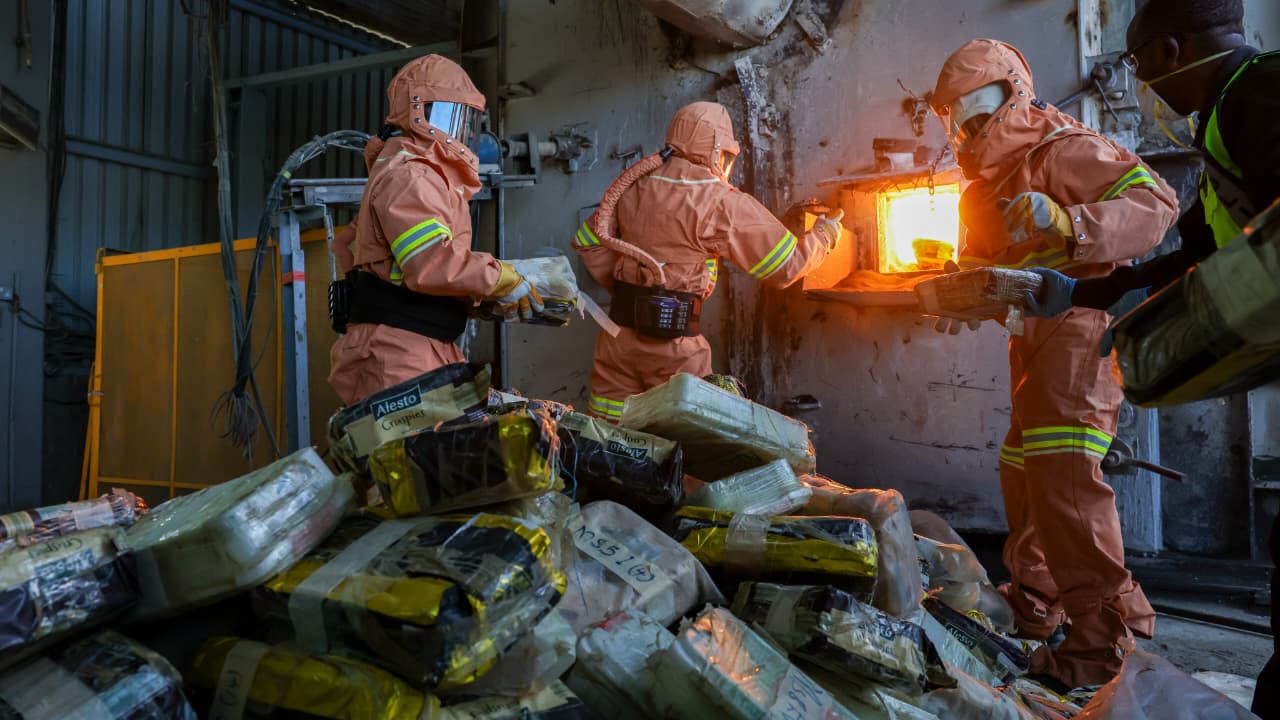
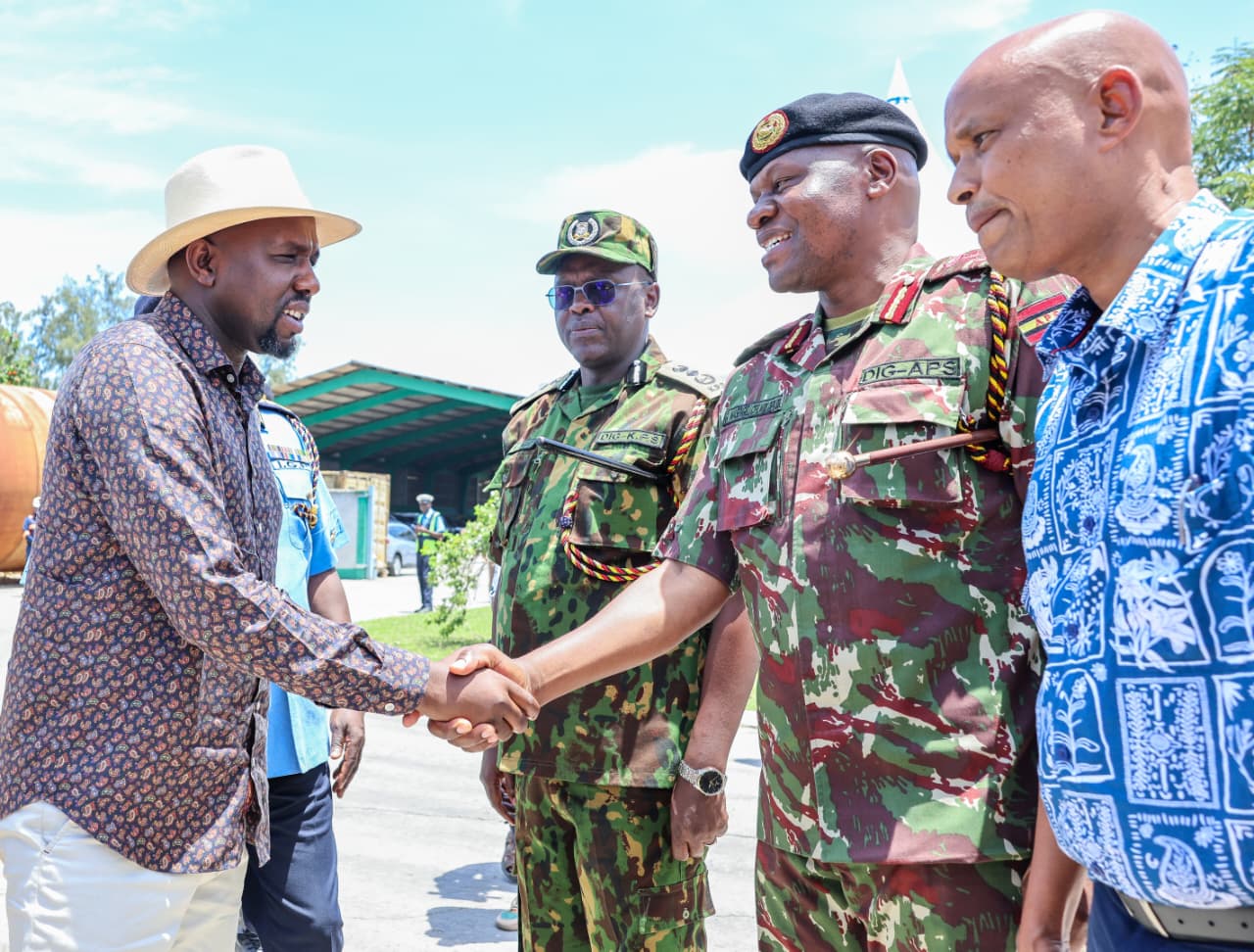
Interior CS Kipchumba Murkomen has overseen the destruction of narcotics worth Sh8.2 billion at Bamburi Cement Factory in Mombasa, including more than 1,000kg of methamphetamine seized in the Indian Ocean last October.
-
Bomet Green Stadium hosted activities marking International Week of Deaf People, bringing together members of the Deaf community, families, advocates and other stakeholders to raise awareness about the rights, dignity, language and inclusion of Deaf people. The event highlighted the importance of Ke
-
Kipchoge Keino Stadium in Eldoret is undergoing a major transformation as the government accelerates preparations ahead of the 2026 Mashujaa Day celebrations scheduled for October 20. Defence Principal Secretary Patrick Mariru has toured the facility to assess progress and monitor the ongoing works,
-
Interior CS Kipchumba Murkomen is overseeing the destruction of methamphetamine worth Sh8.2 billion at Bamburi Cement Factory in Mombasa. The more than one-tonne narcotics consignment was seized by a multi-agency security team in the Indian Ocean last year.
-
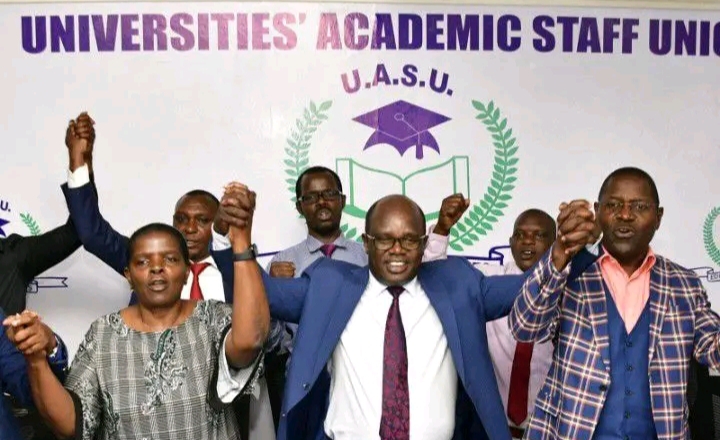
UASU's announcement today marks a significant escalation in the ongoing dispute over lecturers' employment terms and the financing of public universities. The union has issued a seven-day strike notice and says lecturers could down their tools on October 2, 2026, unless the 2025–2029 CBA and relat
-
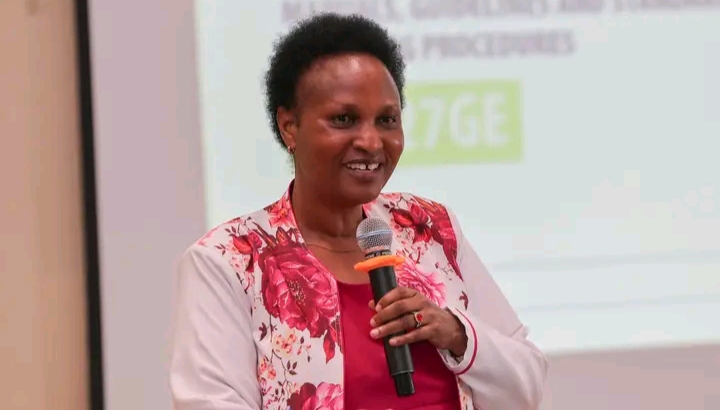
IEBC Commissioner Dr. Ann Nderitu has emphasized the importance of ensuring that Deaf Kenyans can participate fully and equally in the country’s electoral process as preparations for the 2027 General Election continue. The focus includes accessible voter education, Kenyan Sign Language interpretat