



RUTO RESPONDS TO KALONZO: “TSIEKURU ROAD IS NOT THE ONLY ONE I’M WORKING TO BUILD”
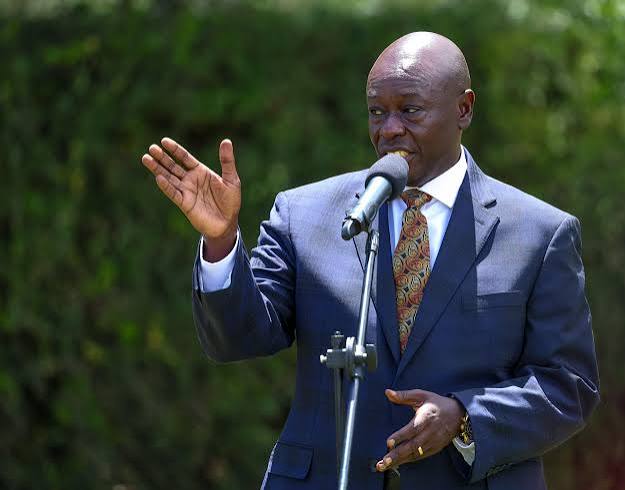
President William Ruto responds to Kalonzo Musyoka, saying the Tsiekuru road is among many infrastructure projects his administration is pursuing across the country.
President William Ruto has responded to remarks by Wiper Party leader Kalonzo Musyoka over the ongoing development of the road leading to his rural home in Tseikuru, Kitui County, saying the project is only one part of a wider infrastructure programme being undertaken by his administration.
Kalonzo recently acknowledged the government’s work on the road leading towards his Tseikuru home, with remarks that President Ruto was being used by God to deliver development to the area. The comments have attracted considerable attention because Kalonzo remains a prominent opposition figure and has been positioning himself ahead of the 2027 General Election.
Responding to the remarks, Ruto said he had heard a friend of Kalonzo observe that God was using him to construct the road leading to the former Vice President’s home. The President, however, stressed that the Tseikuru road should not be regarded as the only infrastructure project his administration is pursuing.
According to reports on the exchange, Ruto maintained that his government’s development programme extends beyond individual leaders, communities and political constituencies. He presented road construction as part of a broader effort to improve connectivity and open up areas that have historically faced challenges with transportation infrastructure.
The Tseikuru road has become a notable subject in the political debate between Ruto and Kalonzo. The road leading towards Kalonzo’s rural home had previously been cited by Ruto when questioning the development record of leaders who have held senior positions in government.
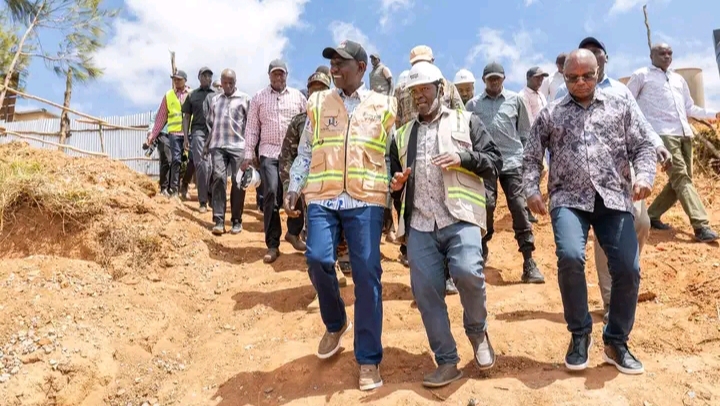
In December 2025, the Kenya National Highways Authority advertised works involving the upgrading of the Kyuso–Tseikuru road to bitumen standards. The tender also covered strengthening works on the Kandwia–Kyuso section.
The road project therefore predates the latest political exchange and forms part of an infrastructure process that has been discussed publicly for some time. Ruto had earlier spoken about the need to improve the road network in the area, while government officials have continued to present road development as an important part of their national infrastructure agenda.
For residents of Tseikuru and surrounding areas, the project carries significance beyond its political symbolism. Improved roads can make it easier for people to travel between rural communities and urban centres, while also facilitating the movement of agricultural products and other goods.
Farmers in rural areas often depend on road networks to transport produce to markets. Poor roads can increase transportation costs, extend travel times and make it difficult for traders to reach production areas, particularly during periods of heavy rainfall.
A reliable road network can also improve access to schools, health facilities, markets and other public services. For communities that have experienced poor road conditions for years, the upgrading of a major route can therefore have a direct impact on everyday economic and social activities.
Ruto has used infrastructure development as one of the key themes of his administration’s development agenda. The President has repeatedly highlighted road construction and maintenance while discussing government efforts to improve connectivity across the country. In one recent government account, the administration said it had constructed 1,800 kilometres of new tarmac roads and maintained 134,800 kilometres over a specified period. Those figures are government-reported figures and should be distinguished from independent assessments of infrastructure delivery.
The President has also argued that improved infrastructure can help unlock economic opportunities by connecting rural communities to markets and supporting sectors such as agriculture.
The exchange with Kalonzo has consequently developed into a broader political conversation about whether development projects should be viewed independently from political competition.
Kalonzo remains an opposition leader and has continued to participate in political activities ahead of the 2027 election. His public acknowledgement of the road project has therefore generated discussion because it comes at a time when political leaders are increasingly highlighting development achievements and government projects in their respective regions.
However, acknowledging a government development project does not by itself establish a political alliance. Recent reporting has noted that Kalonzo remains an opposition figure, while political debate over his relationship with the Ruto administration continues.
The Tseikuru road has also been used by different political actors to make broader arguments about leadership and service delivery.
Government allies have argued that the decision to develop the road demonstrates that public projects can be implemented even in areas associated with opposition politicians. Opposition figures, on the other hand, have questioned the government's motives and the wider political implications of development projects undertaken ahead of the 2027 elections.
Such arguments are likely to continue as the election approaches.
For residents, however, the immediate concern is often less about the political exchanges and more about whether projects are completed on schedule and according to the required standards.
Road users are generally interested in whether a road remains accessible during rainy seasons, whether travel times are reduced and whether transport costs decline after construction.
Businesses also stand to benefit from improved connectivity. Better roads can allow traders to move goods more efficiently, while small businesses may gain access to larger markets. In agricultural communities, improved transport can be particularly important because farmers depend on timely delivery of produce to avoid losses.
The development of the Tseikuru road therefore has implications beyond the political personalities associated with it.
Ruto has sought to place the project within his administration’s wider national road programme. His argument is that infrastructure development should not be restricted by political differences and that communities should benefit from government investment regardless of the political positions of their leaders.
The President has previously made similar arguments when defending development projects in areas where political leaders have opposed his administration.
Government officials have continued to describe roads as essential infrastructure for economic transformation. The official presidential website has similarly highlighted road construction as part of the administration’s development agenda, including projects intended to improve movement of people, goods and services.
The political significance of the Tseikuru project is nevertheless difficult to separate from the approaching 2027 General Election.
Infrastructure projects frequently become part of election campaigns because voters can directly observe physical developments in their communities. Roads, electricity connections, water projects, hospitals, schools and markets are often used by political leaders to demonstrate what they describe as their development record.
At the same time, opposition leaders often question the timing, financing, implementation and distribution of government projects.
The debate therefore extends beyond whether a road is being constructed. It also involves questions about who initiated the project, when it was planned, how it is being financed and whether the benefits will reach the intended communities.
In the case of Tseikuru, records show that the Kyuso–Tseikuru road had already been included in government procurement plans, with the Kenya National Highways Authority inviting contractors to bid for upgrading works.
That background provides context to the latest exchange between Ruto and Kalonzo.
Kalonzo’s comments have nevertheless provided the President with an opportunity to emphasise his administration’s development agenda, while Ruto’s response has highlighted his position that the Tseikuru project represents only one component of a broader national infrastructure programme.
The road has consequently become both a local development project and a subject of national political discussion.
As the 2027 General Election draws closer, Kenyans are likely to hear more arguments from political leaders about infrastructure projects completed, ongoing and planned across the country.
For communities, the ultimate focus will remain on tangible outcomes: completed roads, reliable transport, reduced travel difficulties and improved access to economic opportunities and public services.
The political debate surrounding the Tseikuru road is therefore likely to continue, particularly as Ruto and Kalonzo remain on different sides of Kenya’s political landscape.
For President Ruto, the project provides an opportunity to point to infrastructure investment in an area associated with an opposition leader. For Kalonzo, acknowledging the development work does not necessarily resolve the wider political differences between him and the administration.
The exchange demonstrates how development and politics often intersect in Kenya, particularly during the period leading up to a General Election.
Ruto’s message is that the road to Tseikuru is not an isolated project but part of a broader government effort to improve road connectivity across the country. The government has continued to present infrastructure investment as a tool for improving economic activity and linking rural communities to markets and essential services.
Meanwhile, Kalonzo’s remarks have brought renewed public attention to the road and to the broader question of development in Ukambani.
As work on the road progresses, residents will ultimately judge the project through its practical impact on their daily lives. Whether it improves transportation, supports businesses, assists farmers and enhances access to services will likely matter more to local communities than the political exchanges surrounding its construction.
The Tseikuru road has thus moved from being a local infrastructure project to becoming part of a wider national conversation about development, leadership and political accountability ahead of the 2027 General Election.
For now, President Ruto maintains that the road leading to Kalonzo’s home is only one among many projects his administration is pursuing, while the opposition continues to scrutinise the government's development record. The continuing debate illustrates the growing role of infrastructure in Kenya’s political conversation as the country moves closer to the next election.

You Might Also Like
-
Dr Joyce Kithure's call for young people to use digital media for climate action places Kenya's youth at an important intersection between technology, environmental conservation and public advocacy. Speaking during the launch of the Youth Climate Policy and Advocacy Training programme at KISE, she
-
Former Deputy President Rigathi Gachagua has pledged to intensify the fight against drug trafficking, promising tougher border controls to prevent heroin, cocaine and cannabis from entering Kenya within the first year of his administration.
-
President William Ruto's September 26, 2026 visit to Taita Taveta County focused on development, with particular attention to technical education, land ownership and infrastructure. The President laid the foundation stone for Wumingu Technical and Vocational College, participated in the Coast-wide t
-
Mike Bloomberg's discussions with President William Samoei Ruto bring attention to three important dimensions of Kenya's development agenda: healthier food choices, the clean-energy transition and ocean conservation. The front-of-package warning-label debate is focused on giving Kenyan consumers cl
-
The Koitaleel Samoei University College main campus in Nandi Hills is now approaching a major milestone after years of delays. The latest September 2026 reports place construction at about 85 per cent, with an administration block and 14 lecture halls forming key components of the development. Finis
-
President William Ruto's engagement with the Africa Finance Corporation and the establishment of AFC's Nairobi regional office represent an important development in Kenya's relationship with one of Africa's major infrastructure finance institutions. While AFC remains headquartered in Lagos, the ope