



Ruto Takes Kenya to the WNBA: Meets Kenyan Star Madina Okot and NBA Deputy Commissioner to Expand Basketball Partnership
President William Ruto's visit to the WNBA game in Brooklyn and his subsequent meeting with NBA Deputy Commissioner Mark Tatum placed Kenyan basketball on an international platform. The visit was especially significant because Ruto was there to support Madina Okot, the Kenyan player representing the Atlanta Dream. Okot's appearance at the WNBA level has drawn attention to the possibilities available to Kenyan women pursuing professional basketball. The discussions with Mark Tatum broadened the engagement beyond one athlete. They covered Kenya's partnership with the NBA, grassroots development, NBA Africa and Basketball Africa League programmes, the Railway City multi-purpose arena, Kasarani refurbishment, additional basketball courts and the possibility of incorporating courts into Affordable Housing Programme projects. The proposed cooperation with the Kenya Tourism Board also introduces another dimension, linking basketball with tourism promotion and youth opportunities. For Kenyan basketball, the key issue going forward will be translating these partnerships and commitments into accessible facilities, strong grassroots programmes, quality coaching and genuine pathways for young players. Okot's appearance in the WNBA has already provided a highly visible example of Kenyan talent reaching the international stage, while the discussions with the NBA indicate an effort to broaden those opportunities to more young people across the country.
President William Ruto’s recent engagement with the Women’s National Basketball Association (WNBA) in New York has placed Kenyan basketball talent and the country’s growing partnership with the National Basketball Association (NBA) in the international spotlight.
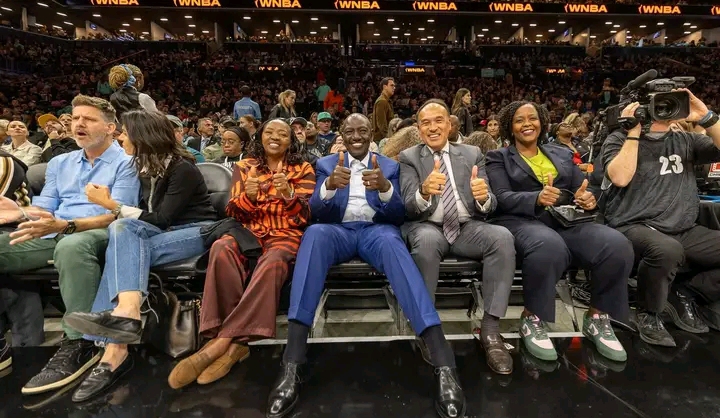
During his visit to the United States for the United Nations General Assembly, President Ruto attended a WNBA game between the Atlanta Dream and New York Liberty in Brooklyn on September 23, 2026. His main interest was supporting Kenyan basketball player Madina Okot, who plays for the Atlanta Dream. Ruto attended the game with First Lady Rachel Ruto, NBA Deputy Commissioner Mark Tatum and representatives of NBA Africa.
The visit was followed by discussions between President Ruto and Mark Tatum on Kenya’s partnership with the NBA. Their talks focused on expanding basketball development in Kenya, strengthening grassroots programmes, improving sporting infrastructure and creating more opportunities for young Kenyan players to progress toward professional basketball.
Ruto watches Madina Okot play in the WNBA
The WNBA appearance became particularly significant because of Madina Okot's presence on the Atlanta Dream roster.
Okot, a Kenyan basketball player, was selected by Atlanta with the 13th pick in the 2026 WNBA Draft. Her progress has attracted attention in Kenya because she represents a new generation of Kenyan athletes competing at one of the highest levels of women's professional basketball.
President Ruto watched the Atlanta Dream play the New York Liberty from courtside. Atlanta won the match 83-65, with Okot recording two points and two rebounds.
After the game, Okot described the President's attendance as an honour. She also expressed hope that her experience could help create opportunities for more Kenyan girls who want to pursue basketball professionally.
The interaction between Ruto, Rachel Ruto and Okot also had a personal Kenyan connection. Reports said Okot spoke Swahili with the President and First Lady during their meeting. Ruto and Okot also posed for a photograph together at the game.
Madina Okot’s significance to Kenyan basketball
Okot's journey has attracted attention because she has become a prominent example of a Kenyan woman reaching the highest levels of professional basketball in the United States.
Reports on her background indicate that she was born in Mumias and began playing basketball in 2020. She attended Kaya Tiwi Secondary School before joining Zetech University and later moving to the United States to continue her education and basketball career.
Her development demonstrates the potential pathway from Kenyan schools and local basketball programmes to American college basketball and eventually professional competition.
Her success also comes at a time when basketball development in Kenya is increasingly being connected to international partnerships. The NBA has been working with Kenyan institutions and organisations to expand access to basketball, coaching and youth development.
The significance of Okot's appearance goes beyond one player. Her career provides young Kenyan girls with a visible example of what can happen when talent development is combined with education, coaching and international opportunities.
Meeting with NBA Deputy Commissioner Mark Tatum
Following the WNBA engagement, President Ruto held discussions with NBA Deputy Commissioner Mark Tatum to review the partnership between Kenya and the NBA.
According to reports, their discussions covered several areas, including the progress of NBA Africa and Basketball Africa League franchises, sports infrastructure, grassroots basketball development and opportunities for young people.
President Ruto said the discussions included the development of the Railway City multi-purpose arena, the refurbishment of Kasarani, and continued investment in basketball courts around the country.
These infrastructure discussions are important because basketball development requires facilities where young people can train, compete and receive coaching.
The proposed development of more basketball courts could also make the sport more accessible to communities that may not have large sporting facilities.
Basketball courts in Affordable Housing projects
One of the areas discussed was the possibility of incorporating basketball courts into Kenya's Affordable Housing Programme projects.
President Ruto said the government and NBA had reviewed implementation of their memorandum of understanding on grassroots development, including plans to integrate basketball courts into Affordable Housing Programme projects.
If implemented, such an approach could place basketball facilities closer to residential communities.
For young people, proximity to sporting facilities can make participation easier. Instead of travelling long distances to access a court, children and teenagers living in housing developments could potentially have sporting facilities within their communities.
The broader objective described in the discussions is to develop basketball from the grassroots level and establish clearer pathways toward professional competition.
The Railway City multi-purpose arena
The Railway City multi-purpose arena was another important issue raised during the talks.
Large modern sporting facilities can provide venues for professional competitions, national tournaments, international events and youth development programmes.
The discussions surrounding Railway City therefore form part of a wider effort to improve Kenya's sports infrastructure.
For basketball specifically, modern arenas can support high-level competitions while also giving Kenyan players opportunities to experience professional-standard facilities.
The project is therefore connected to the wider question of how Kenya can build an environment capable of supporting athletes who want to compete domestically and internationally.
Kasarani refurbishment
President Ruto also highlighted the refurbishment of Kasarani as part of the discussions with the NBA.
Kasarani has historically been one of Kenya's major sporting facilities. Improving its infrastructure could strengthen Kenya's ability to host major sporting competitions and provide better facilities for athletes.
The focus on Kasarani, together with Railway City and additional basketball courts, shows that the partnership discussions are not limited to player development.
They also involve the physical infrastructure needed to support basketball at different levels.
Grassroots basketball development
Grassroots development was one of the central themes of the meeting between Ruto and Tatum.
A strong basketball system requires young players to begin developing their skills at an early age. This involves access to courts, qualified coaches, competitions and talent-identification programmes.
Kenya's partnership with the NBA has therefore sought to expand opportunities beyond established professional players.
In 2023, the NBA opened a Nairobi office and announced plans to support grassroots basketball programmes in cooperation with Kenya's Ministry of Sports, Ministry of Education and Kenya Basketball Federation.
This created a framework through which international basketball expertise could be connected with Kenyan youth programmes.
M-PESA Jr. NBA programme
Another example of the NBA's engagement in Kenya is the M-PESA Jr. NBA programme, which involves NBA Africa and Safaricom.
The programme was launched in February 2025 and targets more than 10,000 boys and girls in Nairobi, Mombasa, Eldoret and Kisumu.
According to reports, the programme combines basketball development with financial literacy. Its activities include regional tournaments, coaching development and basketball clinics.
The programme demonstrates how sports partnerships can extend beyond competition.
Young participants can develop sporting skills while also being exposed to lessons designed to support financial knowledge and personal development.
The inaugural national championships were held in April 2025 at Aga Khan Academy in Mombasa.
Opportunities for Kenyan girls
The meeting and Ruto's appearance at the WNBA game also brought attention to opportunities for Kenyan girls in basketball.
Okot's career is particularly relevant because she is competing in a professional women's league watched internationally.
Her comments after meeting the President reflected her hope that her journey would contribute to greater opportunities for other girls.
Women's basketball in Kenya has faced the broader challenge of developing sufficient pathways from schools and local competitions to international professional leagues. International partnerships can potentially provide additional exposure, coaching opportunities and competition.
The NBA-WNBA ecosystem also provides an international platform through which Kenyan talent can become more visible.
Sport and tourism
The discussions between President Ruto and the NBA also included cooperation between the NBA and the Kenya Tourism Board.
The objective described by Ruto is to use sport as a platform to promote Kenya internationally while expanding opportunities for young people.
Sport has an international audience, and major basketball events can expose audiences to destinations, cultures and tourism opportunities.
For Kenya, linking basketball with tourism could therefore create a broader promotional platform.
The country is already known internationally for its athletics success, and basketball could become another avenue through which Kenya's sporting identity is presented to international audiences.
A wider pathway for young athletes
The discussions in New York highlight a broader question about how Kenya can create pathways for young athletes.
Talent alone does not necessarily guarantee a professional career. Players require training facilities, coaches, competitions, education, financial support and opportunities to compete at increasingly higher levels.
The NBA partnership is being presented as one component of efforts to build that pathway.
At grassroots level, young players can participate in development programmes. At intermediate levels, they can compete in organised tournaments and receive coaching. Exceptional players can then potentially pursue college opportunities and professional careers.
Madina Okot's journey provides a current example of such an international pathway.
What the partnership could mean for Kenya
The issues discussed by Ruto and Tatum could have implications for Kenyan basketball if the planned programmes and infrastructure investments are implemented.
Improved courts could increase access to basketball.
Better coaching programmes could improve player development.
Youth competitions could help identify talented players earlier.
Modern arenas could provide venues for higher-level competitions.
International cooperation could also expose Kenyan coaches and players to broader basketball networks.
At the same time, the long-term impact will depend on implementation. Announcements about facilities and programmes need to translate into functioning courts, regular competitions, trained coaches and sustainable youth development programmes.

You Might Also Like
-
Deputy President Kithure Kindiki's call for Mount Kenya elders to take a leading role in fighting illicit drinks comes amid an intensified national crackdown on illegal alcohol. The government's approach involves police raids, closure of unlicensed outlets, investigations into suspected counterfeit
-
As Kenya moves toward the 2027 General Election, the Kenya National Association of the Deaf and other Deaf organisations are seeking an electoral process in which communication barriers do not prevent citizens from exercising their democratic rights. The key areas include Kenyan Sign Language inter
-
The agro-business expo during Day Three of World Tourism Week at the University of Eldoret has highlighted an important opportunity for the Rift Valley: using agriculture as part of the region's tourism story. By connecting farmers, entrepreneurs, food producers, hospitality businesses, students, i
-
Deputy President Kithure Kindiki's visit to Nyeri County on September 25, 2026, has placed the issue of Mt Kenya unity at the centre of his public message. He urged leaders and residents not to allow political differences to create permanent divisions between communities and rejected attempts to spl
-
President William Ruto's meeting with FIFA President Gianni Infantino in New York focused on strengthening the partnership between Kenya and FIFA and accelerating football development in the country. The discussions covered regional technical centres for young players, the FIFA Arena project, a mode
-
President William Ruto’s engagement with Prince Rahim Aga Khan reflects the long-standing partnership between Kenya and the Aga Khan institutions. The relationship has contributed to important sectors including healthcare, education, economic development, climate resilience and community empowerme