SHANZU COURT SET TO RULE ON PAUL MACKENZIE AND 94 OTHERS IN SHAKAHOLA RADICALISATION CASE
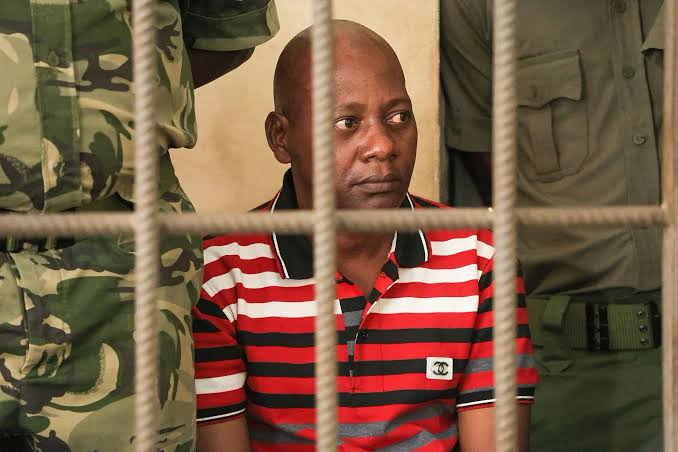
The Shanzu Chief Magistrates Court is expected to deliver its judgment in the case involving controversial religious leader Paul Mackenzie and 94 other accused persons over charges linked to radicalisation and organised criminal activities arising from the Shakahola deaths in Kilifi County. All 95 accused persons are facing radicalisation charges, while 32 of them are also charged with organised criminal activity. The case marks another significant stage in the pursuit of justice following the tragic deaths that shocked the country and raised serious concerns about religious extremism, the exploitation of vulnerable followers and the protection of human rights. Families of the victims and members of the public are keenly awaiting the court's decision as the justice system continues to examine the allegations and determine the responsibility of each accused person.
The Shanzu Chief Magistrates Court is expected to deliver a significant judgment in the case involving controversial religious leader Paul Mackenzie and 94 other accused persons, who are facing charges linked to radicalisation and organised criminal activities connected to the Shakahola deaths in Kilifi County. The ruling is expected to mark another important stage in the legal proceedings arising from one of the country's most disturbing tragedies, which brought renewed attention to religious extremism, the exploitation of vulnerable followers and the need for stronger measures to protect members of the public from harmful religious practices.
The case involves a total of 95 accused persons, all of whom are facing radicalisation charges. In addition, 32 of the accused are facing separate charges relating to organised criminal activity. The prosecution's case concerns alleged activities associated with the Shakahola tragedy, where numerous people died after reportedly following extreme religious teachings and practices in the forest.
The expected judgment will be closely watched by families of the victims, survivors, human rights organisations and members of the public who have followed the investigations and court proceedings. The Shakahola deaths shocked the country and raised serious questions about how individuals could be influenced to abandon normal activities and engage in dangerous practices under the direction of religious leaders.
Paul Mackenzie became a central figure in the tragedy because of his alleged involvement in the religious activities associated with the deaths. His case has attracted significant public attention as authorities continue to pursue accountability for the events that unfolded in Shakahola. The proceedings have also placed the role of religious institutions, community leadership and government oversight under greater scrutiny.
The radicalisation charges facing all 95 accused persons form a major part of the case. Radicalisation remains a serious concern because it can involve the use of extreme beliefs and teachings to influence individuals into accepting harmful activities. In the Shakahola case, the allegations have raised concerns about how religious teachings can be manipulated to control followers, isolate them from their families and expose them to dangerous conditions.
The prosecution of the accused persons is part of broader efforts to establish individual responsibility for alleged offences connected to the tragedy. The court is expected to consider the evidence presented during the proceedings before determining the criminal responsibility of each accused person. The outcome will therefore depend on the evidence and legal arguments placed before the court, rather than public opinion or the seriousness of the allegations alone.
The additional organised criminal activity charges facing 32 accused persons make the proceedings particularly significant. These charges concern allegations of coordinated criminal conduct and require the court to examine the evidence relating to the individuals accused of participating in such activities. The fact that not all 95 accused persons face this additional charge means that the court will have to consider the different allegations and circumstances involving the accused.
The legal process is important because every accused person is entitled to a fair hearing and the presumption of innocence until proven guilty. The court must independently assess the evidence against each individual and determine whether the prosecution has established the charges to the required legal standard. This principle remains essential in a case involving a large number of accused persons and allegations of such serious offences.
The Shakahola tragedy exposed the dangers that can arise when vulnerable people are subjected to extreme teachings without adequate protection or access to reliable information. Families were left searching for missing relatives, while survivors and affected communities faced the difficult task of dealing with the consequences of the events. The deaths also prompted national discussions about the balance between freedom of worship and the responsibility of the state to intervene when religious practices allegedly place lives at risk.
Religious freedom is protected under the Constitution, allowing individuals to practise their faith and belong to religious organisations of their choice. However, that freedom does not provide protection for criminal conduct or activities that violate the rights and safety of others. The Shakahola case has highlighted the importance of ensuring that religious institutions operate within the law while protecting followers from exploitation, abuse and practices that threaten their lives.
The proceedings at Shanzu have also drawn attention to the responsibility of religious leaders and other individuals who exercise influence over their followers. People who seek spiritual guidance often place considerable trust in those leading religious gatherings. That relationship makes it important for religious leaders to exercise responsibility and avoid using their influence to promote harmful practices or encourage followers to disregard their personal safety.
For families affected by the Shakahola deaths, the expected judgment represents an important moment in the long search for accountability. Many relatives have experienced grief, uncertainty and emotional distress following the loss of loved ones. Court proceedings may provide an opportunity for the justice system to examine the circumstances surrounding the tragedy and determine whether those accused bear criminal responsibility.
The case has also demonstrated the challenges faced by investigators and prosecutors when handling complex matters involving numerous accused persons and multiple allegations. Such proceedings require careful examination of evidence, proper documentation and the ability to establish the role of each individual. The large number of accused persons makes it especially important for the court to distinguish between the different allegations rather than treating all individuals as having identical responsibilities.
The expected ruling could have wider implications for how authorities approach cases involving radicalisation and organised criminal activity. It may also contribute to ongoing discussions about the need for effective monitoring of institutions and individuals whose activities raise concerns about public safety. However, any measures introduced in response to the tragedy must respect constitutional rights and avoid unfairly targeting legitimate religious organisations or individuals.
The tragedy further highlighted the importance of cooperation between government agencies, local communities and religious institutions in identifying warning signs before harmful activities escalate. Community members, relatives and local leaders can play an important role in raising concerns when individuals appear to be subjected to dangerous teachings or coercive practices. Authorities also need effective channels through which such concerns can be reported and investigated lawfully.
Public awareness remains another important part of preventing similar tragedies. Citizens need access to accurate information about their rights, the law and the dangers of manipulation by individuals claiming religious authority. Families and communities should be able to question practices that threaten the health, safety and dignity of their members without fear of intimidation.
The case has also renewed attention on the protection of children and other vulnerable individuals who may be unable to make independent decisions or seek help when exposed to harmful environments. Protecting such groups requires effective child protection systems, responsible community engagement and timely intervention where credible concerns arise. The lessons from Shakahola extend beyond the courtroom because preventing future tragedies requires attention to the conditions that allow exploitation and abuse to continue.
As the court prepares to deliver its judgment, attention will remain focused on the evidence and the legal findings concerning the 95 accused persons. The 32 individuals facing organised criminal activity charges will be assessed on those additional allegations, while all 95 will face the court's determination on the radicalisation charges. The court's decision will be important in clarifying the legal position of the accused and determining the next stage of the proceedings.
The Shakahola tragedy remains a painful reminder of the devastating consequences that can arise when people are exposed to extreme practices and are unable to access protection in time. The expected judgment at the Shanzu Chief Magistrates Court is therefore likely to attract considerable public interest, particularly among families seeking answers and communities concerned about the safety of vulnerable people.

You Might Also Like
-
A Nakuru court has found two Kenya Wildlife Service (KWS) officers guilty of abducting fisherman Brian Odhiambo, who went missing on January 18, 2025, near Lake Nakuru National Park. The ruling marks a significant development in a case that has raised concerns about the conduct of security officers,
-
President William Ruto has called for regular reviews of academic programmes offered by universities in Kenya to ensure they remain relevant, effective and responsive to the country's changing needs. Speaking during the National Defence University-Kenya graduation ceremony in Lanet, Nakuru County, t
-
Democracy for the Citizens Party (DCP) Leader Rigathi Gachagua has warned IEBC Chairperson Erastus Ethekon against presiding over an election marred by irregularities, insisting that Kenyans are determined to have a transparent, free and fair 2027 General Election. Gachagua maintained that there wou
-
President William Ruto on Thursday, November 26, 2026, presided over the fourth graduation ceremony at the National Defence University-Kenya in Lanet, Nakuru County, where he announced major initiatives aimed at strengthening national security, research and higher education. The President committed
-
The National Transport and Safety Authority (NTSA) has announced plans to suspend approximately 300,000 driving licences within seven days over unpaid traffic fines, giving affected motorists a limited period to clear their outstanding penalties and avoid losing their driving privileges. The planned
-
Energy and Petroleum Cabinet Secretary Opiyo Wandayi's appearance at the KenGen Sustainable Energy Conference in Olkaria on November 26, 2026, has highlighted the government's ambition to expand Kenya's energy industry. His announcement that KenGen could participate in oil drilling in the South Loki