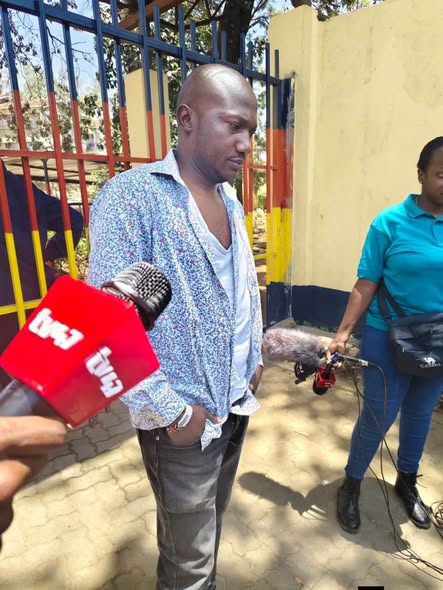
The Independent Policing Oversight Authority (IPOA) has launched an investigation into the reported arrest and detention of journalist Ode Francis
IPOA is investigating the reported arrest and detention of journalist Ode Francis, raising concerns about press freedom, police accountability and the protection of journalists' constitutional rights in Kenya. The investigation seeks to establish the circumstances surrounding the incident and determine whether the law was followed.
The Independent Policing Oversight Authority (IPOA) has launched an investigation into the reported arrest and detention of journalist Ode Francis, raising renewed concerns about press freedom, police accountability and the protection of journalists in the course of their professional duties. The matter has drawn attention to the relationship between law enforcement agencies and members of the media, particularly the need to ensure that journalists can carry out their responsibilities without unlawful interference, intimidation or abuse of authority.
The investigation is important because journalists play a crucial role in informing the public, exposing wrongdoing and holding public institutions accountable. Through their reporting, journalists help citizens understand government decisions, security operations, social challenges and other issues affecting their daily lives. When a journalist is arrested or detained, questions naturally arise about the circumstances surrounding the action, whether the law was followed and whether the journalist's constitutional rights were respected.
IPOA is mandated to provide independent oversight of the National Police Service and investigate complaints involving police misconduct. Its involvement in the case involving Ode Francis is therefore significant, as it offers an avenue for examining the circumstances of the reported incident independently. The authority's work is intended to promote professionalism within the police service, strengthen public confidence and ensure that officers who violate the law are held accountable through appropriate legal and disciplinary procedures.
The reported arrest and detention of the journalist should be examined carefully to establish what happened before, during and after the incident. Investigators need to determine the reason given for the arrest, the officers involved, the location where the journalist was taken and the duration of the detention. They should also establish whether the journalist was informed of the reasons for the arrest, whether access to legal assistance was provided and whether the relevant legal procedures were followed.
A thorough investigation must rely on verifiable evidence rather than assumptions or public speculation. Statements from the journalist, police officers, witnesses, editors and other individuals with relevant information may help investigators reconstruct the sequence of events. Where available, custody records, occurrence book entries, station registers, communication records, medical reports and video footage could provide additional evidence. The objective should be to establish the facts impartially and determine whether any officer acted outside the law.
The Constitution of Kenya provides important safeguards for people who are arrested or detained. Article 29 protects individuals against arbitrary deprivation of freedom and other forms of unlawful treatment. Article 49 sets out the rights of arrested persons, including the right to be informed promptly of the reason for arrest, the right to communicate with an advocate or another person whose assistance is necessary, and the right to be brought before a court as required by law. These protections apply to journalists just as they apply to every other citizen.
The fact that a person works as a journalist does not place that individual above the law. Journalists, like other members of the public, are subject to lawful investigations and may be arrested where the legal requirements are satisfied. However, an arrest must have a lawful basis, and officers must follow the procedures established by the Constitution and other applicable laws. A journalist's professional activities should not be treated as grounds for punishment merely because a report is critical of the police, exposes misconduct or embarrasses a public official.
The central question in the Ode Francis case is therefore whether the reported arrest and detention were lawful, necessary and conducted in accordance with established procedures. The answer must be determined through evidence and due process. If investigators establish that the arrest was justified and that the journalist's rights were respected, their findings should explain the basis for that conclusion. If evidence instead points to unlawful detention, intimidation, assault, abuse of office or other misconduct, the authority should recommend or pursue the appropriate action within its legal mandate.
The investigation also highlights the importance of protecting media freedom in a democratic society. Article 34 of the Constitution of Kenya guarantees freedom of the media, while Article 33 protects freedom of expression, subject to the limitations recognised by law. These constitutional provisions allow journalists to investigate public-interest issues, report on matters of concern and present information to audiences without improper interference. The exercise of these freedoms carries responsibilities, but those responsibilities must not become a pretext for silencing legitimate journalism.
An environment in which journalists fear arbitrary arrest can weaken the public's access to information. Reporters may become reluctant to investigate allegations of corruption, misconduct, misuse of public resources or violations of human rights if they believe that their work could expose them to unlawful detention. Sources may also hesitate to provide information, particularly when they fear retaliation. Such an atmosphere can reduce the quality of public debate and undermine the ability of citizens to make informed decisions.
For this reason, the investigation should be viewed not only as a matter concerning one journalist but also as an opportunity to reinforce the standards governing relations between the police and the media. Police officers have a legitimate responsibility to maintain public order, prevent crime and enforce the law. Journalists, meanwhile, have a responsibility to report accurately, respect the law and avoid obstructing lawful police operations. These responsibilities can coexist when both parties respect constitutional boundaries and act professionally.
The police service should ensure that officers understand the distinction between legitimate law enforcement and interference with journalistic work. Where officers believe that a journalist has committed an offence, they should identify the applicable law, document the grounds for their actions and follow the proper procedures. Arrest should not be used as a tool to punish criticism, compel the disclosure of confidential sources without lawful authority or discourage reporting on matters of public interest.
At the same time, journalists and media organisations should be encouraged to document incidents involving alleged intimidation or misconduct and report them through appropriate channels. Preserving evidence, recording relevant times and locations, identifying witnesses and retaining copies of official communications can assist independent investigations. Media organisations can also support affected journalists by providing legal assistance, verifying information before publication and engaging oversight bodies when there are credible concerns about violations of press freedom.
IPOA's handling of the complaint will be important in demonstrating that allegations of police misconduct receive serious and impartial consideration. Public confidence depends not only on whether investigations are opened but also on whether they are conducted thoroughly, concluded within a reasonable period and followed by meaningful action where wrongdoing is established. The authority should communicate appropriate updates without compromising witness safety, investigative integrity or the privacy rights of those involved.
Transparency is particularly important in cases that attract public attention. Where the law permits, the authority should explain the scope of its investigation, the procedures followed and the steps that will be taken after the evidence has been assessed. If the investigation identifies criminal conduct, the relevant findings should be referred to the appropriate institutions for action in accordance with the law. Where administrative or disciplinary failures are established, suitable corrective measures should also be considered.
Accountability must be accompanied by fairness. The journalist is entitled to have any complaint examined impartially, while the officers involved must also be given a fair opportunity to respond to the allegations. No individual should be declared guilty solely on the basis of public discussion or unverified claims. A credible investigation must protect the rights of all parties, preserve relevant evidence and distinguish established facts from allegations that remain unproven.
The case also presents an opportunity for the National Police Service to review its procedures concerning the arrest, questioning and detention of media practitioners. Clear guidance, regular training on constitutional rights and effective internal supervision can reduce unnecessary confrontations between police officers and journalists. Establishing reliable communication channels between police spokespersons and media organisations can also help address misunderstandings before they escalate into disputes.
Media freedom does not prevent lawful police action, and police authority does not permit the arbitrary restriction of constitutional freedoms. The balance between these principles depends on respect for the rule of law, independent oversight and a shared understanding that public institutions must remain accountable to the people they serve.
Ultimately, the investigation into the reported arrest and detention of Ode Francis should establish the facts, determine whether the law was followed and identify any corrective action required. Its outcome should be guided by evidence, constitutional principles and respect for due process rather than political pressure or public emotion. If wrongdoing is established, those responsible should face appropriate consequences. If the allegations are not substantiated, the findings should clearly explain the evidence supporting that conclusion.
The broader significance of the matter lies in the need to protect both individual rights and the integrity of public institutions. A democratic society depends on journalists being able to report matters of public interest and on police officers being able to perform their duties within the law. Neither responsibility should be undermined by intimidation, unlawful conduct or a lack of accountability.
As IPOA examines the circumstances surrounding Ode Francis's reported arrest and detention, the public will reasonably expect a professional, independent and credible process. A transparent outcome can help restore confidence, reinforce respect for constitutional protections and remind law enforcement agencies that accountability is essential to effective policing. It can also reaffirm that journalists must exercise their profession responsibly while enjoying the same fundamental rights and legal protections guaranteed to every person in Kenya.

You Might Also Like
-
The arrest of 76 suspects in Kitale over alleged criminal activities has brought renewed attention to security in Trans Nzoia County and to the troubling disappearance of Lilly Cherono Kimutai, wife of retired police officer Michael Kimutai. The reported arrest of two suspects linked to the case of
-
The Anti-Counterfeit Authority's push for stronger regional cooperation and more consistent legal frameworks reflects the reality that counterfeit trade crosses borders and cannot be defeated by isolated national action. Kenya's engagements with Tanzania, Uganda, WIPO and other African partners dem
-
France's announcement on October 22, 2026, of the first documented human infection with Shamonda virus is a significant development in infectious disease research. The virus, previously associated primarily with livestock, was detected in a severely immunocompromised patient receiving treatment in L
-
Rescue operations are underway following a deadly quarry collapse at Mutonga in Imenti South, Meru County, that left one person dead and several others feared trapped beneath the rubble. Emergency teams and local residents are working to locate the missing individuals as concerns grow over quarr
-
President William Ruto, speaking at the COMESA Summit in Zimbabwe on October 22, 2026, calls for African countries to be treated as equal partners in global affairs, emphasising fairness, mutual respect and equal opportunities in international trade, investment and decision-making. He urges COMESA m
-
President William Ruto's remarks at the 25th COMESA Summit in Harare highlighted the importance of stronger African economic cooperation, increased production, greater investment and expanded trade within the region. His message that African countries should produce more, invest more and trade more