THREE ARRESTED AS NACADA OFFICERS SEIZE 1,002 ROLLS OF SUSPECTED BHANG IN NAIROBI RAID
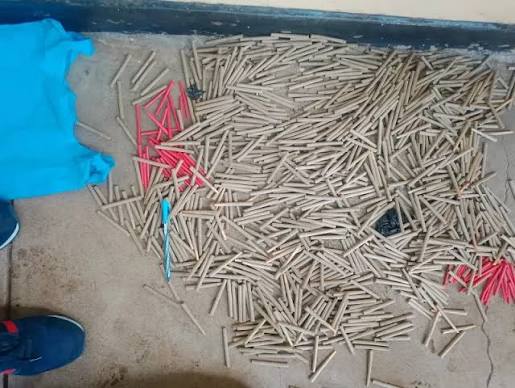
Anti-narcotics officers have arrested three suspects following a raid at a house in Nairobi’s Jericho Estate. During the operation, officers recovered 1,002 rolls of suspected bhang believed to be linked to illegal drug activities. The seizure highlights ongoing efforts by security agencies to combat drug trafficking and substance abuse. Authorities are expected to conduct further investigations to establish the source and intended destination of the recovered drugs. The suspects will face the legal process as investigations continue. The operation also underscores the need for stronger surveillance and intelligence gathering to disrupt illegal drug networks. Security agencies continue to urge members of the public to report suspected drug-related activities. The fight against narcotics remains a key priority in protecting communities, particularly young people, from the dangers of substance abuse
Three people have been arrested following an anti-narcotics operation in Nairobi’s Jericho Estate, where officers seized 1,002 rolls of suspected bhang from a house in the area.
The operation, which resulted in the recovery of a substantial quantity of suspected narcotics, forms part of ongoing efforts by security agencies to combat drug trafficking and the distribution of illegal substances across the country.
According to the available information, anti-narcotics officers conducted a raid at a residential property in Jericho Estate, leading to the discovery of the suspected bhang. Three individuals were subsequently arrested in connection with the seizure and are expected to face the relevant legal processes.
The recovery of 1,002 rolls has once again drawn attention to the persistent challenge of illegal drug distribution in Nairobi and other urban centres across Kenya. The operation also highlights the continued efforts by law enforcement agencies to identify locations allegedly being used to store, distribute or facilitate the sale of prohibited substances.
Drug trafficking and substance abuse remain significant concerns for the country, with authorities repeatedly warning about the social, economic and security consequences associated with the illegal drug trade.
The arrest of the three suspects is an important development in the ongoing fight against narcotics, particularly as security agencies intensify operations targeting individuals and networks suspected of participating in the distribution of illegal drugs.
Jericho Estate, like other residential neighbourhoods in Nairobi, is home to families, business operators and people engaged in different economic activities. The discovery of suspected narcotics inside a residential house has therefore raised concerns about the possibility of illegal activities taking place within ordinary residential communities.
The operation demonstrates the importance of intelligence gathering, surveillance and cooperation between law enforcement agencies in identifying suspected drug-related activities.
Anti-narcotics officers are tasked with investigating and disrupting networks involved in the production, transportation, storage and distribution of illegal substances. Their work involves identifying suspected drug supply channels, conducting investigations and carrying out operations aimed at preventing narcotics from reaching the market.
The seizure of the 1,002 rolls of suspected bhang represents another interception in the broader campaign against the illegal drug trade. However, authorities must establish the circumstances surrounding the discovery, including the ownership of the recovered substances and the alleged involvement of the arrested individuals.
The three suspects will be subjected to the legal process as investigators seek to establish their possible connection to the suspected narcotics. Their arrest does not automatically amount to a conviction, as they remain entitled to the presumption of innocence until proven guilty before a court of law.
Investigations are expected to determine whether the recovered bhang was intended for personal use, local distribution or supply to other individuals within Nairobi and surrounding areas.
The operation also highlights the difficulties facing authorities in dealing with drug-related activities conducted within residential neighbourhoods. Unlike large-scale trafficking operations that may involve identifiable transportation routes and commercial premises, some suspected distribution activities can take place in ordinary houses and other private properties.
This makes intelligence-led policing particularly important in identifying suspicious activities while ensuring that investigations are conducted within the law.
Kenya has continued to strengthen its efforts against narcotics through enforcement operations, public awareness campaigns and the work of specialised agencies responsible for addressing drug-related offences.
The National Authority for the Campaign Against Alcohol and Drug Abuse (NACADA) plays a central role in coordinating national efforts to prevent and reduce alcohol and drug abuse. The authority works with government institutions, law enforcement agencies, communities and other stakeholders to address the challenges associated with substance abuse.
Its responsibilities include public education, prevention programmes, research, policy coordination and supporting efforts aimed at reducing the availability and consumption of harmful substances.
Bhang, commonly known as cannabis, remains among the substances targeted by Kenyan law enforcement agencies. The possession, cultivation, trafficking and distribution of cannabis are regulated under the country's narcotics laws.
Authorities have repeatedly warned individuals involved in illegal drug activities that they risk arrest and prosecution if found violating the law.
The consequences of drug trafficking extend beyond the individuals directly involved in the trade. Illegal substances can contribute to addiction, family difficulties, financial instability and other social challenges, particularly when they become accessible to young people.
Drug abuse can also interfere with education, employment and productivity, making it a concern for families, schools, communities and the government.
Young people are particularly vulnerable to the negative consequences of substance abuse, especially where exposure to drugs is accompanied by unemployment, peer pressure, limited access to information and other social challenges.
Community leaders and parents have therefore been encouraged to remain actively involved in educating young people about the dangers associated with drug use.
Schools and learning institutions also have an important responsibility in strengthening prevention programmes and ensuring that learners receive accurate information about the effects of substance abuse.
Beyond enforcement, experts have consistently emphasised the importance of rehabilitation and support services for individuals struggling with addiction. While arrests and seizures can disrupt illegal supply networks, addressing the demand for drugs requires sustained public education, treatment and community-based interventions.
Families also play an important role in identifying behavioural changes and seeking professional assistance where substance abuse is suspected.
The latest operation in Jericho Estate comes amid continued public concern over the availability of illegal substances in different parts of the country. Residents have repeatedly called for stronger security measures and increased cooperation between communities and law enforcement agencies to address criminal activities.
Community policing remains an important approach in tackling such challenges. Members of the public can assist authorities by reporting suspected illegal activities through appropriate channels, helping security agencies gather information that may support investigations.
However, such reports must be handled responsibly to avoid wrongful accusations, harassment or unnecessary confrontation.
Security agencies are also expected to ensure that anti-narcotics operations respect the rights of suspects and members of the public while maintaining the integrity of investigations.
The seizure of suspected narcotics in Jericho Estate is another reminder that the fight against illegal drugs requires a coordinated approach involving law enforcement, government agencies, educational institutions, families and community organisations.
As investigations into the incident continue, attention will remain on the three arrested individuals and the next steps in the legal process.
Authorities will need to establish the source of the suspected bhang, its intended destination and whether the operation could lead to the identification of other individuals allegedly connected to the drug trade.
The recovery of 1,002 rolls also underscores the importance of sustained operations targeting the supply chains that facilitate the distribution of illegal substances.
For residents of Jericho Estate and the wider Nairobi community, the incident highlights the need for continued vigilance and cooperation with security agencies.
Ultimately, the fight against narcotics cannot be won through arrests and seizures alone. Effective enforcement must be supported by prevention programmes, rehabilitation services, public awareness and measures that address the social and economic factors contributing to substance abuse.
The three arrests and the recovery of the suspected bhang mark another development in Kenya's ongoing campaign against illegal drugs, with authorities expected to pursue investigations and take appropriate action in accordance with the law.

You Might Also Like
-
Energy and Petroleum Cabinet Secretary Opiyo Wandayi has urged ODM leaders to abandon hardline demands and support President William Ruto’s re-election bid unconditionally ahead of the 2027 General Election. His remarks come amid growing debate within ODM over a possible pre-election agreement wit
-
The eight East African Community Partner States have adopted a regional Artificial Intelligence Strategy and approved a new AI learning module for universities. The initiative seeks to integrate artificial intelligence education into both technical and non-technical degree programmes. Students will
-
The multi-agency rescue operation at the collapsed 18-storey building in Nairobi’s Eastleigh is expected to conclude today after approximately 90% of the rubble was cleared. Rescue teams are now concentrating on the rear section and basement, where missing persons are believed to be trapped. Six p
-
ODM has reportedly endorsed President William Ruto as its preferred presidential candidate for the 2027 General Election. The party has also reached an agreement with UDA to establish a joint campaign committee and operate a shared treasury account. However, negotiations over the sharing of governme
-
Members of the National Assembly have rejected Senate amendments on the tallying and electronic transmission of presidential election results ahead of the 2027 General Election. The proposed changes, negotiated by teams representing President William Ruto and the late Raila Odinga, sought to introdu
-
Kenya has challenged Saudi Arabia’s decision to suspend travel by its citizens to Kenya and halt visa issuance to Kenyan travellers amid the Ebola outbreak. Health Cabinet Secretary Aden Duale has termed the restrictions excessive, arguing that they are not supported by the prevailing epidemiologi