



Today in history: Wangari Maathai becomes the first African woman to win the Nobel Peace Prize
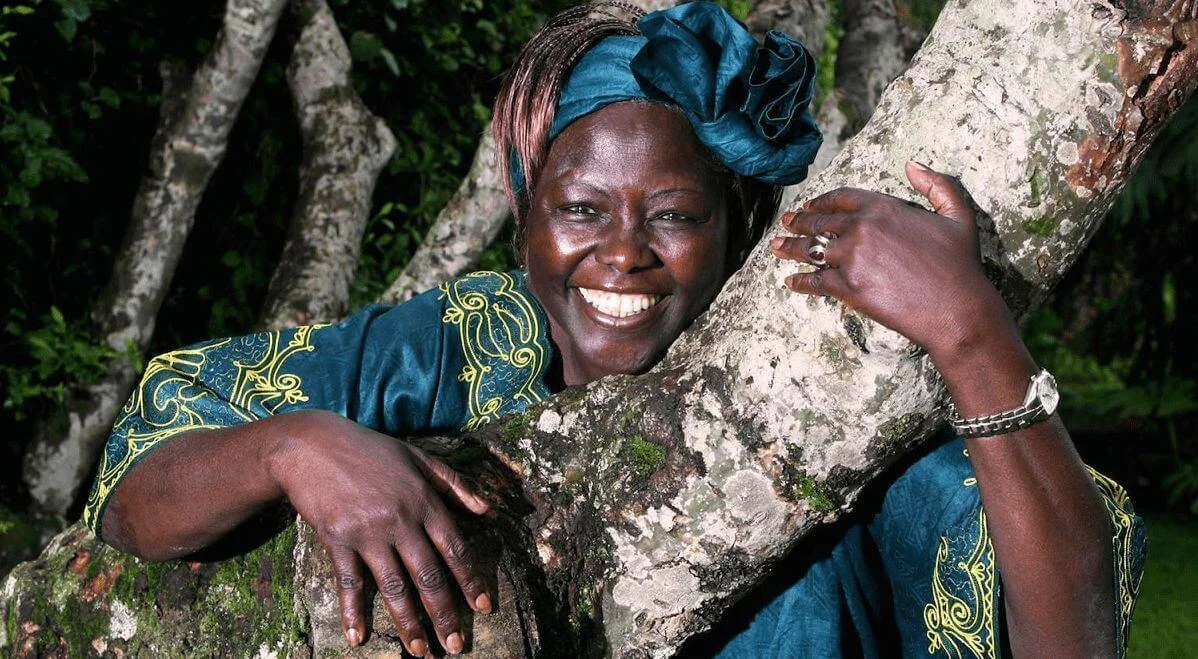
Today in history: Wangari Maathai made history as the first African woman to receive the Nobel Peace Prize, recognised for her remarkable work in environmental conservation, sustainable development, democracy and peace. Her achievement remains a landmark moment for Kenya, Africa and women around the world.
On October 8, 2004, Kenya and Africa celebrated a historic achievement when Professor Wangari Maathai was awarded the Nobel Peace Prize, becoming the first African woman to receive the prestigious honour.
Maathai’s recognition marked a major moment not only for Kenya but also for the global environmental and human rights movements. Her work demonstrated how environmental conservation could be closely connected to peace, democracy, human rights and sustainable development.
The Nobel Committee recognised Maathai for her contribution to sustainable development, democracy and peace. Her selection brought international attention to the connection between environmental challenges and the social and political conditions affecting communities.
At the centre of Maathai’s work was a simple but powerful idea: protecting the environment could also improve people’s lives.
For decades, she had advocated for the planting of trees, protection of natural resources and empowerment of communities, particularly women. Through her activism, she encouraged ordinary citizens to take an active role in addressing environmental degradation.
Maathai was born on April 1, 1940, in Ihithe, in Kenya’s central region. She grew up at a time when Kenya was still under British colonial rule and later became one of the country’s most prominent scholars and environmental activists.
Her educational journey took her outside Kenya, where she studied in the United States before continuing her academic career. She eventually became the first woman in East and Central Africa to earn a PhD and later became a professor at the University of Nairobi.
Her academic achievements were remarkable, but her greatest international influence came through her environmental activism.
In 1977, Maathai founded the Green Belt Movement, an organisation that encouraged communities to plant trees while addressing wider social and economic challenges.
The movement began with a focus on environmental conservation and the needs of rural women. Many communities were experiencing difficulties linked to deforestation, soil erosion, declining water supplies and the loss of trees and other natural resources.
Maathai recognised that these environmental problems were not isolated from the everyday struggles faced by communities.
Women in rural areas often carried much of the responsibility for finding firewood, collecting water and producing food. As environmental resources became scarce, their workload increased.
The Green Belt Movement therefore promoted tree planting as a practical way of restoring degraded land while providing communities with opportunities to improve their livelihoods.
Over time, the movement expanded beyond environmental conservation.
Maathai began connecting environmental protection with issues of governance, human rights and democracy. She argued that communities could not effectively protect their natural resources without also addressing the political and social systems that influenced how those resources were managed.
Her activism sometimes brought her into conflict with government authorities.
During Kenya’s one-party era, Maathai became an outspoken advocate for democratic rights and environmental protection. She participated in campaigns against land grabbing and the destruction of public spaces.
One of the most notable examples was her opposition to plans involving Uhuru Park in Nairobi. Maathai and other activists resisted proposals that threatened the park, drawing international attention to the importance of preserving public spaces.
Her activism was not always welcomed by those in power.
She faced intimidation, arrests and physical attacks during some of her campaigns. Despite these challenges, she continued to speak publicly about environmental protection, human rights and democratic governance.
Her determination became an important part of her public identity.
For Maathai, planting a tree was more than an environmental activity. It represented responsibility, community participation and hope for future generations.
The Green Belt Movement eventually grew into an international environmental and social movement, supporting the planting of millions of trees across Kenya and inspiring similar initiatives elsewhere.
Maathai’s approach was particularly significant because it placed local communities at the centre of environmental conservation.
Instead of treating environmental protection as something that could only be addressed by governments or large institutions, she demonstrated that ordinary citizens could play an important role.
Women became central to the movement.
Through tree planting and community mobilisation, many women gained greater opportunities to participate in decisions affecting their families and communities.
This combination of environmental conservation and empowerment helped make Maathai’s work internationally influential.
By the time she received the Nobel Peace Prize in 2004, her reputation had extended far beyond Kenya.
The Nobel Committee described her as a person who stood at the forefront of the struggle to promote ecologically viable social, economic and cultural development in Kenya and Africa.
Her award also represented an important recognition of the relationship between environmental sustainability and peace.
Environmental degradation can contribute to competition over scarce resources, displacement and social tensions. Protecting land, forests and water resources can therefore contribute to stability and improve the conditions necessary for peaceful communities.
Maathai’s work brought this connection into international discussions.
Her Nobel Prize also highlighted the important role of women in environmental conservation, democracy and peacebuilding.
At a time when many global conversations about development were focused heavily on economic growth, Maathai helped broaden the discussion by emphasising the importance of healthy ecosystems, accountable leadership and community participation.
Her achievement was especially significant for African women.
Becoming the first African woman to win the Nobel Peace Prize demonstrated that leadership in global peace and development could come from an African woman whose work was rooted in local communities.
Her success became a source of inspiration for many young Africans and women around the world.
The award also placed Kenya at the centre of international attention.
At home, Maathai’s achievement was celebrated as a national milestone. Her journey from a rural Kenyan upbringing to becoming a globally recognised scholar and activist illustrated the possibilities created by education, determination and civic participation.
Following her Nobel recognition, Maathai continued her work in public life.
She entered electoral politics and was elected Member of Parliament for Tetu Constituency in 2002. She later served as an assistant minister for Environment and Natural Resources.
Her political career reflected her long-standing belief that environmental issues and governance could not be separated.
She continued advocating for sustainable development and responsible management of natural resources while remaining involved in international environmental discussions.
Maathai also became an important voice on climate change and the need for African countries to protect their forests and ecosystems.
Her message remained consistent: development should improve people's lives without destroying the natural systems upon which communities depend.
Her work gained international recognition through numerous awards and honours before and after the Nobel Prize.
However, the 2004 Nobel Peace Prize remains one of the defining moments of her career.
It established Maathai as one of Africa’s most influential environmental and democracy advocates and helped elevate environmental issues within the global peace agenda.
Her story also demonstrates how seemingly small community actions can develop into movements with international consequences.
The planting of a single tree may appear simple, but Maathai used that action to encourage communities to think about forests, food, water, livelihoods, governance and future generations.
The Green Belt Movement’s philosophy showed that environmental conservation could be practical and community-driven.
It also demonstrated that sustainable development involves more than building infrastructure or expanding economies. It requires protecting the resources that make life possible.
Today, Maathai’s legacy continues through environmental organisations, conservation initiatives and young activists who have adopted many of the principles she promoted.
Her work remains particularly relevant as countries confront climate change, deforestation, biodiversity loss and pressure on natural resources.
Kenya, like many African countries, continues to face environmental challenges, including changing weather patterns, land degradation and pressure on forests and water resources.
These challenges reinforce the importance of the message Maathai championed for decades: environmental protection is directly connected to human wellbeing.
Her legacy also remains relevant to conversations about democracy.
Maathai demonstrated that environmental activism can become a platform for citizens to demand accountability and participate in decisions affecting their communities.
She believed that people needed to understand their rights and responsibilities if they were to effectively participate in building democratic societies.
Her activism therefore went beyond planting trees.
It involved encouraging people to understand the causes of the problems affecting them and to take collective action to address those problems.
The Nobel Peace Prize recognised this broader contribution.
Although the award was presented for her contribution to sustainable development, democracy and peace, its significance extended across several areas of public life.
Maathai showed that environmental protection can empower communities, strengthen livelihoods and create conditions for greater social stability.
She also demonstrated the importance of persistence.
Throughout her career, she encountered opposition, criticism and personal risks. Yet she continued advocating for issues she believed were important.
Her journey provides an enduring lesson about the role of individuals in creating social change.
Maathai died on September 25, 2011, aged 71, after a battle with cancer. Her death was mourned in Kenya and across the world.
Even after her death, the ideas she championed have continued to influence environmental and development discussions.
The Green Belt Movement remains part of her lasting legacy, while her books, speeches and environmental campaigns continue to inspire researchers, activists, students and community leaders.
October 8 therefore serves as an important date in Kenya’s history.
It recalls the moment when a Kenyan woman from a rural background became the first African woman to receive the Nobel Peace Prize.
Her achievement was not simply a personal honour. It was recognition of years of work connecting environmental conservation with the broader struggles for democracy, human rights, sustainable development and peace.
Wangari Maathai’s story reminds the world that major change does not always begin in government offices or international institutions.
Sometimes, it begins with ordinary people coming together to address a problem in their community.
For Maathai, that beginning was the planting of trees.
Those trees became symbols of environmental restoration, community empowerment and hope.
Her Nobel Peace Prize in 2004 transformed her into a global symbol of sustainable development and civic action, while her Kenyan roots remained central to her story.
As the world continues to confront environmental and social challenges, her message remains relevant: protecting the environment is also about protecting people, communities and future generations.
Twenty-two years after her historic Nobel recognition, Wangari Maathai remains one of Kenya’s most celebrated figures and one of Africa’s most influential voices on environmental conservation, democracy and peace.
Her legacy continues to remind generations that meaningful change is possible when people recognise the challenges around them, organise themselves and take action.
Today in history, Kenya remembers the extraordinary moment when Professor Wangari Maathai made history as the first African woman to win the Nobel Peace Prize — an achievement that placed her environmental and democratic work firmly on the global stage.

You Might Also Like
-
The concerns raised by landslide victims in Chesongoch have brought renewed attention to the challenges faced by communities recovering from natural disasters. The victims say they were left out of government compensation despite suffering losses, and they are calling for the authorities to review t
-
The five-sitting-day suspension of Kiharu MP Ndindi Nyoro marks a significant parliamentary disciplinary episode arising from his claims about investments in Kenya Pipeline Company shares. Nyoro alleged that public institutions including NSSF, PSSF and Kenya Re were pressured to invest in KPC, whil
-
Services at Kericho County Referral Hospital continue to play a critical role despite concerns among residents about the Ebola outbreak. The facility remains an important centre for emergency care, maternity services, diagnostics, specialised treatment and referrals, while county authorities continu
-
Heavy rains can have a significant impact on farmers in Bomet County. Although rainfall is essential for agriculture, excessive rain can damage crops, cause soil erosion, increase crop diseases, affect livestock, disrupt transportation and increase production costs. For farmers, the key challenge i
-
Deputy Inspector General Eliud Lagat's call for motorists to obey traffic rules underscores the urgent need for greater discipline and responsibility on Kenyan roads. Speeding, reckless overtaking, drunk driving, distracted driving and operating unroadworthy vehicles can turn ordinary journeys into
-
Kenya has intensified measures to contain Ebola after confirming an imported case of Bundibugyo Ebola Virus Disease, with the Ministry of Health hosting and coordinating an Ebola Incident Management Support Team to strengthen surveillance, contact tracing, laboratory testing, infection prevention an