Two police officers arrested over alleged defilement of three-year-old girl in meru county
Two police officers attached to kinjo police patrol base in meru county have been arrested over allegations of defiling a three-year-old girl. the suspects are expected to appear before the githongo law courts as investigations continue.
Two police officers attached to kinjo police patrol base in meru county have been arrested over allegations of defiling a three-year-old girl, in a case that has raised serious concerns about child protection and the responsibility of law enforcement officers to safeguard vulnerable members of society.
the two suspects are expected to be presented before the githongo law courts, where the legal process is expected to proceed as investigations into the allegations continue.
the case involves a very young child, making the protection of her identity, safety and well-being a critical consideration as authorities pursue the matter.
the arrests place renewed attention on the need to protect children from sexual abuse, ensure that allegations of criminal conduct are investigated professionally and uphold accountability for anyone suspected of committing an offence.
however, the allegations against the two officers remain allegations, and the suspects are entitled to a fair legal process as the case moves through the justice system.
two officers arrested in connection with the allegations
according to the information provided, the two officers were attached to kinjo police patrol base in meru county before their arrest.
the circumstances leading to their arrest, including the date the alleged offence occurred and how the matter was reported to authorities, have not been established in the information available.
it is also unclear whether the suspects were arrested at the patrol base or at another location.
the two officers are expected to appear before the githongo law courts, where the relevant legal procedures can be undertaken.
their court appearance is an important step in the judicial process, although further information will be needed to establish the specific charges, the evidence presented and any subsequent court directions.
the investigation will be expected to establish the circumstances surrounding the allegations and determine whether sufficient evidence exists to support prosecution.
authorities handling the matter will also need to ensure that relevant evidence is preserved and that any witnesses are treated appropriately throughout the process.
given the age of the child involved, the case requires particular sensitivity and careful handling by everyone involved.
child protection remains a major concern
the allegations have drawn attention to the vulnerability of young children and the responsibility of adults to protect them from abuse and exploitation.
children at the age of three depend heavily on parents, guardians and other responsible adults for their safety and care.
they may have limited ability to understand harmful situations or independently seek assistance when something goes wrong.
this makes it particularly important for families, communities, schools, childcare providers and public institutions to maintain safe environments for children.
child protection requires more than responding after an incident has been reported. it also involves prevention, education, early identification of possible abuse and effective reporting systems.
parents and guardians are encouraged to take children's concerns seriously and seek assistance from appropriate authorities or child protection professionals whenever there are reasonable grounds to suspect abuse.
at the same time, investigations involving young children must be conducted in a manner that protects them from further harm.
the handling of the meru case will therefore be important not only in establishing the facts but also in ensuring that the child's welfare remains central throughout the process.
importance of a professional investigation
investigations into allegations of sexual offences against children require careful evidence collection and coordination among the relevant authorities.
investigators must establish the circumstances of the alleged incident, identify relevant witnesses and preserve any available evidence that may assist the court in determining the case.
where necessary, appropriate medical and psychosocial support should also be made available to the child through qualified professionals.
because of the child's young age, any interviews or assessments should be conducted using child-sensitive procedures that minimise distress and avoid unnecessary repetition.
protecting the child from intimidation, exposure or inappropriate questioning is essential.
authorities must also ensure that the investigation remains impartial and that evidence is assessed objectively.
the arrest of a suspect does not, by itself, establish guilt. investigators must gather evidence, and the prosecution must follow the applicable legal procedures before the court can determine the case.
the same principles apply regardless of whether a suspect is a public officer, a private citizen or a person holding a position of responsibility.
responsibility of law enforcement officers
police officers play a central role in maintaining law and order, investigating crime and protecting members of the public.
their responsibilities include responding to reports of abuse, assisting vulnerable victims and ensuring that criminal allegations are handled in accordance with the law.
when allegations of serious offences involve serving officers, the matter can raise additional questions about accountability, professional standards and public confidence in law enforcement institutions.
however, such cases must be assessed on the evidence relating to the individuals involved rather than used to make assumptions about every member of the police service.
the legal process should establish the facts fairly and determine individual responsibility where evidence supports a finding of guilt.
where misconduct is proven, appropriate legal and disciplinary measures may follow under the applicable laws and regulations.
at the same time, officers facing allegations are entitled to due process and the opportunity to respond to the accusations through the established legal system.
maintaining these safeguards is important for ensuring accountability while protecting the integrity of investigations and court proceedings.
the role of the courts
the two suspects are expected to appear before the githongo law courts, according to the information provided.
a court appearance provides an opportunity for the legal process to move forward in accordance with the applicable procedures.
the precise charges, plea arrangements and any decisions concerning bail or bond have not been confirmed in the information available.
such details should be established from court records or official statements rather than assumed.
the court will consider the relevant legal requirements at each stage of the proceedings.
if the case proceeds to trial, the prosecution will be required to present evidence supporting the charges, while the defence will have an opportunity to challenge that evidence.
the court will then determine the matter based on the evidence and the applicable law.
the presumption of innocence remains an important principle throughout criminal proceedings. an arrest or charge does not amount to a conviction.
for this reason, reporting on the case should use careful language, including terms such as "suspects," "alleged offence" and "the allegations," until the court reaches a determination.
protecting the identity of the child
the involvement of a very young child makes privacy and dignity especially important in reporting this case.
media organisations and members of the public should avoid publishing information that could identify the child, including names, photographs, home addresses or unnecessary details about her family.
even information that appears harmless when considered separately can make it possible for members of the community to identify a child involved in a sensitive case.
protecting the child's identity can help reduce the risk of stigma, unwanted attention and further distress.
journalists should also avoid circulating graphic descriptions or unverified claims about the alleged incident.
responsible reporting should focus on verified developments, the actions taken by authorities and the broader public interest in child safety and accountability.
the child's dignity and welfare should remain a priority throughout the reporting process.
the importance of reporting suspected abuse
cases involving suspected sexual abuse highlight the importance of having accessible and trusted reporting channels for children and the adults responsible for their care.
parents, guardians and other members of the public should report suspected child abuse to the appropriate authorities or child protection services.
where a child may have experienced sexual abuse, access to qualified medical professionals and appropriate psychosocial support can be important.
children should be treated with patience and sensitivity, and adults should avoid pressuring them to provide details or repeatedly question them about an incident.
instead, concerns should be referred to trained professionals who can follow appropriate procedures.
communities also have a role in creating environments where children can raise concerns and receive support without fear of punishment or blame.
preventive education, responsible supervision and cooperation between families, schools, community organisations and public institutions can contribute to stronger child protection systems.
these measures are important regardless of the outcome of an individual criminal case.
accountability and public confidence
the case also brings attention to the importance of accountability whenever allegations of serious criminal conduct involve people entrusted with public responsibilities.
members of the public expect law enforcement institutions to investigate offences impartially and respond appropriately when complaints are made against serving officers.
transparent procedures, professional investigations and adherence to the law can help maintain public confidence in the justice system.
where evidence establishes wrongdoing, the legal process should provide for appropriate consequences in accordance with the law.
where allegations cannot be substantiated, the outcome should likewise be determined through the established procedures rather than public speculation.
the objective is to ensure that justice is pursued fairly, evidence is properly considered and the rights of everyone involved are respected.
the protection of children must remain central to this process.
further details awaited
as the two suspects prepare to appear before the githongo law courts, further information will be needed to clarify the specific charges, the circumstances surrounding the alleged offence and the progress of investigations.
the information currently available does not establish when the alleged incident occurred, how the complaint was initially reported or what evidence investigators have collected.
it is also not yet clear whether the relevant authorities have issued an official statement providing additional details about the arrests.
these facts should be confirmed before further claims are included in subsequent reports.
for now, the confirmed details available from the initial account are that two officers attached to kinjo police patrol base in meru county have been arrested over allegations involving a three-year-old girl and are expected to appear before the githongo law courts.
the case underscores the importance of protecting children, investigating allegations of sexual offences professionally and ensuring that all suspects are subjected to a fair legal process.
as the matter progresses, attention will remain on the investigation, the court proceedings and the measures necessary to protect the welfare and privacy of the child.
the final determination of the case will depend on the evidence presented and the outcome of the legal process.

You Might Also Like
-
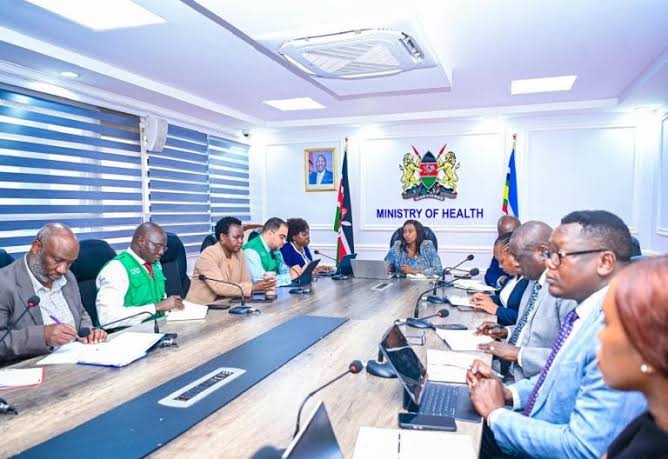 Ps mary muthoni leads the national multi-agency ebola taskforce in reviewing response operations, coordinating resources and strengthening preparedness measures following an imported ebola case in kenya, as authorities intensify efforts to prevent further transmission and protect public health.
 -
President william ruto announces ksh850 million for the construction of small-scale tea factories, aiming to support tea farmers, boost local processing and create employment opportunities in tea-growing regions.
-
Deputy President Kithure Kindiki's visit to Othaya Constituency in Nyeri County on October 12, 2026, centred on two major development activities: the launch of the Kihuro–Kirio–Kianjogu Last Mile Electrification Project and the inspection of the Gathunguri–Waihara–Kabebero road. The electri
-
The kenya kwanza administration is accelerating infrastructure development in nandi county, with 350km of roads under construction, 23,000 households targeted for electricity connectivity, 15 modern markets, 3,500 affordable housing units and 6,000 student hostel units. president william ruto and ot
-
Rigathi Gachagua's latest assurance that the opposition will field one presidential candidate against President William Ruto in 2027 has placed unity at the centre of Kenya's emerging election debate. The DCP leader has maintained that opposition leaders must be prepared to put aside personal ambit
-
Chief Justice Martha Koome's visit to Kimana in Kajiado County for the International Day of the Girl Child on October 11, 2026, placed the protection and empowerment of vulnerable girls at the centre of national attention. The graduation of 200 rescued girls following skills and leadership training