



UDA Hits Back at Uhuru Kenyatta Over Claim That Raila Odinga Won 2022 Election
UDA Secretary General Hassan Omar has criticised former President Uhuru Kenyatta over his claim that Raila Odinga won the 2022 election, insisting that President William Ruto legitimately won the contest.
The United Democratic Alliance (UDA) has responded sharply to former President Uhuru Kenyatta after he claimed that the late former Prime Minister Raila Odinga won the 2022 presidential election.
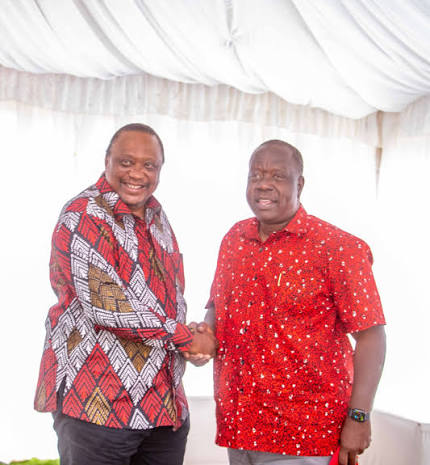
Uhuru made the remarks during a Jubilee Party meeting in Nairobi on Tuesday, September 22, 2026, as he addressed party officials and discussed his continued political role following the recent leadership transition within Jubilee.
In his remarks, the former President questioned the narrative that his political side had been defeated in the 2022 election, arguing that the contest had been between the candidates who were on the ballot.
The comments have triggered a fresh political exchange between Uhuru and leaders associated with the ruling UDA party, reopening debate over the closely contested 2022 presidential election.
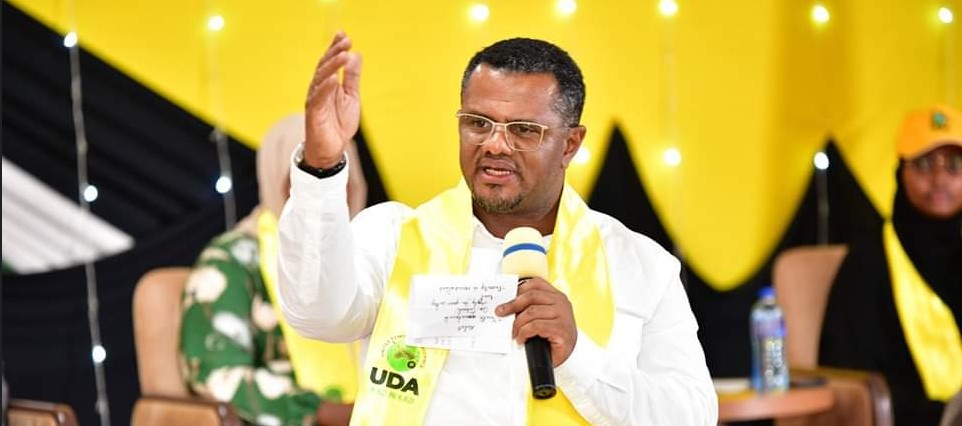
UDA Secretary General Hassan Omar criticised Uhuru's remarks, arguing that the former President has not accepted the outcome of the election. Omar used strong language in responding to the former Head of State, accusing him of remaining preoccupied with the 2022 result. His response was reported by Citizen Digital on Tuesday.
UDA Defends Ruto's Victory
Omar maintained that President William Ruto won the 2022 presidential election and rejected the suggestion that the result was manipulated to deny Raila Odinga victory.
The official results of the August 9, 2022 presidential election showed Ruto receiving 7,176,141 votes, equivalent to 50.49 per cent, while Raila Odinga received 6,942,930 votes, representing 48.85 per cent. The difference was approximately 233,000 votes.
Ruto was subsequently declared president-elect by the Independent Electoral and Boundaries Commission (IEBC), and the Supreme Court upheld his election after petitions challenging the result.
Raila had rejected the results and challenged the outcome at the Supreme Court. However, the court dismissed the petitions and upheld Ruto's victory, clearing the way for his inauguration as Kenya's fifth President.
The renewed political debate therefore centres on a disagreement between the officially declared and judicially upheld result and claims by some political figures that the actual outcome was different.
Uhuru's Position
Uhuru's latest remarks are part of his renewed public engagement in national politics.
The former President has recently featured prominently in political discussions following developments within the Jubilee Party and the wider opposition landscape.
He has handed over the leadership of Jubilee to former Interior Cabinet Secretary Fred Matiang'i while indicating that he will remain a member of the party and continue serving in a senior advisory capacity.
The leadership transition comes as Jubilee prepares for its National Delegates Convention and as opposition parties continue reorganising ahead of the 2027 General Election.
Uhuru's continued political involvement has also been given fresh attention following a High Court ruling on the political rights of retired presidents. Justice Bahati Mwamuye recently declared unconstitutional provisions that sought to restrict retired presidents from participating actively in political parties.
The ruling has added a new dimension to discussions surrounding Uhuru's role in Kenya's political affairs.
Changing Opposition Landscape
The latest exchange between UDA and Uhuru comes at a time of significant political realignment.
The opposition landscape has undergone major changes in recent weeks, including the rebranding of the Azimio la Umoja coalition to the Ukombozi Alliance.
Wiper leader Kalonzo Musyoka announced the change on September 21, saying parties within the coalition had unanimously agreed to adopt the new name. At the time of the announcement, Uhuru was identified as chairman of the new alliance.
The political developments have placed Uhuru at the centre of renewed opposition activity even as he transitions from formal leadership of Jubilee.
The former President's political position remains significant because of his previous role as head of state and his influence within Jubilee and the broader opposition coalition.
Ruto-Uhuru Political Rivalry
The latest exchange also reflects the continuing political rivalry between Uhuru and President Ruto.
The two worked together for nearly a decade after Ruto served as Uhuru's deputy during his two terms in office. However, their political relationship deteriorated toward the end of Uhuru's presidency, particularly after Uhuru began supporting Raila's presidential campaign ahead of the 2022 election.
Ruto subsequently ran against Raila in the 2022 election after falling out politically with Uhuru.
The election became a defining moment in the relationship between the two former allies.
Ruto ultimately secured the presidency, while Raila challenged the results through the courts.
Four years later, the disagreement over the 2022 election remains part of political debate, with different political camps offering contrasting interpretations of what happened during the election.
Raila's 2022 Campaign
Raila entered the 2022 presidential contest as the Azimio la Umoja coalition candidate, with Uhuru supporting his campaign after the two leaders had established a political partnership following the 2018 handshake.
The campaign brought together several political parties and prominent leaders, including Uhuru's Jubilee Party and Raila's ODM.
Ruto, meanwhile, campaigned under the United Democratic Alliance and the Kenya Kwanza coalition.
The election was closely contested, with Ruto ultimately being declared the winner by the IEBC.
Raila disputed the results and challenged the declaration before the Supreme Court.
The Supreme Court's decision to uphold Ruto's victory brought the legal contest to an end, although political disagreements surrounding the election have continued.
Political Debate Ahead of 2027
The latest dispute comes less than a year before Kenya's next General Election, scheduled by the IEBC for August 10, 2027.
Political parties are already positioning themselves for the upcoming contest, with alliances being reorganised and leaders holding consultations across the country.
UDA remains the governing party and is associated with President Ruto, who is expected to seek another term.
On the other side, opposition and former government allies are exploring different political arrangements.
The reorganisation of Jubilee, the emergence of the Ukombozi Alliance and the continued political activities of figures such as Uhuru and Kalonzo are part of the broader realignment taking place ahead of the election.
The political debate surrounding the 2022 election could therefore remain a recurring issue as parties prepare their campaigns.
Different Interpretations of the 2022 Result
Claims that Raila won the 2022 election are not new.
In January 2023, Azimio leaders cited data they said demonstrated that Raila had won the election. The coalition presented an alternative tally that placed Raila ahead of Ruto. Those claims were disputed and did not change the official election result or the Supreme Court's decision upholding Ruto's victory.
The current debate is therefore a continuation of an argument that has remained politically sensitive since the 2022 election.
UDA leaders have continued to defend Ruto's victory, while some leaders aligned with Raila and the former Uhuru administration have questioned aspects of the election outcome.
Focus Shifts to 2027
With the 2027 election approaching, political parties are increasingly focusing on alliances, leadership structures and mobilisation.
The exchange between Hassan Omar and Uhuru demonstrates how issues from the previous election continue to influence current political discussions.
For UDA, defending Ruto's 2022 victory remains important as the party prepares for another national campaign.
For Uhuru and leaders involved in the emerging opposition arrangements, the emphasis is increasingly on political organisation and coalition building.
The former President's decision to remain active in politics also means that his views are likely to remain part of national political debate.
The latest disagreement has once again placed the 2022 presidential election at the centre of political conversation.
While Uhuru has expressed his view that Raila won the election, UDA has rejected that interpretation and maintained that Ruto legitimately won the contest.
The officially recorded result and the Supreme Court's decision remain the formal basis on which the 2022 election outcome was settled. The competing political interpretations, however, continue to shape Kenya's political discourse as parties and leaders prepare for the 2027 General Election.
You Might Also Like
-
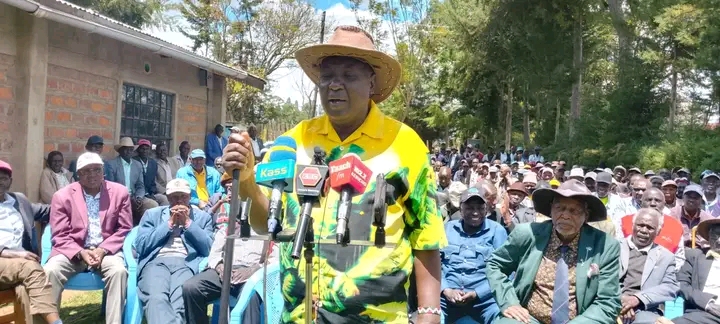
The meeting by Kipkelion elders to appreciate President William Ruto over the proposed Londiani Referral Hospital reflects the deep importance the community attaches to the project. For years, residents have looked forward to a major referral facility that could improve access to specialised health
-
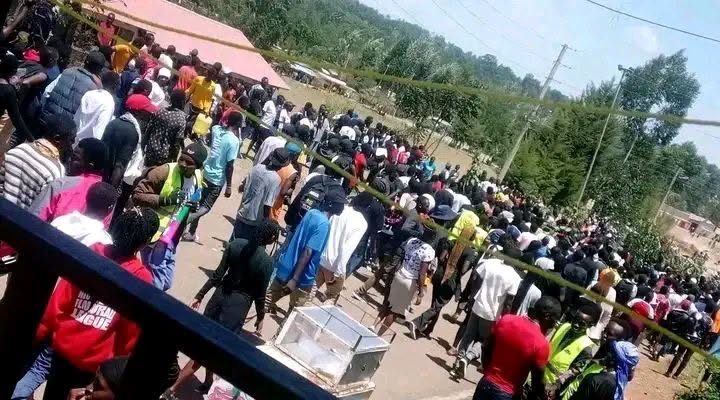
Bomet University students have taken to the streets over unresolved welfare concerns, including water shortages, Chepkosa Dam, delayed bridge works, inadequate security lighting and rising accommodation costs.
-
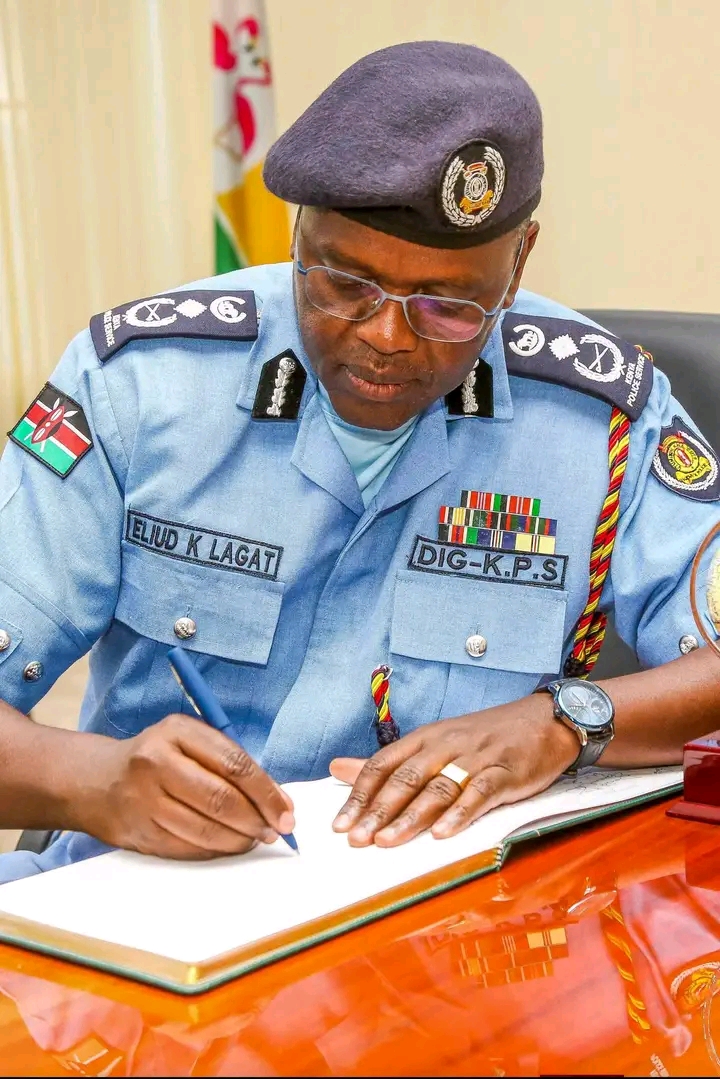
Deputy Inspector General Eliud Lagat's engagement in Nakuru has placed youth involvement, community safety and professional policing at the centre of the security conversation. His strongest warning was directed at young people whom he urged not to accept money to act as political goons or fight on
-
Former President Uhuru Kenyatta has handed over the leadership of the Jubilee Party to Fred Matiang’i ahead of the party’s National Delegates Convention. Uhuru says he will remain a Jubilee member and serve in a senior advisory role.
-
PS Beatrice Inyangala has drawn attention to a serious concern in Kenya's education sector, citing research that 90 per cent of students have experienced violence either as victims or perpetrators. She said the research showed that women represented 65 per cent of those affected, compared with 35 pe
-
Interior Cabinet Secretary Kipchumba Murkomen has launched the Kenya National Mediation Hub, an initiative aimed at strengthening peaceful conflict resolution, dialogue and preventive security in schools, colleges, TVET institutions and universities. Launched at the University of Nairobi under the J