



UHURU STEPS DOWN AS AZIMIO COUNCIL CHAIR AS GACHAGUA AND ORENGO EMERGE IN LEADERSHIP TALKS
Former President Uhuru Kenyatta steps down as Azimio council chair, with James Orengo and Rigathi Gachagua emerging in discussions over the coalition’s future leadership.
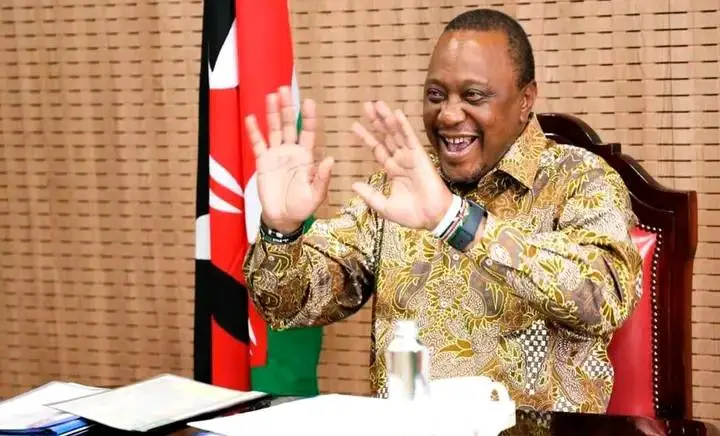
Former President Uhuru Kenyatta has stepped down from his position as chairperson of the Azimio coalition council, setting the stage for a fresh leadership arrangement within the opposition camp ahead of the 2027 General Election.
The move comes at a time when opposition parties are undergoing significant changes as leaders seek to reorganise their political formations and develop a common strategy for the next election.
Uhuru’s exit from the coalition leadership has sparked discussions over who should take over the influential position, with Siaya Governor James Orengo and former Deputy President Rigathi Gachagua among the names being considered in the ongoing political conversations.
The leadership question is expected to become an important part of negotiations as opposition parties attempt to consolidate their numbers and establish a united political front.
Uhuru has remained an influential figure in Kenya’s political landscape even after leaving the presidency in 2022. His decision to step aside from the coalition council leadership therefore marks a significant change in the opposition’s political structure.
The former President had played a prominent role in the formation and coordination of Azimio la Umoja One Kenya Coalition, which brought together several political parties and leaders during the 2022 General Election.
Since then, however, the political landscape has continued to evolve, with parties reassessing their alliances and leaders exploring new partnerships ahead of 2027.
The latest changes have also been linked to efforts to transform the opposition coalition into a broader political movement capable of accommodating different parties and leaders.
ORENGO EMERGES IN LEADERSHIP STRUCTURE
James Orengo has emerged as one of the key figures in the coalition’s evolving leadership structure.
The veteran politician and Siaya Governor has been involved in national politics for decades and has played a prominent role in Kenya’s political and constitutional affairs.
His experience in opposition politics and his long association with reform movements have positioned him as an important figure in the ongoing discussions.
Orengo has also repeatedly called for greater cooperation among opposition parties, arguing that political formations need to work together if they are to present a coordinated alternative to the government.
His emergence in the leadership discussions comes as the opposition seeks to overcome internal differences and competing political ambitions.
The coalition brings together leaders with different political backgrounds and interests, making the question of leadership particularly sensitive.
GACHAGUA ALSO IN THE PICTURE
Former Deputy President Rigathi Gachagua has also featured prominently in discussions surrounding the future leadership of the opposition.
Gachagua, who served as Deputy President under President William Ruto before their political relationship deteriorated, has since established himself as a major figure within the opposition landscape.
His political movement has attracted attention as he seeks to build a national political base ahead of the 2027 election.
Gachagua’s possible involvement in the coalition leadership discussions reflects the changing nature of Kenya’s opposition politics.
His relationship with Uhuru Kenyatta has also attracted attention. The two worked closely during the Jubilee administration before political differences emerged between them.
In recent years, however, the former allies have publicly reconciled, creating new possibilities for cooperation and dialogue within the opposition.
Gachagua has also acknowledged Uhuru’s role as an elder statesman and has indicated that the former President could play a role in helping opposition leaders resolve differences.
OPPOSITION SEEKS UNITY
The leadership changes come at a time when opposition parties are under pressure to develop a coordinated political strategy.
Several senior politicians have expressed interest in the presidency, creating a situation where the opposition must balance individual ambitions with the need for cooperation.
Among the prominent figures involved in the wider opposition discussions are Kalonzo Musyoka, Rigathi Gachagua, Fred Matiang’i, Edwin Sifuna and other political leaders.
Each of these leaders has established political constituencies and distinct political identities.
The challenge for the opposition will be developing a structure that allows these leaders and their parties to work together while addressing questions about leadership and the eventual presidential candidate.
The departure of Uhuru from the coalition council leadership is therefore likely to have an impact on these discussions.
As a former President and former Jubilee Party leader, Uhuru has considerable experience in managing political coalitions.
His role in the opposition has often been viewed through the lens of his previous presidency and his political relationship with other senior leaders.
FROM AZIMIO TO A NEW POLITICAL ARRANGEMENT
The opposition coalition has also undergone changes in its identity and structure.
The political formation previously known as Azimio la Umoja has been associated with efforts to create a wider alliance bringing together different opposition parties.
The reorganisation reflects attempts by political leaders to adapt to the changing political environment.
Rather than maintaining the exact structure used during the 2022 election, opposition leaders have been exploring new arrangements that could attract additional parties and supporters.
The coalition’s future leadership will therefore have to navigate both internal party interests and the broader question of how opposition parties can cooperate.
The process is expected to involve extensive consultations among party leaders, coalition officials and other political actors.
UHURU’S POLITICAL LEGACY
Uhuru Kenyatta served as Kenya’s fourth President from 2013 to 2022.
During his presidency, he worked with several political parties and leaders and was involved in major political developments that shaped the country.
His decision to support Raila Odinga in the 2022 election marked a major political shift after years of rivalry between the two leaders.
Following the election, Uhuru continued to participate in national political discussions while gradually reducing his direct involvement in party politics.
His position within the opposition coalition gave him another avenue through which he could influence political dialogue.
His decision to step down from the council leadership now creates room for a new figure to coordinate the coalition.
The move also raises questions about the future role Uhuru will play in opposition politics.
Although he is no longer seeking elected office, his experience as a former Head of State means his political views continue to attract attention.
THE ROAD TO 2027
With the 2027 General Election drawing closer, political parties have intensified efforts to strengthen their structures.
The opposition faces the challenge of competing against the governing coalition while simultaneously managing internal negotiations.
A united opposition would require agreement on leadership, party structures, policy priorities and the process of selecting candidates.
The coalition leadership will be central to these negotiations.
Whoever takes over the council leadership will have to coordinate leaders with different ambitions and political constituencies.
The person will also be expected to facilitate discussions on cooperation and help maintain cohesion within the alliance.
For James Orengo, his long political experience could place him at the centre of these discussions.
For Gachagua, his growing political presence could also make him an important participant in the opposition’s future arrangements.
However, the final leadership structure will depend on consultations among the coalition’s constituent parties and leaders.
A CHANGING OPPOSITION LANDSCAPE
Kenya’s opposition politics have undergone several changes since the 2022 election.
Political alliances that were previously considered stable have shifted, while new movements and parties have emerged.
Leaders who were previously on opposite sides have also found themselves working together or exploring possible partnerships.
The political realignments are expected to continue as the 2027 election approaches.
The decision by Uhuru to step aside from the Azimio council leadership is therefore part of a larger process of political restructuring.
The emergence of Orengo and Gachagua in discussions over the coalition’s future illustrates the competition and negotiations taking place within the opposition.
Other political leaders are also expected to have a role in determining the direction of the alliance.
QUESTIONS AHEAD
Several questions remain regarding the future of the coalition.
One of the main issues is who will eventually assume the leadership position left open by Uhuru.
Another question is how the various opposition parties will share responsibilities within the coalition.
There is also the issue of whether the different presidential aspirants will agree to support a common candidate.
These questions are likely to dominate political discussions as the election approaches.
The opposition will also have to determine how it will structure its campaign and whether it will operate as one coalition or allow individual parties to maintain separate identities while cooperating on selected issues.
The answers to these questions will shape the coalition’s political strategy.
UHURU REMAINS A KEY FIGURE
Despite stepping down from the coalition council leadership, Uhuru Kenyatta remains an important figure in Kenya’s political discussions.
His experience in government, party politics and coalition building gives him a unique position within the opposition landscape.
His relationship with different political leaders may also make him an important participant in behind-the-scenes consultations.
However, his decision to leave the formal leadership position suggests that the opposition is moving toward a new phase.
The focus is now shifting to the next generation of political arrangements and the leaders who will take responsibility for coordinating the coalition.
WHAT NEXT FOR THE OPPOSITION?
The coming months are expected to provide a clearer picture of the opposition’s political direction.
Leaders will continue consulting on the coalition’s leadership, membership and strategy.
The selection of a council chairperson will be one of the immediate issues requiring attention.
James Orengo and Rigathi Gachagua are among the prominent names associated with the discussions, although the final decision remains subject to political negotiations.
Other leaders and parties will also seek representation and influence within the emerging structure.
The opposition’s ability to maintain unity will depend largely on how these competing interests are managed.
For now, Uhuru Kenyatta’s decision to step down has opened another chapter in Kenya’s evolving opposition politics.
As parties prepare for the 2027 General Election, the leadership transition will be closely watched as opposition leaders seek to establish a structure capable of bringing together their different political interests.
The coming period is likely to be marked by consultations, negotiations and political realignments.
Ultimately, the coalition’s future leadership will be determined through the decisions of its member parties and political leaders as they work to define their strategy for the next electoral cycle.

You Might Also Like
-
Kenya's Ebola response has entered a critical surveillance and contact-tracing phase following confirmation of the country's first imported Bundibugyo Ebola case. PS Mary Muthoni says 57 contacts have been identified, with 10 already placed under quarantine, while health officers across the country
-
Deputy President Kithure Kindiki's appearance at Jamhuri Park on October 7 placed agriculture and food security at the centre of the national economic transformation conversation. He outlined government figures on farmer registration, fertiliser prices, livestock vaccination, milk production, meat e
-
A passenger travelling aboard a Kenya Airways flight from Nairobi to Lagos, Nigeria, has died after suffering a medical emergency shortly before the aircraft landed at Murtala Muhammed International Airport. The passenger reportedly became unresponsive about 20 minutes before landing, prompting cabi
-
NCIC's latest actions against CS Geoffrey Ruku and its handling of nominated MP Joseph Wainaina Iraya underline the commission's growing focus on political language and national cohesion ahead of the 2027 elections. Ruku has been directed to stop repeating remarks that NCIC found divisive, respond w
-
President William Ruto says Raila Odinga’s mausoleum at Kang’o Ka Jaramogi honours his contribution to Kenya’s democratic journey and will help preserve his legacy for future generations.
-
Aden Duale's leadership in checking Kenya's Ebola preparedness comes at a crucial time following the country's first confirmed imported Ebola case and the death of the patient in Nairobi. The development has tested systems that the government had been preparing for months. Authorities are now conce