UNHCR Begins Registration of Over 40,000 Ethiopian Refugees Fleeing Conflict Into Kenya as Humanitarian Crisis Deepens in Moyale
With approximately 40,000 people reported to have fled into Kenya, the situation presents a significant challenge for the government, humanitarian organisations and host communities. Food, clean water, shelter, healthcare and sanitation remain urgent priorities, while women and children require additional protection. As the registration process continues, humanitarian agencies are expected to strengthen their operations and mobilise additional resources to support affected families.
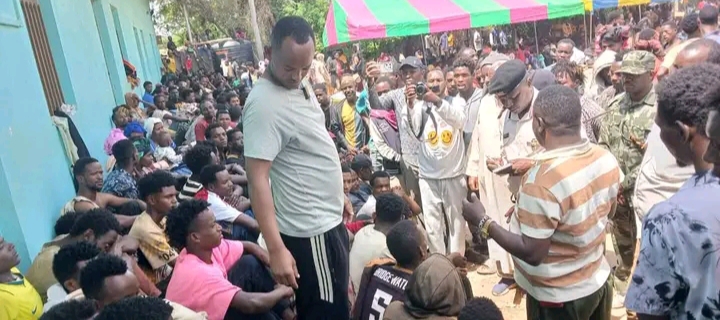
The United Nations High Commissioner for Refugees (UNHCR), working together with the Kenya Red Cross Society, has begun registering thousands of Ethiopian nationals who have crossed into Kenya to escape escalating violence in their country. The exercise, which began on Saturday, October 31, 2026, in Moyale, Marsabit County, is aimed at establishing the actual number of people seeking safety in Kenya and ensuring that humanitarian assistance reaches affected families.
The refugee registration exercise comes at a time when the number of Ethiopians fleeing across the Kenya-Ethiopia border continues to increase. Approximately 40,000 people have reportedly crossed into Kenya following clashes in parts of Ethiopia, although estimates from different authorities and humanitarian organisations have varied as more families continue arriving.The crisis has attracted the attention of humanitarian organisations, government officials, local leaders and international agencies, with growing concerns over the pressure being placed on the already limited resources available in Moyale and surrounding communities.
According to reports, the registration exercise started at Haroisa and Odda Mission Church (OMC) camps, where displaced Ethiopian families have sought temporary shelter. UNHCR and the Kenya Red Cross are working together to identify the refugees and establish a reliable record that will guide the distribution of food, water, shelter and other essential services.How the refugee registration exercise is being conducted
During the initial phase of registration, humanitarian officials are placing identification wristbands carrying unique identification codes on refugees, including children.
The wristbands will help establish an initial record of the displaced population and make it easier for humanitarian agencies to identify individuals and households during subsequent assistance programmes.A UNHCR representative explained that the exercise is the beginning of what is known as level-one registration, commonly referred to as population fixing.
The process will then proceed to household profiling, during which officials will collect additional information about families, their composition and their humanitarian needs.
After the profiling exercise, affected households are expected to receive aid cards that will help humanitarian organisations coordinate the delivery of relief assistance.
The identification system is particularly important because thousands of refugees are spread across different temporary shelters and host communities. Some have settled in organised camps, while others are staying with relatives, friends and well-wishers.The violence has been linked to tensions involving the Oromia and Somali regional administrations over a disputed boundary and administrative control. Reports indicate that disagreements surrounding a regional administrative office and the display of a flag in contested territory contributed to the latest escalation.
The clashes have reportedly involved armed groups and regional security forces, creating fear among civilians living in affected areas.
As fighting intensified, many residents began leaving their homes in search of safer places. Since Moyale is a border town connecting Kenya and Ethiopia, thousands of people have crossed into the Kenyan side to escape the violence.Women and children are among those affected, with many families arriving without adequate food, clothing or household belongings.
Some refugees reportedly left their homes in a hurry, abandoning property and other possessions because of fears that the fighting could spread to their villages.
The displacement has also disrupted normal economic activities, with families losing access to their farms, businesses, schools and other sources of livelihood.
The situation has created uncertainty among communities living close to the border, particularly those whose livelihoods depend on cross-border trade and movement.Some families are accommodated in temporary camps, schools and religious institutions, while others have sought shelter in the homes of relatives and members of the local community.
The large number of arrivals has placed considerable pressure on host families, many of whom were already struggling with their own economic challenges.
Some households that previously accommodated one family are now hosting several additional families, creating difficulties in accessing cooking facilities, sleeping spaces, water and sanitation services.
The Kenya National Commission on Human Rights (KNCHR) reported on October 27 that approximately 40,000 people had sought refuge in Moyale. More than 15,000 were reportedly staying in temporary shelters, while over 20,000 others were living with friends and relatives.Food remains among the most urgent needs for families who have crossed into Kenya.
Many refugees arrived with limited belongings and have no immediate means of earning an income. This has made it difficult for them to purchase food and other basic necessities.
Humanitarian organisations have been providing emergency assistance, including food supplies, hot meals, household items and medical support.
Access to clean drinking water is another major concern. With thousands of additional people depending on limited water sources, local facilities are facing increased demand.
Sanitation is equally important, especially in temporary shelters where many families are sharing limited facilities.The county has been appealing for additional humanitarian assistance to support displaced families and the local population.
Marsabit Governor Mohamud Ali has condemned the violence in Ethiopia and called for an immediate ceasefire and peaceful dialogue.
During a visit to Odda Mission Church Secondary School in Moyale, where approximately 4,800 Ethiopian refugees were being accommodated, the governor expressed concern about the humanitarian situation.
He was accompanied by Marsabit County Commissioner Stanley Kamande, Deputy Governor Solomon Riwe and representatives of humanitarian organisations.
Governor Ali called on political leaders, community elders and other public figures to exercise restraint when discussing the conflict.He warned that inflammatory statements, hate speech and misinformation could increase tensions and undermine peaceful coexistence between communities.
The governor also urged residents, particularly young people, to reject rumours and avoid actions that could contribute to violence.
His appeal comes amid concerns that tensions arising from the Ethiopian conflict could affect relationships between communities living on both sides of the border.
Local authorities have emphasised the importance of maintaining security while ensuring that people escaping violence receive humanitarian protection.
The county leadership has also called on the national government and international partners to increase support for the affected population. Women and children make up a significant proportion of the people who have crossed into Kenya. Many children have been separated from their normal school environment, while some families may have become separated during the journey.
Humanitarian agencies are expected to identify unaccompanied children, separated families, persons with disabilities and individuals requiring specialised assistance.
Child protection services will be particularly important because children living in temporary shelters may face risks of exploitation, neglect and psychological distress.
Women and girls also require safe accommodation, access to reproductive healthcare and protection against gender-based violence.
UNHCR and its partners are expected to coordinate protection services and establish referral systems to ensure that vulnerable individuals receive appropriate support.The continued displacement of civilians demonstrates the consequences of unresolved political and administrative disagreements.
Kenya and Ethiopia share longstanding social, economic and cultural relationships, particularly among communities living along their common border.
Moyale is an important centre for cross-border trade, transportation and interaction between the two countries.
Continued insecurity could therefore affect economic activities, disrupt the movement of goods and services and undermine relationships between neighbouring communities.
Religious leaders, elders and other community representatives have been encouraged to support peaceful dialogue and urge the relevant authorities to address the underlying disagreements.What happens next after registration?
The ongoing registration exercise is expected to provide humanitarian agencies with more reliable information about the number of refugees and their immediate needs.
Once the initial identification process is completed, officials will proceed with household profiling and the issuance of aid cards.This will help organisations establish the number of people in each household, identify vulnerable individuals and plan the distribution of relief supplies.
The information will also support better coordination between UNHCR, the Kenyan government, the Kenya Red Cross and other humanitarian partners.
Authorities will need to ensure that refugees staying outside formal camps are also included in the exercise so that they do not miss out on assistance.
The registration process will be particularly important as new families continue arriving from Ethiopia.
Although approximately 40,000 people have been reported to have crossed into Kenya, UNHCR's October 28 statement cited estimates of up to 50,000 people, while noting that the figures remained fluid as verification continued.

You Might Also Like
-
DCP Deputy Party Leader Cleophas Malala has dismissed claims that he is being sidelined within the party, insisting that he remains confident in his leadership position. He has maintained that the growing influence of Nyandarua Senator John Methu does not threaten his role in the political outfit. H
-
Jubilee Party leader Fred Matiang’i has urged opposition leaders to embrace inclusivity as they pursue plans to form a united opposition ahead of the 2027 General Election. He has warned that sidelining certain political players could trigger internal disagreements, weaken the coalition and deepen
-
The funeral of Bernard Kiplangat Ngetich in Kipkelion became an important moment for leaders from Kericho County to raise concerns about insecurity and accountability within security institutions. Led by Senator Aaron Cheruiyot, the leaders demanded that the DCI investigate allegations that some of
-
Education Cabinet Secretary Julius Migos Ogamba has announced that 1,048,355 candidates are sitting the 2026 KCSE examinations, marking a historic milestone as the number surpasses one million for the first time in Kenya’s examination history. The candidature represents a 5.27% increase from the 9
-
Aden Duale's development engagements in Garissa, including presiding over the groundbreaking of the KMTC project and inspecting affordable housing developments, have placed healthcare education and decent accommodation at the centre of the county's development agenda. His condemnation of the heckli
-
The supervision of KCSE examination distribution by Education Cabinet Secretary Julius Migos Ogamba at Borabu Sub-County in Nyamira County marks an important moment as Kenya begins the 2026 main written national examinations. With 1,048,355 candidates registered, the country faces a major responsib