




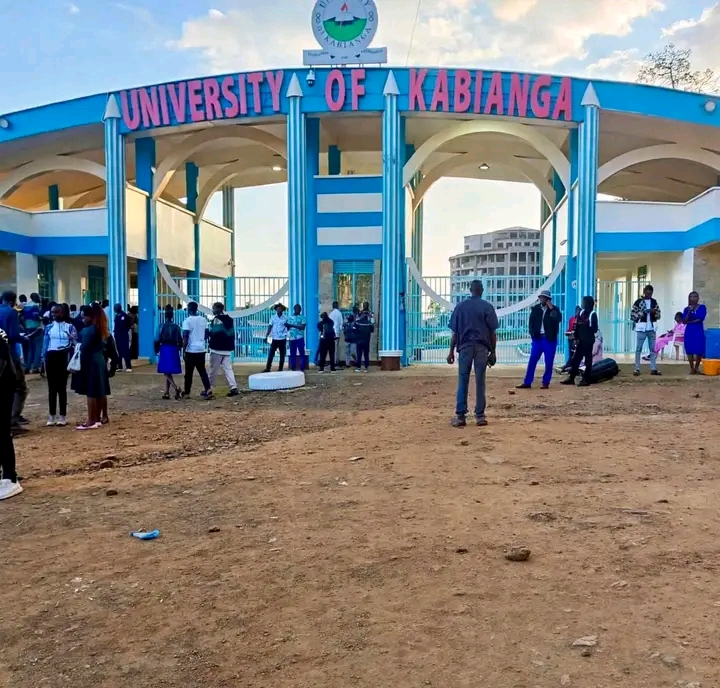
University of Kabianga Welcomes More Than 5,000 New Students as 2026/2027 Admission Exercise Begins
The admission of more than 5,000 first-year students for the 2026/2027 academic year is a major development for the University of Kabianga. Thousands of students and their parents and guardians have converged at the institution as the new academic journey begins. The large intake demonstrates strong demand for university education and growing confidence in Kabianga, while also presenting the institution with the responsibility of ensuring adequate facilities, academic staff and student support services. For the new students, the admission marks the beginning of an important chapter. They now have the opportunity to acquire professional knowledge, develop new skills, participate in university activities and prepare for their future careers. For the university and the surrounding community, the large intake is both an achievement and a reminder of the need for continued investment in education, infrastructure and student welfare.
The University of Kabianga has recorded a major increase in its new student population after welcoming more than 5,000 first-year students for the 2026/2027 academic year. The large admission marks an important moment for the university and highlights the institution's growing role in providing higher education opportunities to students from different parts of Kenya.
According to an official update by the University of Kabianga dated September 1, 2026, thousands of students, parents and guardians arrived at the university on Monday, August 31, 2026, for registration and admission. The university described the exercise as a significant milestone, with more than 5,000 first-year students joining the institution.
Large turnout at the university
The admission exercise brought considerable activity to the University of Kabianga. Students arrived from different parts of the country, many accompanied by their parents and guardians as they prepared to begin university life.
The university reported that vehicles streamed into the campus from the early hours of the morning, while long queues developed at different registration and admission points. University staff, student leaders and volunteers were involved in assisting the new students and helping them understand the procedures required before officially beginning their studies.
The large turnout demonstrates the logistical demands associated with admitting thousands of students at the same time. Registration requires the coordination of academic departments, finance offices, accommodation services, student affairs offices, ICT personnel and other university departments.
For parents and guardians, the admission period is also an important opportunity to obtain information about accommodation, fees, registration, student welfare and other services available at the institution.
More than 5,000 first-year students
The most significant feature of this year's admission exercise is the number of students joining the university.
The University of Kabianga officially stated that it was welcoming over 5,000 first-year students for the 2026/2027 academic year.
This is a substantial cohort and represents a significant addition to the university community. The number also indicates the continued demand for university education in Kenya and the confidence placed in the institution by students and families.
The university's announcement comes as thousands of Kenyan students transition from secondary education to higher education. For many of the new students, admission to Kabianga represents the beginning of professional and academic training that could eventually lead to careers in education, health sciences, business, information technology, agriculture, communication and other fields.
The university has a broad range of academic programmes. Its official first-year portal lists programmes including Bachelor of Science courses, agriculture-related programmes, economics, environmental studies, tourism management, education, business management, hotel and hospitality management, human rights, nursing, public health and clinical medicine.
A boost to the university community
The arrival of thousands of students is expected to have a significant impact on the University of Kabianga community.
A large first-year cohort means increased interaction between new students, continuing students, academic staff and administrative personnel. It also creates opportunities for student organisations, clubs and societies to recruit new members.
The new students will have to adapt to a different learning environment from what they experienced in secondary school. University education generally requires students to take greater responsibility for their studies, manage their time effectively and make independent decisions about their academic and personal lives.
For Kabianga, the admission of such a large number of students also presents an opportunity to strengthen its reputation as an institution capable of accommodating students from across Kenya.
The university describes itself as a centre of innovation and excellence and is ISO 9001:2015 certified.
Admission through KUCCPS and other pathways
A significant proportion of students entering public universities in Kenya are placed through the Kenya Universities and Colleges Central Placement Service (KUCCPS).
The University of Kabianga's student handbook explains that government-sponsored undergraduate admission is handled through KUCCPS. The institution also admits self-sponsored undergraduate students and international students under its established admission procedures.
This means that the large number of students joining Kabianga does not necessarily represent only one category of admission. Students can enter through different pathways depending on their qualifications and sponsorship arrangements.
The university's admission requirements vary according to the level and programme selected. For undergraduate programmes, the general minimum requirement is a KCSE mean grade of C+, although individual programmes may have additional subject requirements. Applicants with relevant diplomas may also qualify for degree admission depending on the programme and university regulations.
Academic programmes attracting students
One factor behind the growing student population is the range of courses offered by the institution.
Students joining the university have opportunities to pursue programmes in areas such as education, business, health sciences, agriculture, environmental studies, information technology and social sciences.
For example, the institution lists Bachelor of Science in Nursing, Bachelor of Science in Public Health and Bachelor of Science in Clinical Medicine among programmes available to students.
Technology-related programmes are also available. The university's academic programme information includes Bachelor of Science in Information Technology and Information Science and Knowledge Management, among others.
The diversity of courses gives students with different career ambitions an opportunity to pursue areas matching their interests and academic qualifications.
Registration and documentation
Admission is not complete simply because a student has received a placement or admission letter. New students are required to complete registration procedures and provide the necessary documentation.
The university provides an online first-year portal where newly admitted students can access admission documents, registration guidance, acceptance forms, personal details forms and medical forms.
The university's student handbook also outlines documents required for registration, including an admission letter, original examination result slip or certificate, personal details form, acceptance form, medical form, identification documents and evidence of payment of required fees.
The documentation process is important because it enables the university to verify students' qualifications and establish official student records.
Parents and guardians play an important role
The admission exercise is not only about students. Parents and guardians also play an important role during the transition.
Many parents accompanied their children to the university, particularly those joining higher education for the first time. The University of Kabianga said its staff assisted parents and guardians with information about registration, accommodation and orientation.
For families, university admission can be a major financial and logistical undertaking. Parents often have to plan for tuition and other charges, accommodation, food, transport, learning materials and personal expenses.
The large number of students arriving at the same time therefore creates significant demand for information and support services.
Accommodation and campus services
With more than 5,000 first-year students joining the university, accommodation is one of the important issues that must be managed.
Students need suitable places to live and access to essential services such as dining facilities, libraries, health services, learning spaces and recreational facilities.
The admission exercise therefore involves much more than registration. The university has to integrate the new students into its existing systems and ensure that they can access the services necessary for their academic lives.
The university's first-year portal provides students with information about various fee structures and academic programmes, helping new students understand their obligations before beginning their studies.
Orientation of new students
Another important stage after admission is orientation.
New students must become familiar with the university's academic expectations, rules and regulations, learning facilities and support services. They also need to understand how to use university systems, including student portals and e-learning facilities.
Orientation can help students understand where to seek assistance when they face academic, financial, social or personal challenges.
The University of Kabianga has several student and academic resources, including an e-learning portal, library portal, research portal and student/staff portal.
These systems are increasingly important because modern university education depends not only on physical classrooms but also on digital learning and administrative platforms.
A sign of growing confidence in Kabianga
The admission of more than 5,000 first-year students is also being viewed by the university as evidence of growing confidence in the institution.
In its announcement, Kabianga said the strong enrolment reflects continued confidence among students and parents and points to the expansion of its academic programmes and commitment to quality education, innovation and excellence.
A large student population can strengthen an institution in several ways. It can create a more diverse academic community, increase participation in clubs and societies and create a larger pool of students involved in research and innovation.
At the same time, rapid growth requires careful planning. Universities must ensure that expansion in student numbers is matched by sufficient classrooms, laboratories, lecturers, accommodation, library facilities and other resources.
Pressure on university infrastructure
While a large admission is positive news, it can also present challenges.
More students mean greater demand for classrooms, lecture halls, laboratories, accommodation, dining facilities, transport and administrative services. If these facilities are not expanded in line with enrolment, students could experience congestion.
The university therefore needs to continuously invest in infrastructure and human resources.
Kabianga has already announced plans involving infrastructure development. Its website recently highlighted the appointment of a contractor for construction of a multi-purpose hall, an indication of ongoing efforts to improve facilities.
Such projects become particularly important when an institution is experiencing increasing student numbers.
Economic impact on the region
The admission of thousands of students can also benefit the surrounding community.
Students require accommodation, food, transport, stationery, printing services, clothing and other goods and services. Businesses around the university can therefore experience increased demand during the admission period and throughout the academic year.
Landlords, food vendors, transport operators, retail shops and other service providers may benefit from the presence of a large student population.
The university's presence also contributes to the wider development of the region by creating employment and attracting visitors, parents and other stakeholders.
Opportunities for the new students
For the more than 5,000 students joining the University of Kabianga, admission represents an opportunity to build academic and professional foundations.
Students will be expected to take their studies seriously, attend lectures, complete assignments, participate in examinations and comply with university regulations.
University life also offers opportunities beyond classroom learning. Students can participate in sports, clubs, societies, leadership activities, research and community engagement.
The diverse background of students from different parts of Kenya can also create opportunities for cultural exchange and friendships.
What the admission means for the future
The 2026/2027 admission exercise could become an important milestone in the history of the University of Kabianga.
With more than 5,000 first-year students arriving, the university is entering the academic year with a large new cohort. The challenge now will be to ensure that the students receive the quality of education and support expected from the institution.
The university has already put measures in place to streamline the admission process, with different departments working together to register and orient new students.
The success of the admission exercise will ultimately be measured not only by the number of students admitted but also by how effectively the institution supports them through their academic journey.

You Might Also Like
-
 The death of Nancy Akinyi Koiya, a 26-year-old mother of two and businesswoman from the Kisumu–Nandi border region, has left her family and community devastated. She reportedly disappeared after leaving her hotel and catering business at Kibigori Junction earlier this week. Her husband, Kiplagat K
 -
The latest HELB announcement by Education Cabinet Secretary Julius Ogamba is significant for thousands of Kenyan students preparing to join universities and TVET institutions. The government's decision to extend the 2026/2027 tertiary education funding application deadline to September 21, 2026, aft
-
FUNERALS WITHOUT BODIES: NEPAL FAMILIES MOURN LOVED ONES STILL MISSING AFTER DEVASTATING FLOODS
-
The trailer fire at Kipsitet along the Kericho–Kisumu Highway on September 3, 2026, has drawn attention to the dangers faced by long-distance transport operators and other road users. The trailer, reportedly travelling toward Uganda, caught fire shortly after being parked along the highway near Mo
-
Kenya Airways has disclosed that it lost more than US$7 million (about KSh905 million) in revenue and additional disruption-related costs following a three-day industrial action that severely disrupted aviation operations in Kenya. The airline cancelled 63 flights, recorded more than 160 delays, wit
-
Kenya's current milk shortage is the result of several interconnected problems rather than one single cause. Dry and cold weather has reduced pasture and fodder availability, lowering milk yields in important dairy-producing areas. At the same time, high feed and operating costs have made production