



Wanga Doubts Sifuna’s Chances Against Ruto in 2027
Homa Bay Governor Gladys Wanga has questioned Edwin Sifuna’s chances of defeating President William Ruto in 2027, citing the difficulty of uniting the opposition behind his candidacy.
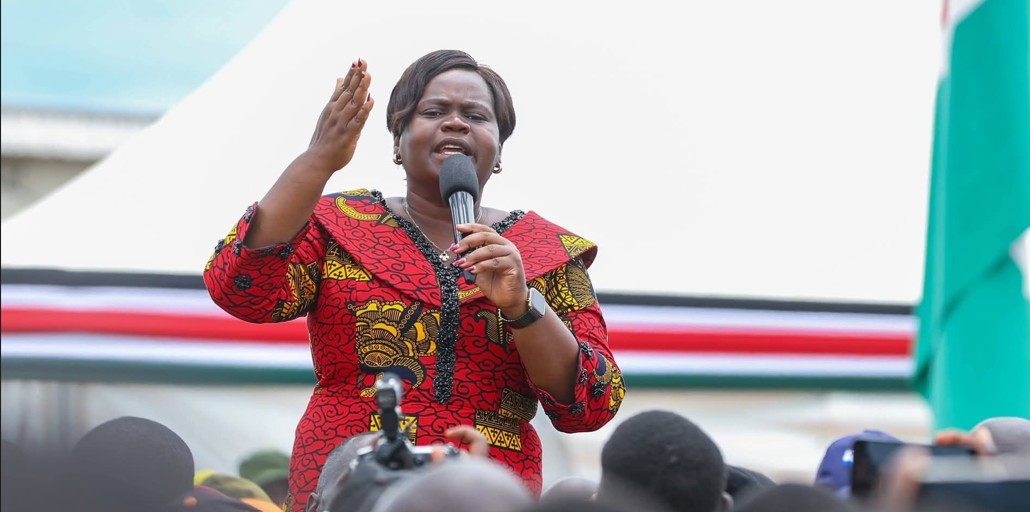
Homa Bay Governor and ODM National Chairperson Gladys Wanga has cast doubt on Nairobi Senator Edwin Sifuna’s chances of defeating President William Ruto in the 2027 General Election, arguing that the biggest challenge for the opposition will be reaching an agreement on a single presidential candidate.
Speaking during a media interview, Wanga said the opposition remains deeply divided, with several leaders positioning themselves for the presidency. She argued that without a united opposition and a candidate capable of commanding support across different political formations, defeating Ruto would be a difficult task.
Wanga’s remarks come at a time when Sifuna has stepped up his efforts to position himself as one of the leading opposition figures ahead of the 2027 election. The Nairobi senator has formally embarked on a presidential campaign through the Linda Mwananchi Movement and has been seeking to build a political platform that can compete nationally.
Despite Sifuna’s growing visibility, Wanga believes that popularity at political rallies does not necessarily translate into votes at the ballot.
She argued that the real measure of a politician’s strength would ultimately be an election, rather than the size of crowds attracted during political rallies.
“The real test is at the ballot,” Wanga said, stressing that politicians should not assume that large crowds automatically represent guaranteed electoral support.
Opposition Unity Remains a Major Question
At the centre of Wanga’s argument is the question of opposition unity.
The opposition currently has several prominent figures with presidential ambitions or influence, including Sifuna, Wiper leader Kalonzo Musyoka, former Cabinet Secretary Fred Matiang’i, former Deputy President Rigathi Gachagua, and other senior political leaders.
The challenge, according to Wanga, is getting all these leaders and their political formations to agree on one candidate.
She warned that the opposition could lose valuable time if it delays settling on a flag bearer.
Wanga said the opposition needs to identify its presidential candidate early enough to give that person sufficient time to travel across the country, build networks and introduce themselves to voters.
She argued that President Ruto already has an advantage because he has been travelling across the country and engaging voters, giving him more time to strengthen his political support ahead of the election.
According to Wanga, if the opposition waits until early 2027 to settle on its candidate, it could be difficult to effectively introduce that candidate to millions of voters before election day.
Her argument highlights one of the most important strategic questions facing the opposition: whether it can agree on a single candidate early enough to mount a coordinated national campaign.
Sifuna’s Growing Political Profile
Sifuna has nevertheless emerged as one of the most prominent opposition figures in recent months.
The Nairobi senator has been increasingly positioning himself as a presidential contender and has attracted support from several leaders who believe he could provide a fresh alternative ahead of the 2027 election.
A recent Politrack Africa survey placed Sifuna as the leading opposition presidential aspirant, although President Ruto maintained a significant lead in the overall presidential preference ratings.
The survey put Ruto at 45.1 per cent and Sifuna at 19.6 per cent. Kalonzo Musyoka followed at 10.3 per cent, while Fred Matiang’i and Rigathi Gachagua recorded 7.2 per cent and 6.0 per cent respectively.
The figures have provided Sifuna’s supporters with an argument that he is gaining momentum nationally.
However, Wanga’s assessment suggests that even a strong individual showing may not be enough if opposition leaders fail to consolidate their support.
The senator therefore faces the challenge of transforming his growing popularity into a broader political coalition capable of bringing together different regions, parties and political interests.
The Question of Raila Odinga’s Political Legacy
Wanga also linked the current opposition divisions to the absence of the late ODM leader Raila Odinga, who died in October 2025.
According to her, Raila played an important role in bringing different opposition leaders together despite differences in their political strength and ambitions.
She described Raila as a leader who had the patience and political experience to accommodate leaders with different levels of influence.
Wanga argued that Raila was able to create a platform where different political leaders could negotiate and work together, even when they had competing interests.
The challenge now, she suggested, is whether the current crop of opposition leaders can reproduce that level of political coordination.
Without such coordination, she believes the opposition could enter the 2027 election with multiple presidential candidates, potentially dividing the vote.
Sifuna’s Supporters See a Different Picture
While Wanga remains sceptical, Sifuna’s supporters argue that the senator has the potential to build a broad national movement.
Several opposition leaders have publicly expressed support for his presidential ambitions.
Trans Nzoia Governor George Natembeya, for example, previously said he had chosen to support Sifuna, arguing that political leaders must come together if they want to defeat Ruto.
Other opposition figures have also urged leaders to consider Sifuna as a potential compromise candidate.
The debate has therefore shifted from whether Sifuna can attract crowds to whether he can convince other presidential hopefuls to step aside and support a common opposition candidate.
That is likely to be one of the most difficult political negotiations ahead of 2027.
The United Opposition Factor
Another important factor is the emergence of a broader opposition grouping involving leaders such as Gachagua, Kalonzo, Matiang’i, Martha Karua and Eugene Wamalwa.
The group has been exploring ways of presenting a united challenge to Ruto.
Sifuna’s relationship with this emerging coalition could have a major impact on the presidential contest.
Some leaders within the opposition have called for a single candidate, arguing that multiple candidates would split the anti-government vote.
At the same time, different leaders have their own political bases and ambitions, making negotiations complicated.
Sifuna has indicated openness to working with other opposition formations, but the question remains whether the different camps can agree on who should ultimately carry the opposition flag.
Wanga’s Warning to the Opposition
Wanga’s remarks are therefore not simply a criticism of Sifuna. They also represent a broader warning to the opposition about the importance of preparation.
She argues that political parties cannot wait until the last minute before introducing their presidential candidate to voters.
A presidential campaign requires nationwide mobilisation, grassroots structures, fundraising, messaging and coalition-building.
The candidate must also convince voters outside their traditional political strongholds.
For Sifuna, this means demonstrating that his political appeal extends beyond Nairobi and the traditional ODM support base.
He will also need to build relationships with leaders from different regions and communities if he hopes to mount a serious national campaign.
Ruto’s Head Start
Wanga also believes President Ruto has benefited from his early mobilisation across the country.
The President has continued to tour different counties, launch development projects and engage communities as he prepares for the 2027 contest.
For the opposition, this creates a strategic challenge.
If they spend months negotiating among themselves without identifying their candidate, Ruto could continue strengthening his networks while the opposition remains focused on internal competition.
Wanga therefore believes time is becoming increasingly important.
The opposition must not only agree on a candidate but also give that candidate enough time to campaign nationally.
Sifuna’s Challenge Ahead
For Sifuna, the road to 2027 is likely to involve more than maintaining his current popularity.
He will have to demonstrate that he can build a national coalition around his candidacy.
That means reaching out to political leaders who currently have their own presidential ambitions and convincing them that supporting one candidate offers them a better chance of defeating Ruto.
He will also have to develop a clear national agenda addressing issues such as the cost of living, unemployment, healthcare, education, corruption, economic growth and governance.
Political observers are likely to pay close attention to whether Sifuna can transform the Linda Mwananchi Movement into a structured national political force.
The movement has already provided him with a platform, but the next challenge will be building grassroots structures capable of delivering votes across the country.
A Race Still Open
Despite Wanga’s confidence that Sifuna would struggle to defeat Ruto, the 2027 presidential race remains open.
Political alliances in Kenya can change rapidly, particularly in the period leading to an election.
Leaders who appear to be competitors today can become allies tomorrow, while political parties can merge, form coalitions or agree on joint candidates.
The opposition’s current divisions therefore do not necessarily mean they will remain divided until the election.
The possibility of a negotiated settlement remains.
Sifuna could potentially emerge as a compromise candidate, or another opposition figure could eventually receive the backing of the wider coalition.
Much will depend on negotiations over the coming months.
The Bigger Political Test
Ultimately, Wanga’s comments highlight a broader reality of Kenyan presidential politics: individual popularity is only one part of the equation.
A presidential candidate needs a strong national organisation, political allies, regional support and a campaign capable of reaching voters across the country.
Sifuna has already established himself as one of the leading opposition figures, and recent polling suggests he has significant support compared with other opposition aspirants.
However, turning that support into a winning national coalition will be the real test.
For President Ruto, the key objective will be maintaining his current advantage while preventing the opposition from consolidating its support behind one strong challenger.
For the opposition, the priority will be finding common ground and avoiding a fragmented presidential race.
As the 2027 election approaches, the question will therefore not only be whether Sifuna can defeat Ruto.
It will also be whether Sifuna can convince competing opposition leaders to put their individual ambitions aside and unite behind one presidential candidate.
Wanga believes that remains a major obstacle.
But with political alliances still evolving, the final answer may only become clear as the country moves closer to the 2027 General Election.

You Might Also Like
-
An 18-year-old Form Four student, Joy Wangui, has been found dead in the Kiambaa area of Molo, Nakuru County, in a shocking incident that has left her family and residents deeply disturbed. Police are investigating the circumstances surrounding her death, with her boyfriend, identified as Walter Kip
-
The meeting hosted by Health CS Aden Duale and involving the Council of Governors Health Committee has produced a significant agreement on the future of county health facilities under SHA. The new framework clarifies how facilities will be contracted, reduces some documentation hurdles, maintains in
-
Head of Public Service Felix Koskei has emphasized the importance of peace, dialogue and unity within families and communities, remarks that come amid growing concern over domestic conflicts and a tragic suspected murder-suicide in Bomet. The deaths of a couple in Cheboin, Chepalungu, have renewed a
-
Kindiki's October 5 visit to Kiambu placed infrastructure and economic development at the centre of the government's message to residents. The Nyambari ESP Market, Uplands-Githunguri Road and Kwaheri-Mary Magdalena Road were among the key projects launched, while the Deputy President also inspected
-
Speaking during the World Teachers’ Day celebrations at Kasarani on October 5, Education Cabinet Secretary Julius Ogamba delivered a direct message to striking university lecturers: return to work, obey court orders and allow negotiations to continue. He said the government had fully cleared arrea
-
Narok Senator Ledama Olekina has criticised the growing number of voices seeking to shape ODM’s future, questioning the role of longtime party supporters now presenting themselves as its founders.